A late start handled carefully
L.C.’s late application became responsible through evidence reconstruction and transition planning—not through rushing modest activities into larger claims.
Good material, incomplete records, six weeks
L.C. began the process later than most applicants. She had contributed illustrations to a student climate newsletter and helped a biology teacher organize local water-quality observations, but dates, hours and roles had never been recorded. Her grades were solid rather than flawless, and a weak first term in mathematics coincided with a move between school systems. She wanted a U.S. education but was candid about homesickness and uncertainty around communal living.
The application needed enough detail to be credible without converting loosely organized school activities into a formal research project.
The pressure to make irregular work look regular
What the application already showed
- Solid bilingual academic preparation
- Sustained interest in environmental communication
- Honest awareness of the residential transition
What it did not yet answer
- Could activity dates and responsibilities be supported?
- How should the weaker mathematics term be understood?
- What support would L.C. use if the move became isolating?
Evidence, communication, and readiness to leave
The questions below did not supply an admissions formula. They determined what evidence needed to be checked, which claims needed limits, and what the applicant still had to decide.
When is an activity description precise enough to be trusted?
An activity description became trustworthy when L.C. reconstructed dates and roles instead of turning irregular water observations into a weekly schedule.
What makes environmental information usable?
Environmental information became usable when she examined why classmates ignored the first newsletter graphics and revised how evidence was presented.
What does readiness for a distant move require?
Readiness for a distant move required more than wanting independence; it included communal living, travel, help-seeking, and a plan for a difficult first month.
A small audience revealed a real communication problem.
A six-week evidence plan gathered transcripts, teacher context, activity dates and examples of work. The school list considered entry points for Grade 11, residential support, environmental offerings and access to visual arts. L.C. created a comparison sheet that included travel routes and the frequency with which she could realistically return home.
Her essay centered on redesigning confusing graphics in the climate newsletter after classmates ignored the first issue. The strongest version acknowledged that the project reached a small audience and focused on what she learned about communicating evidence. Interview sessions included practical questions about sharing space, asking adults for help and handling a difficult first month. A short transition plan identified routines and people she could use if the move felt isolating.
The facts stayed the same. Their hierarchy changed.
Evidence was made more precise, attributable, and useful. The goal was not to enlarge the record, but to stop one title, institution, hardship, or outcome from carrying more meaning than it could support.
Irregular activities risked becoming estimated weekly commitments.
Dates, roles, and gaps were reconstructed from available records.
The newsletter was framed mainly by its topic.
Its value came from a specific communication failure and revision.
Homesickness felt like evidence against readiness.
It became a reason to compare support systems and make a transition plan.
Grade 11 entry from São Paulo
L.C.'s late start created pressure to accept whatever facts were easiest to state. Her water-quality work, for example, had happened in irregular sessions around weather and teacher availability. Converting it into a weekly commitment would have made the activity easier to summarize but less accurate. Reconstructing dates from messages and school calendars took time the family worried they did not have.
The emotional question was equally important. L.C. liked the idea of independence and disliked admitting that the actual move frightened her. She had never shared a room, managed a winter wardrobe or been responsible for seeking help from adults outside her family. Rather than treating those concerns as weakness, the process used them to compare residential systems and to build a transition plan that went beyond an admissions result.
Independence remained visible in the work.
- L.C. verified every date and declined to estimate hours she could not support. She decided to discuss homesickness as a planning consideration rather than conceal it. Her writing, school research and final decision remained her own.
An ambitious move with a practical transition plan
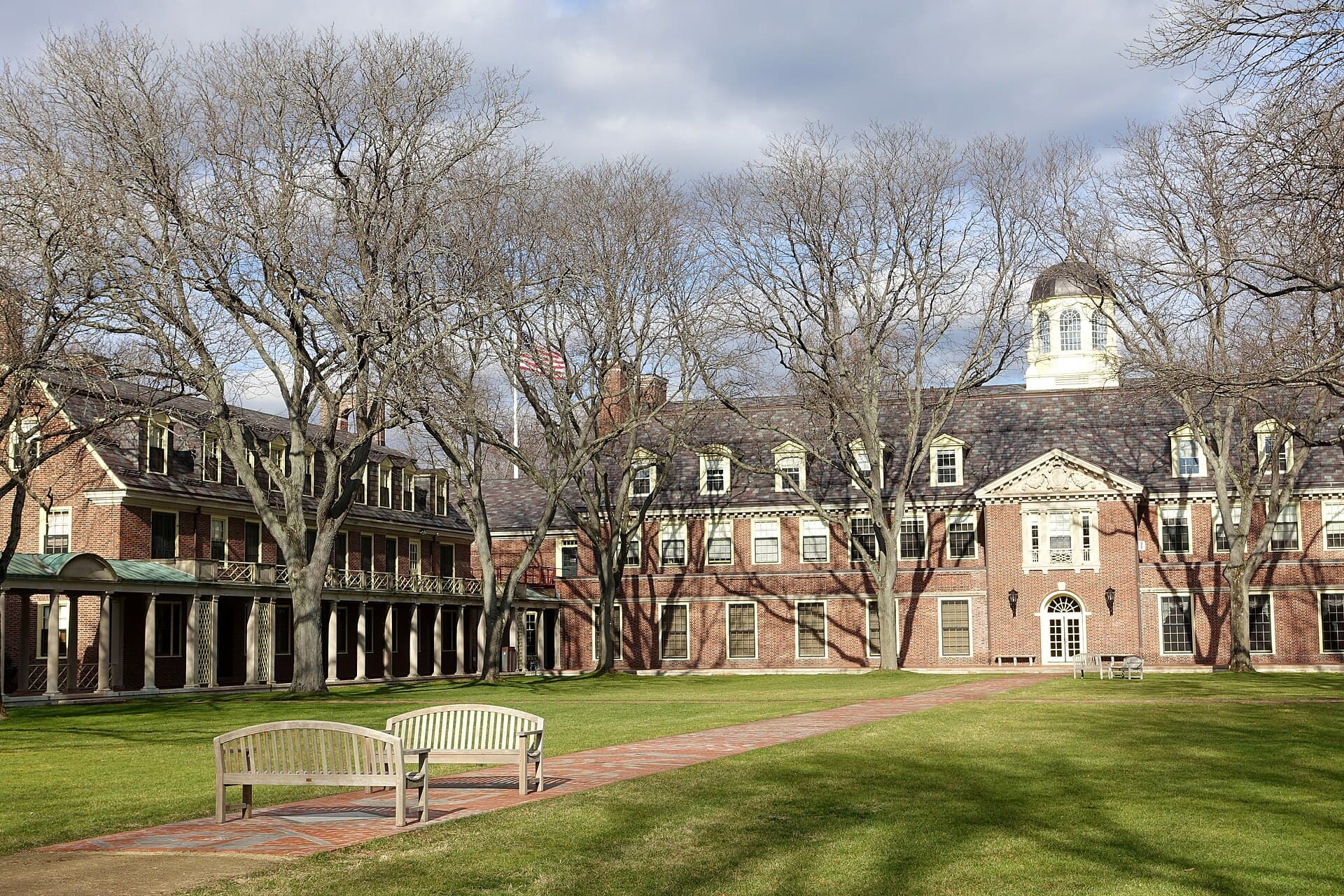
L.C. was admitted to Loomis Chaffee and Milton, waitlisted at Peddie and not admitted to Groton. She selected Loomis after comparing academic breadth, environmental opportunities, visual arts and residential support. The result was a balanced choice: ambitious, but accompanied by a concrete plan for transition and continued family contact.
WHAT CHANGED
- Activity dates and limits became supportable.
- The newsletter shifted from topic prestige to a concrete communication problem.
- Homesickness became a planning input rather than something to conceal.
- The family evaluated the move through course entry, daily support, and travel.
WHAT DID NOT CHANGE
- The water-quality work remained irregular and teacher-supported.
- One weaker mathematics term remained part of the transcript.
- The newsletter still reached a small school audience.
- L.C. remained uncertain about aspects of communal living far from home.
The reader’s understanding changed in stages.
This sequence describes what the revised evidence made easier to understand. It does not claim to reconstruct an admissions committee’s private deliberations.
A capable student with insufficiently documented activities and little time to repair the record.
L.C.'s work could be described accurately without forcing regularity onto it.
Her environmental interest became visible through an unsuccessful design and revision.
The move was ambitious because its academic and emotional demands were confronted directly.
The alternatives were plausible—and less useful.
Estimate neat weekly hours
The application would gain apparent order at the cost of factual support.
Call the water work a formal research project
Teacher-supported observations would be assigned a scale and independence they did not have.
Hide concerns about leaving home
School comparison would ignore the support most likely to matter after arrival.
Let the late calendar drive every choice
Urgency could produce errors in documents, course mapping, and activity claims.
Each stage used a different test.
| Decision | How it was tested |
|---|---|
| How to handle missing records | Reconstruct from messages, school calendars, and examples; leave uncertainty visible where necessary. |
| How to frame the newsletter | Describe the small audience, the failed presentation, and the revision without claiming broader impact. |
| How to compare schools | Map Grade 11 course entry, residential support, environmental work, visual arts, and travel. |
| How to prepare for departure | Name routines, people, and communication plans before treating an offer as a complete solution. |
WHAT THIS CASE SUPPORTS
- L.C. could reconstruct an incomplete activity record carefully.
- She revised environmental communication after observing limited engagement.
- She could discuss residential concerns and help plan for them.
WHAT IT CANNOT PROVE
- That the newsletter produced measurable environmental change.
- That water observations constituted independent research.
- That a transition plan would eliminate homesickness.
Questions when the calendar is already tight
The profile shows how one applicant’s evidence and decisions were organized. It does not predict another person’s result or supply a story to copy.
- Which dates can you verify, and which are only estimates?
- What did your audience actually do after seeing your work?
- Which part of a late application must be finished first so the rest remains accurate?
- Who would you contact during a difficult first week away?
- Does entering in Grade 11 preserve the courses you need?
L.C.’s case shows that speed and care are not opposites when the work is sequenced properly and the transition is examined as seriously as the application. A late application can still be careful. L.C.'s process prioritized evidence reconstruction, emotional readiness and viable course entry over rushed polish. Her result was useful because the transition had been planned with the same seriousness as the application itself.