.jpg)
Independent research
Your own question, pursued with care and an honest method.
- Science and engineering
- Social sciences
- Humanities and history
- Papers and posters
RESEARCH, PROJECTS & AWARDS
Depth comes from sticking with something you care about. We help you choose and carry out research, projects, competitions, publications, or community work that matters to you before it impresses anyone else.
Arrange your free introduction45 minutes with your proposed mentor. A personalized plan by email afterward.
See what we support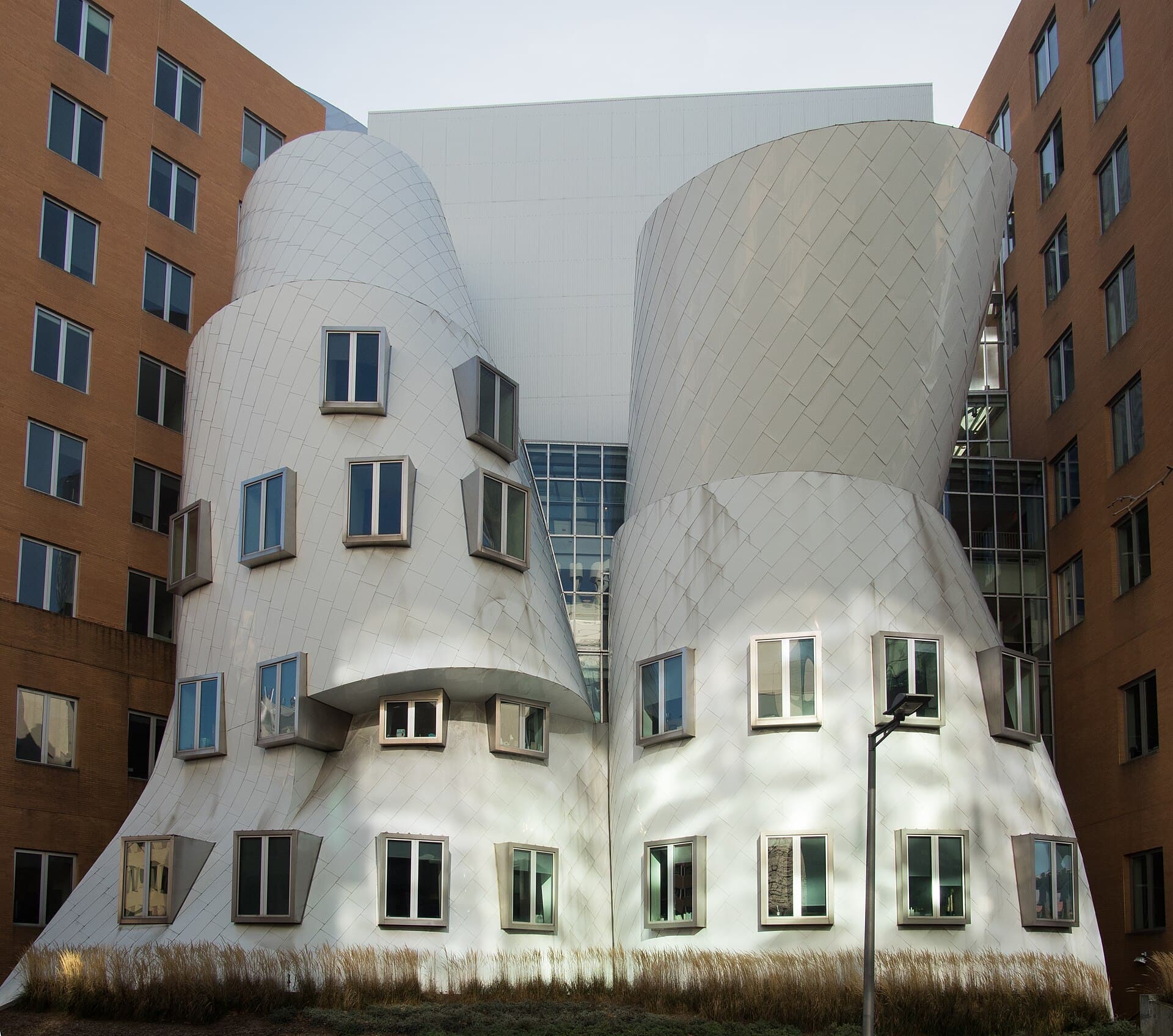
Stata Center, MIT · Rhododendrites / Wikimedia Commons, CC BY-SA 4.0. Resized and cropped.
WHAT WE SUPPORT
Some students start with a question, others with something they want to build. We help with both, at the scale that fits your time and experience.
Your own question, pursued with care and an honest method.
Something useful you build, test, and improve.
Chosen for your skills and interests, not for prestige alone.
Programs worth your time, and applications that show why.
Making the most of projects your school already offers.
Presenting what you did, clearly and accurately.
HOW A PROJECT GROWS
Every project is different, but most move through the same four parts. Here is an illustrative example of how one question could develop.
AN ILLUSTRATIVE EXAMPLE
This example is invented to show the shape of a project. Your own question could come from any subject.
| Part of the project | What it could look like |
|---|---|
| A real question | Why does the river near school flood after short storms but not after long, gentle rain? |
| A workable method | Compare ten years of public rainfall and river-level data, then visit two drainage points after storms. |
| Honest evidence | A clear pattern for short, heavy storms, plus two cases that don’t fit and are worth explaining. |
| Sharing it | A short paper and a poster for a regional science fair, with the limits of the data stated plainly. |
HOW WE HELP
You might have a clear question or only a subject you enjoy. We’ll help you find a starting point and keep the work moving.
FINDING YOUR QUESTION
We look at what you read, notice, and keep coming back to, then shape it into a question you can actually investigate.
A focused question and a realistic scope.
PLANNING THE WORK
We help you choose a method, find data or materials, and set milestones that fit around your classes.
A project plan with milestones and regular check-ins.
THE DIFFICULT MIDDLE
Most projects stall at some point. We help you work through setbacks, record what you tried, and write thoughtful emails to experts who might advise you.
Honest feedback on your progress and your next step.
SHARING YOUR WORK
We help you write an abstract, prepare a poster or presentation, and describe your role on applications in words you can explain.
Clear writing about your work, at its real scale.
TRY THIS WITH YOUR OWN IDEA
Fill in each row honestly. Gaps are normal, and they show us where to begin.
| Question | What to write down |
|---|---|
| Your question | One sentence you could investigate, not a whole subject. |
| Why it matters to you | What made you curious in the first place. |
| What you can do yourself | The data, materials, or skills you already have or can learn. |
| Who could guide you | A teacher, professional, or researcher whose work connects. |
| What you will produce | A paper, poster, prototype, dataset, or presentation. |
| How long it will take | A realistic number of weeks, around your schoolwork. |
A national research competition for high school students. For the 2027 competition, applications close on November 5, 2026.
A free six-week summer program at MIT for high school juniors: a week of STEM classes, then a five-week research internship.
Students reach the international fair by winning at an affiliated local, regional, state, or national science fair. ISEF 2027 takes place in Los Angeles in May 2027.
TWO STUDENTS, HONEST SCALE
These anonymized journeys show how describing research and projects accurately strengthened two applications.
 FINAL CHOICE · UCLA
Z.W. · BIOLOGY AND SCIENCE COMMUNICATION
We helped her map her actual tasks in the lab and choose research verbs she could explain with confidence. Short programs that meant less got less space, and her work explaining science to younger students got more.
Royce Hall, UCLA · Beyond My Ken / Wikimedia Commons, CC BY-SA 4.0. Resized and cropped.
 FINAL CHOICE · PRINCETON
N.S. · COMPUTER SCIENCE AND LINGUISTICS
Fewer than thirty people had used his pronunciation tool. We helped him describe it at that scale and turn their responses into the questions about language and usability that shaped his essays.
Nassau Hall, Princeton University · Ken Lund / Wikimedia Commons, CC BY-SA 2.0. Resized and cropped.
QUESTIONS STUDENTS ASK
If your question isn’t here, bring it to your free introduction.
No. Many admitted students have never done formal research. What matters is sustained work you care about and can explain. Research is one way to show that, not the only one.
We help you identify people whose work connects to your question and write thoughtful, specific emails. We don’t arrange placements, and we can help you build a strong project without one.
Some are excellent, and some mainly sell a name. We compare what you would actually do, who would guide you, and what you would produce, alongside the cost. Some strong programs, such as RSI, are free.
Most meaningful projects take several months. We plan milestones around your school year so the work doesn’t crowd out your classes.
You do. We ask questions, give feedback, and help you plan, so you can explain every part of your work with confidence.
RELATED SUPPORT
These services often go together with a research project or competition.
PEOPLE ON YOUR SIDE
We carefully select mentors who listen, offer honest feedback, and help you feel comfortable asking questions. One lead mentor gets to know you and guides your work.
How we choose and match mentors





Our team has guided students of different ages and stages. Their careers span technology, finance, consulting, education, and government at leading companies and institutions.

Bring your questions to a free 45-minute introduction with your proposed mentor. We’ll listen, talk through your options, and send you a personalized plan by email. No scare tactics and no pressure to sign up: we’ll tell you honestly what we think, even if that means pointing you somewhere else.
Arrange your free introductionRead our story →
