SMALL BY DESIGN Deep care. Honest fit. Relationships that last. Why we stay small →
Menu
Request a Consultation
← All High School Admissions journeys
ANONYMIZED CLIENT JOURNEY · H5

S.M.

Lagos day-school student / Writing and civic discussion / Financial-aid-dependent boarding search

S.M. brought strong humanities work, school-based journalism and an uneven laboratory-science record. Her preparation replaced polished generalities with specific examples of revision and responsibility, while treating financial aid as central to the list. Admitted to Hotchkiss, Lawrenceville and Groton, she chose Lawrenceville after comparing aid, residential support and academic range.

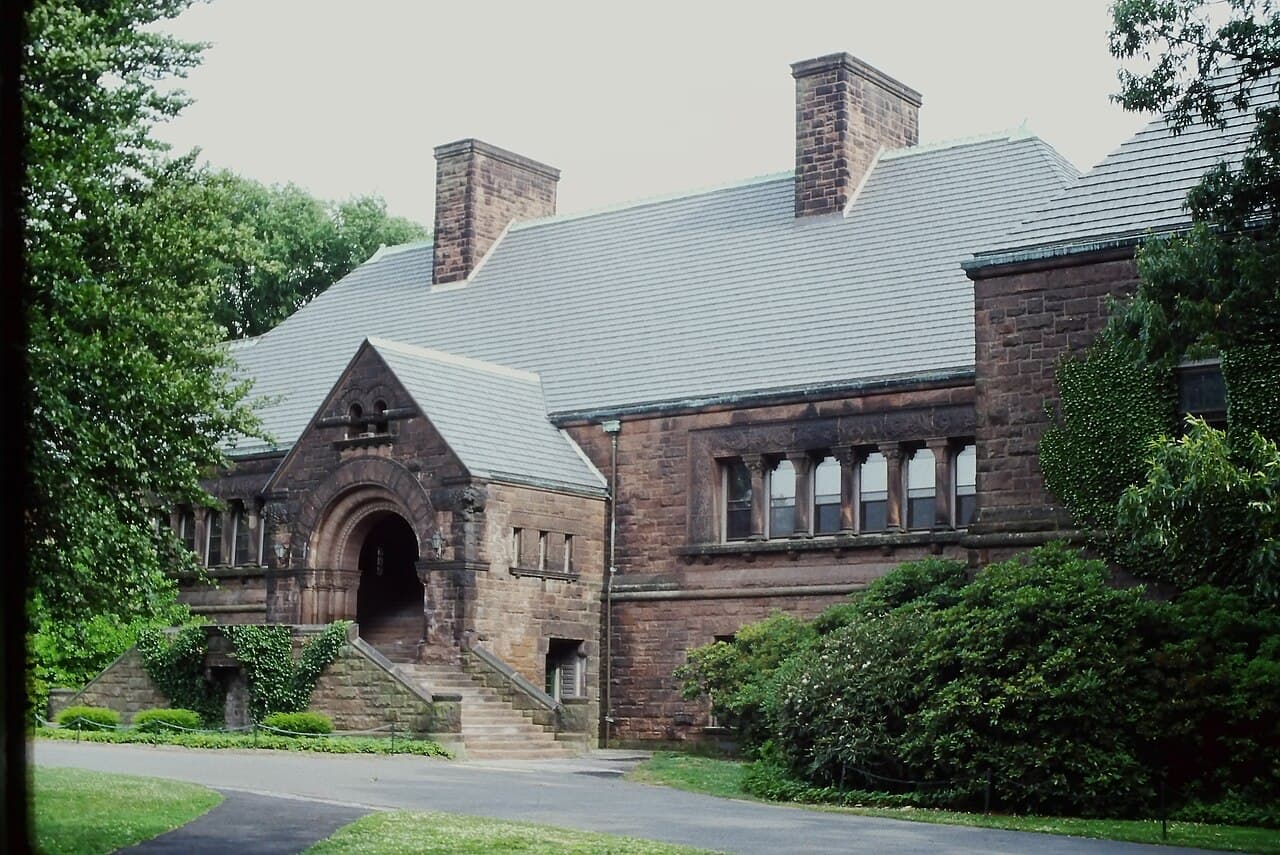
AI-generated representative image; it does not depict the client.
AT A GLANCE

The context behind the decisions.

Entry point
Grade 10 boarding-school admission
Background
Nigerian student at a private day school in Lagos
Academic direction
History, journalism, economics and public speaking
Ordinary complication
Strong verbal work, inconsistent laboratory-science grades and activities concentrated inside school
Family consideration
Attendance depended on substantial need-based aid and a workable international travel plan
Support emphasis
Evidence-based school list, interview depth, financial documentation and transition planning
Acceptances
The Hotchkiss School; The Lawrenceville School; Groton School
Other result
Rejected by Phillips Exeter Academy
Final choice
The Lawrenceville School with need-based financial aid
EXTENDED CASE ANALYSIS

A strong argument learns whom it has missed

S.M. did not need more impressive claims. She needed to show what happened when strong verbal confidence met evidence, criticism, and the financial realities of studying far from home.

THE STARTING READ

Articulate, thoughtful, and sometimes too polished

S.M. was known for asking the question that changed the direction of a history class. She edited opinion pieces for a small school newsletter and participated in public-speaking assemblies, but her school did not offer a large competition circuit. Her academic record was strong in the humanities and mathematics, while laboratory-science results fluctuated because she rushed practical write-ups and assumed the conclusion mattered more than the method.

Her parents initially viewed U.S. boarding school as a single category: highly selective, expensive and academically strong. S.M. was more interested in differences between discussion culture, residential support and the freedom to combine writing with economics. Neither side had yet confronted the full cost of travel, health insurance, school breaks and emergency arrangements.

THE CENTRAL DIAGNOSIS

When intelligence answered a different question

What the application already showed

  • Strong humanities and mathematics performance
  • Sophisticated verbal reasoning
  • Sustained school journalism

What it did not yet answer

  • Could S.M. answer a personal question without turning it into a speech?
  • Had she learned from the laboratory-science pattern?
  • Would the list remain viable with substantial financial need?
THE INTELLECTUAL CENTER

Evidence, accountability, and a viable list

The questions below did not supply an admissions formula. They determined what evidence needed to be checked, which claims needed limits, and what the applicant still had to decide.

What makes an argument responsible?

An argument became responsible when S.M. tested it against the experience of the people it described rather than relying on a polished conclusion.

How does confidence become accountability?

Confidence became accountability when missed deadlines, group dominance, and revised science work replaced broad claims about leadership.

When is an ambitious school list genuinely viable?

A selective list became viable only after aid, travel, insurance, school breaks, and emergency arrangements were understood.

THE TURNING POINT

A classmate challenged who was missing from the article.

The profile was organized around how S.M. uses argument: not simply to win, but to test whether a public claim survives contact with other people's experience. Her main essay followed the editing of a newsletter article about traffic enforcement. A classmate challenged her for writing about commuters she had never interviewed. S.M. revised the piece, spoke with school staff who traveled different routes and changed both its tone and conclusion.

Academic context addressed the science pattern briefly and factually. She described a later improvement in laboratory documentation without claiming that one better term erased the weakness. School research compared advising, writing opportunities, discussion-based teaching, residential life and the practical support available to an international student far from home. Interview work focused on answering first, then reflecting, rather than beginning with a speech.

SELECTING EVIDENCE

The facts stayed the same. Their hierarchy changed.

Evidence was made more precise, attributable, and useful. The goal was not to enlarge the record, but to stop one title, institution, hardship, or outcome from carrying more meaning than it could support.

Earlier presentation

Interview answers began with polished commentary.

Stronger presentation

S.M. answered the actual question first and reflected afterward.

Earlier presentation

Journalism was presented mainly by topic.

Stronger presentation

Revision, sourcing, and accountability showed how she worked.

Earlier presentation

Aid was treated as a sensitive later-stage concern.

Stronger presentation

Financial viability shaped the list from the beginning.

APPLICATION CONTEXT

Applying from Lagos with aid as a condition

S.M. was articulate enough to sound prepared even when she had not answered the question. In early interview practice, she could turn a simple prompt about a mistake into a polished discussion of educational inequality. The content was intelligent, but the reader learned little about her daily behavior. Slowing her down revealed smaller, more useful examples: missing a newsletter deadline, rewriting a science report and apologizing after dominating a group discussion.

Financial need also shaped the list more sharply than the family wanted to admit. They feared that asking direct questions about aid would make them appear less serious. The process treated affordability as a condition of attendance, not an embarrassing footnote. Each school remained on the list only if the family understood its aid process, deadlines and likely non-tuition costs.

STUDENT OWNERSHIP

Independence remained visible in the work.

  • S.M. chose every example and wrote all materials. Her parents completed financial forms using their own records. The mentor helped identify missing evidence, test whether the school list remained viable and prepare S.M. to advocate for herself. No one contacted a school to negotiate an outcome or represented the family.
OUTCOME & DECISION

The offer that held ambition and sustainability together

S.M. was admitted to Hotchkiss, Lawrenceville and Groton and denied by Exeter. Once aid packages and travel arrangements were compared, Lawrenceville became the most sustainable option. S.M. also preferred its house system and the range of ways she could continue writing without defining herself only as a journalist. The decision combined ambition with a clear plan for cost, distance and belonging.

WHAT CHANGED

  • Interview answers began with the question asked rather than a prepared public issue.
  • Journalism was evaluated through sourcing and revision, not topic alone.
  • The laboratory-science pattern received concise, factual treatment.
  • Aid and international logistics shaped the list from the start.

WHAT DID NOT CHANGE

  • S.M. remained verbally confident and intellectually ambitious.
  • Her journalism and speaking opportunities remained concentrated inside school.
  • Uneven laboratory-science results were not erased by one later improvement.
  • Attendance still depended on substantial financial support.
HOW THE FILE BECAME LEGIBLE

The reader’s understanding changed in stages.

This sequence describes what the revised evidence made easier to understand. It does not claim to reconstruct an admissions committee’s private deliberations.

First impression

An unusually articulate humanities student with uneven laboratory-science evidence.

Early conversation

A student able to sound prepared while avoiding the personal question underneath the prompt.

Article revision

A writer who could recognize when argument had outrun evidence and change course.

Offer comparison

A family deciding through aid, travel, residence, and belonging rather than recognition alone.

WHAT COULD HAVE WEAKENED THE CASE

The alternatives were plausible—and less useful.

Lead every answer with a large social issue

A reader would learn what S.M. could discuss but little about how she behaved.

Use the article as proof of civic impact

A school publication would carry a reach and representational authority it did not have.

Avoid direct questions about aid

The family could keep schools whose full attendance cost was not viable.

Treat science improvement as complete repair

One later term would be asked to erase a pattern instead of showing a credible response to it.

DECISION DISCIPLINE

Each stage used a different test.

DecisionHow it was tested
How to answer interviewsAnswer personally and specifically before widening to a broader idea.
How to present journalismName the sourcing gap, the revision, and the limits of the school audience.
How to handle scienceAcknowledge the laboratory pattern and point to later documentation without overstating recovery.
How to compare offersCombine aid, travel, house system, academic range, and practical support.

WHAT THIS CASE SUPPORTS

  • S.M. could revise writing after recognizing missing evidence.
  • She could name and address a weakness in laboratory documentation.
  • Her family could compare offers through full cost and residential practicality.

WHAT IT CANNOT PROVE

  • That the revised article represented commuters comprehensively.
  • That school journalism constituted professional reporting.
  • That aid removed every cost of international attendance.
QUESTIONS FOR A SIMILAR APPLICANT

Questions before confidence becomes performance

The profile shows how one applicant’s evidence and decisions were organized. It does not predict another person’s result or supply a story to copy.

  • Whose experience sits behind the public claim you are making?
  • What happens when someone challenges the premise rather than the wording?
  • Can you describe a small failure before turning it into a lesson?
  • Which non-tuition cost could make an otherwise generous offer unworkable?
  • What support would you need during a school break far from home?
S.M.’s strongest evidence was not that she could make a persuasive argument. It was that she could discover whom the argument had overlooked and revise it. A strong applicant story does not require a national award or a dramatic social-impact project. S.M.'s file became persuasive when her intelligence was shown through revision, accountability and specific choices. Financial planning was part of the educational decision from the beginning, not something added after admission.
CONTINUE EXPLORING
High School AdmissionsAll 40 client journeysAll student results
YOUR NEXT STEP

Your application should still sound and feel like your own.

We will listen carefully and tell you whether we believe Letrado is the right fit. If another resource would serve you better, we will be honest about that too.

See If We Are a Fit