Advanced is not the same as ready
Y.H.’s case required separating academic acceleration from residential readiness—and separating his own preferences from a schedule built largely by adults.
A strong record designed mostly by adults
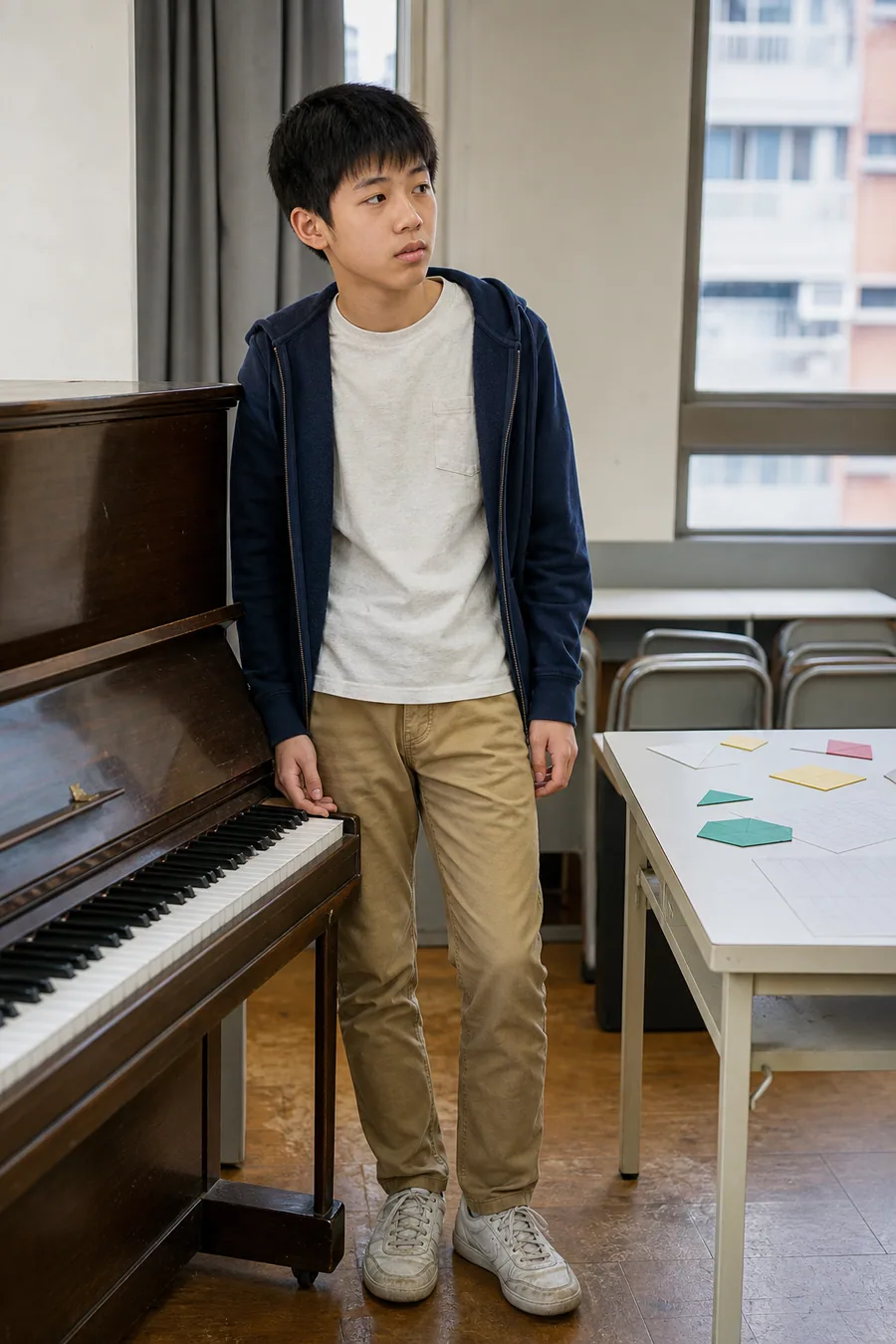
Y.H. completed mathematics beyond his grade level and had studied piano since early childhood. The record looked impressive, but he spoke about both pursuits as schedules designed by adults. He enjoyed solving problems with friends and improvising music, yet those moments disappeared beneath exam results, lesson hours and competition certificates. At thirteen, he had also never managed his own weekly schedule, laundry or travel beyond a familiar routine.
His parents assumed that academic readiness meant residential readiness. Y.H. was excited by boarding school in the abstract but avoided practical questions about sharing space, asking for help or being unsuccessful in a class where many students had similar strengths.
Finding Y.H. inside the schedule
What the application already showed
- Advanced mathematical preparation
- Long-term piano study
- Curiosity about collaborative and unfamiliar work
What it did not yet answer
- Which commitments did Y.H. personally want to continue?
- Was he ready to manage daily residential life?
- Did boarding school offer more than additional acceleration?
Choice, daily independence, and listening
The questions below did not supply an admissions formula. They determined what evidence needed to be checked, which claims needed limits, and what the applicant still had to decide.
What belongs to the student inside an adult-designed schedule?
What belonged to Y.H. became clearer when he separated activities he valued from the competition and acceleration goals adults had set.
What does readiness look like outside the transcript?
Readiness outside the transcript appeared through planning, household tasks, communication, and moments when he waited for a parent to solve a problem.
Can precision make collaboration harder?
Precision made collaboration harder when completing a group problem quickly prevented other students from understanding or contributing.
A piano interpretation became an act of listening.
The school list compared mathematical depth, arts access, advising, residential scale and opportunities to try unfamiliar activities. Y.H. kept a two-week independence log covering planning, household tasks, communication and moments when he waited for a parent to solve a problem. The exercise was not an admissions credential; it gave the family evidence about readiness and concrete areas to practice.
His essay developed from a piano rehearsal in which he abandoned the written interpretation and listened to how another student shaped the same phrase. The story connected precision with responsiveness without claiming that music explained every part of his identity. Supplemental responses included interests outside mathematics and piano, including a tentative curiosity about stage design. Interview sessions rewarded honest pauses and incomplete answers rather than memorized fluency.
The facts stayed the same. Their hierarchy changed.
Evidence was made more precise, attributable, and useful. The goal was not to enlarge the record, but to stop one title, institution, hardship, or outcome from carrying more meaning than it could support.
Coursework and recitals formed a parental portfolio.
Y.H. identified which interests and future choices belonged to him.
Advanced academics implied complete readiness.
A two-week independence log made nonacademic readiness visible.
Piano was organized around competition.
Y.H. could explain why he wanted to continue it on different terms.
What boarding asks of a thirteen-year-old
The application risked becoming a parental portfolio. Every course and recital was genuine, but the sequence did not reveal which choices belonged to Y.H. He needed permission to say that he wanted to continue piano without making competition the center of his musical life. That conversation was uncomfortable because his parents had invested time and resources in lessons, and Y.H. worried that changing emphasis would appear ungrateful.
Interview practice exposed a second issue. Y.H. answered adult questions by guessing what the adult wanted. When asked about community, he described leadership; when asked about failure, he selected a safe academic example with a successful ending. More open practice helped him discuss an unresolved friendship conflict and a group problem set where he had made collaboration harder by finishing too quickly.
Independence remained visible in the work.
- Y.H. wrote the applications, selected the musical story and decided which interests to present. His parents participated in the readiness and financial discussions but did not direct his preference order. Guidance remained developmental: no one scripted his interview or converted parental plans into his voice.
A broader education with an independence plan
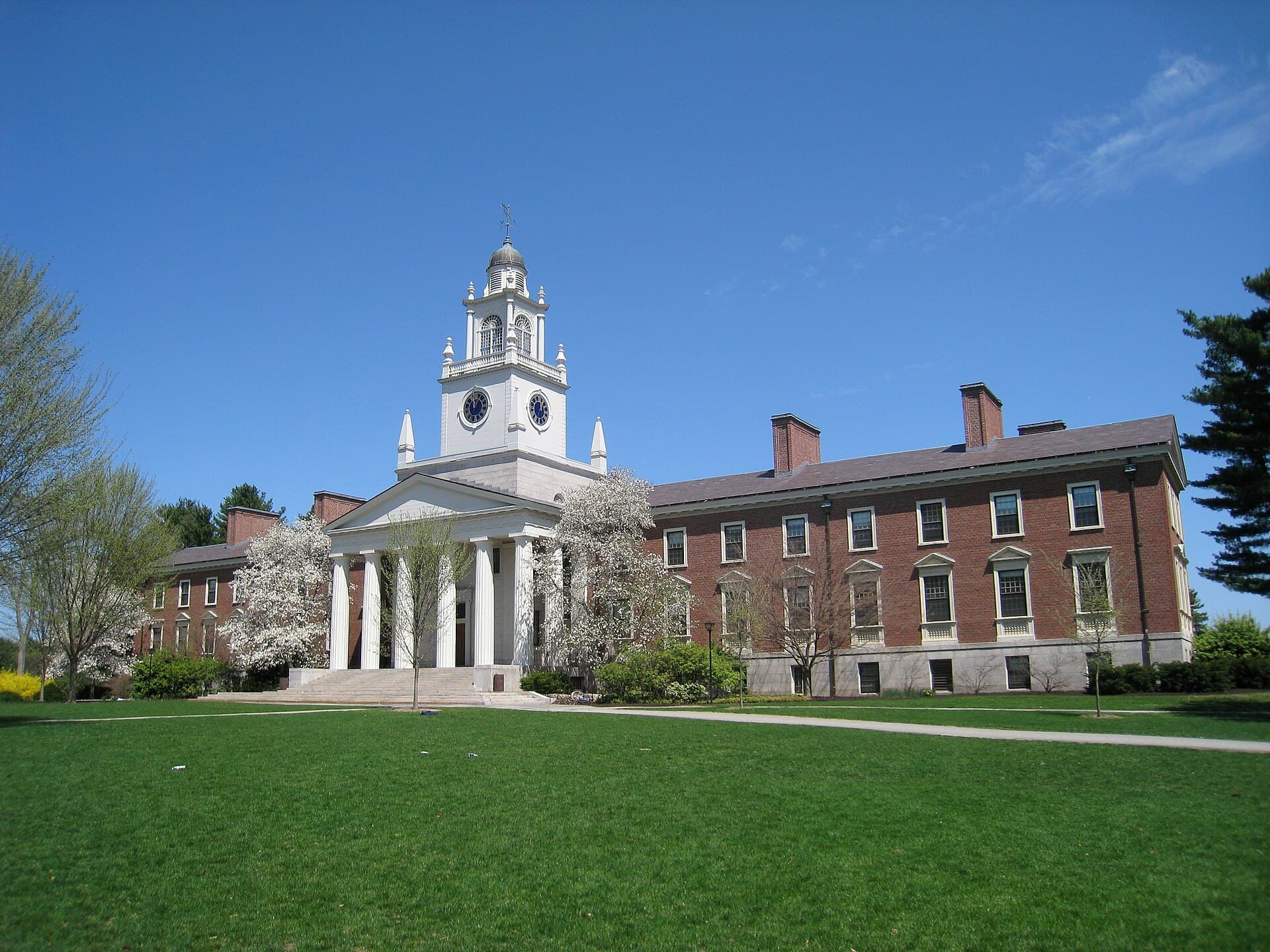
Y.H. was admitted to Exeter, Andover and St. Paul's and waitlisted at Hotchkiss. He chose Andover after comparing mathematics, music, advising and the breadth of activities available to a younger student. The family also agreed on an independence plan before departure, including expectations for communication that would support him without reproducing daily management from a distance.
WHAT CHANGED
- Y.H.'s preferences became distinguishable from the plan built around him.
- Residential readiness included ordinary daily responsibilities.
- Interview answers became less focused on guessing what an adult wanted.
- Music remained important under terms Y.H. could articulate himself.
WHAT DID NOT CHANGE
- He remained academically advanced for his age.
- Years of parental investment in music remained part of the family context.
- At thirteen, he was still developing practical independence.
- His parents retained responsibility for finance, safety, and the final feasibility of boarding.
The reader’s understanding changed in stages.
This sequence describes what the revised evidence made easier to understand. It does not claim to reconstruct an admissions committee’s private deliberations.
A young student advanced in mathematics and experienced in piano.
A schedule containing real achievement but limited evidence of Y.H.'s own choices.
A capable student with specific daily-life skills still to develop.
A younger boarder choosing breadth and support with a plan for gradual independence.
The alternatives were plausible—and less useful.
Treat acceleration as proof of boarding readiness
Academic evidence would obscure daily dependence and help-seeking needs.
Present the adult-designed schedule as student agency
The file would sound accomplished but reveal little about Y.H.'s preferences.
Script mature interview answers
Approval-seeking language would replace the uncertainty appropriate to his age.
Make competition the only reason to continue piano
Y.H. would lose the musical relationship he actually wanted to preserve.
Each stage used a different test.
| Decision | How it was tested |
|---|---|
| Which interests to foreground | Ask what Y.H. would choose to continue and how he would change its terms. |
| How to test readiness | Observe planning, household tasks, communication, and parent dependence in daily life. |
| How to prepare for interviews | Reward truthful pauses and unresolved examples rather than adult-sounding certainty. |
| How to choose a school | Balance mathematical depth, music, advising, breadth, and support for a younger resident. |
WHAT THIS CASE SUPPORTS
- Y.H. could distinguish some personal interests from adult-directed achievement.
- The independence log identified concrete areas for preparation.
- He could reflect on collaboration and listening through real examples.
WHAT IT CANNOT PROVE
- That advanced academics implied residential maturity.
- That two weeks of practice made Y.H. fully independent.
- That changing the emphasis of piano rejected his parents' support.
Questions beyond the transcript
The profile shows how one applicant’s evidence and decisions were organized. It does not predict another person’s result or supply a story to copy.
- Which part of your schedule would you rebuild differently if you controlled it?
- What happens in your week when no adult reminds you?
- When has finishing first made a group less effective?
- How do you ask for help when the problem is not academic?
- What does boarding offer besides more difficult classes?
Y.H.’s transcript showed that he could handle difficult work. The deeper process asked whether he was ready to choose, collaborate, and live with greater independence. Advanced academics are not the same as readiness to live and learn independently. Y.H.'s process became more useful when it stopped treating boarding school as a prize for acceleration and began testing whether the environment matched his voice, curiosity and stage of development.