SMALL BY DESIGN Deep care. Honest fit. Relationships that last. Why we stay small →
Menu
Request a Consultation
← All High School Admissions journeys
ANONYMIZED CLIENT JOURNEY · H7

E.F.

Rural Maine public-school student / Ecology and field observation / Limited access, uneven language grades

E.F. came from a rural public school with limited advanced coursework, uneven French instruction and no formal test-preparation ecosystem. Her application documented that context while presenting ecology work at its true scale. Admitted to Lake Forest and Cate, she chose Lake Forest after weighing aid, transition support and ties to home.

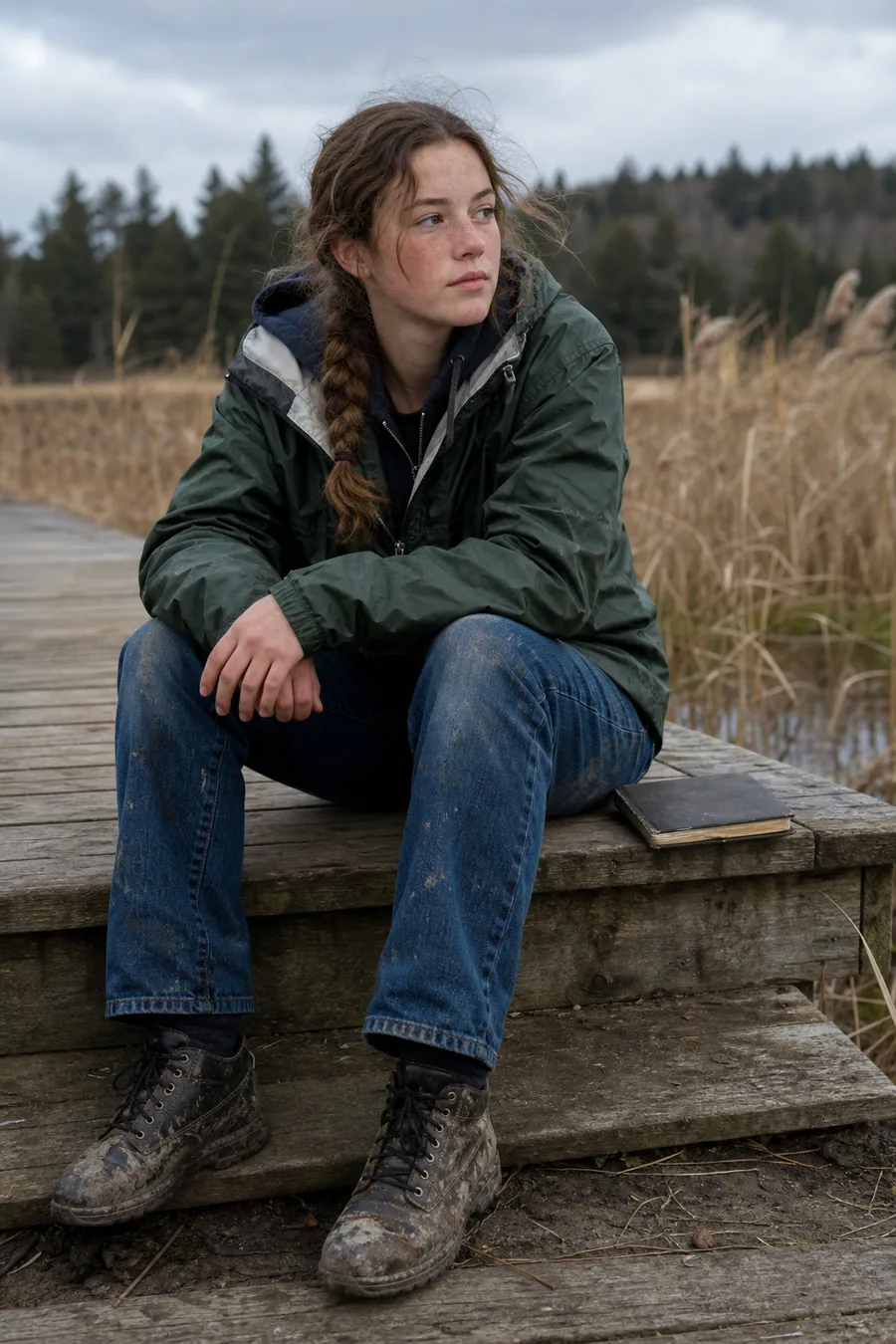
AI-generated representative image; it does not depict the client.
AT A GLANCE

The context behind the decisions.

Entry point
Grade 10 boarding-school admission
Background
Small rural public school in Maine
Academic direction
Ecology, environmental writing and field science
Ordinary complication
Limited advanced coursework, uneven French grades and no formal admissions-test preparation
Family consideration
Need-based aid, travel and whether leaving would weaken ties to home
Support emphasis
School context, teacher evidence, realistic testing plan and geographic comparison
Acceptances
Lake Forest Academy; Cate School
Other results
Waitlisted at Deerfield Academy; rejected by Phillips Academy Andover
Final choice
Lake Forest Academy with financial aid
EXTENDED CASE ANALYSIS

Making limited access visible without making it a brand

E.F.’s application gained strength by making limited access visible, defining field observation accurately, and refusing to treat rural context as either an excuse or a guaranteed advantage.

THE STARTING READ

A wetland education outside an advanced-course catalogue

E.F. knew the wetlands near her home in practical detail. She recorded seasonal changes for a local conservation group, helped younger students identify birds and wrote short pieces for a town newsletter. Her school offered few advanced courses, and the nearest private test-preparation option was more than an hour away. She performed well in science and English but struggled in French after a prolonged teacher absence and a sequence of rotating substitutes.

The idea of boarding school came from a science teacher, not from a family tradition. E.F.'s parents supported exploration but worried that an application would imply rejection of the local school and community that had helped her grow.

THE CENTRAL DIAGNOSIS

What context explained—and what it could not

What the application already showed

  • Sustained local ecological observation
  • Strong science and English work
  • Close knowledge of a specific environment

What it did not yet answer

  • How should limited course access be read?
  • Did the French results reflect a broader concern?
  • Would leaving expand her education while preserving ties to home?
THE INTELLECTUAL CENTER

Access, maintenance, and the scale of the work

The questions below did not supply an admissions formula. They determined what evidence needed to be checked, which claims needed limits, and what the applicant still had to decide.

What can a student demonstrate without formal institutional access?

Without formal institutional access, E.F. could still show repeated observation, community contribution, and the judgment to describe those activities at their true scale.

What does environmental care require after the first action?

Environmental care required more than marking a nesting area once; the storm exposed the need for someone to return, repair, and maintain the work.

How should a reader understand opportunity?

Opportunity became legible through the school's actual curriculum, disrupted French instruction, travel distance, and limited test-preparation access.

THE TURNING POINT

A storm exposed the difference between action and a maintenance plan.

E.F. worked with her counselor to document the school's curriculum, the French disruption and the absence of certain advanced options. Recommendation planning identified teachers who could discuss curiosity and follow-through rather than simply repeat grades. Her main essay followed a failed attempt to protect a marked nesting area after a storm erased the signs. The experience showed that care without a maintenance plan was temporary.

School research deliberately included different regions. Cate offered a compelling environmental setting; Lake Forest provided access to Chicago-area resources while retaining a smaller residential community. E.F. compared aid, travel, science opportunities, writing, distance from home and the emotional meaning of leaving. Interview practice helped her speak positively about her public school while explaining what she hoped to add.

SELECTING EVIDENCE

The facts stayed the same. Their hierarchy changed.

Evidence was made more precise, attributable, and useful. The goal was not to enlarge the record, but to stop one title, institution, hardship, or outcome from carrying more meaning than it could support.

Earlier presentation

E.F. tried to prove limited access had not mattered.

Stronger presentation

School context explained both constraints and her response to them.

Earlier presentation

Conservation work risked being called research.

Stronger presentation

Observation, recording, and community support were described precisely.

Earlier presentation

Leaving home appeared to signal greater ambition.

Stronger presentation

Continuity, aid, and the emotional meaning of leaving were compared openly.

APPLICATION CONTEXT

A rural public-school record read on its own terms

E.F. initially tried to prove that limited access had not mattered. That claim was neither necessary nor true. She had fewer courses, laboratories and organized clubs than many applicants. The stronger approach was to explain the environment accurately and show what she did with the resources available, including the limits of informal conservation work. She collected observations; she did not conduct publishable ecological research.

Testing required a similarly restrained plan. A diagnostic showed areas she could improve through structured self-study, but an aggressive tutoring schedule would have displaced schoolwork and weekend responsibilities. The family chose a limited preparation period and accepted that the score would be one piece of a contextual file.

STUDENT OWNERSHIP

Independence remained visible in the work.

  • E.F. verified the scale of every conservation activity and wrote her materials. The mentor did not label observation as research or suggest that rural background guaranteed a distinctive admissions advantage. Her family set the financial boundary and participated in the final choice.
OUTCOME & DECISION

Why the strongest thematic match was not the final choice

E.F. was admitted to Lake Forest and Cate, waitlisted at Deerfield and denied by Andover. Cate's setting aligned closely with her interests, but Lake Forest offered the stronger aid package and a community she believed would make the transition manageable. She chose Lake Forest and developed a plan to continue contributing to the conservation group during longer school breaks.

WHAT CHANGED

  • E.F. stopped pretending that limited access had made no difference.
  • School and instructional context made the record easier to interpret.
  • Conservation work was described as observation and community support, not research.
  • Aid, transition, and ties to home received as much weight as thematic fit.

WHAT DID NOT CHANGE

  • Her school still offered fewer advanced courses than many boarding schools.
  • French results remained uneven after a prolonged teacher absence.
  • The conservation work did not produce publishable findings.
  • Leaving home still carried a cost to family and community continuity.
HOW THE FILE BECAME LEGIBLE

The reader’s understanding changed in stages.

This sequence describes what the revised evidence made easier to understand. It does not claim to reconstruct an admissions committee’s private deliberations.

Course record

A strong science and English student with fewer advanced options and uneven French.

Opportunity context

A student whose school and geography shaped the opportunities available to her.

Field evidence

A careful observer learning that conservation requires maintenance, not just concern.

Final choice

A family allowing aid, transition, and connection to home to outweigh a seemingly perfect thematic setting.

WHAT COULD HAVE WEAKENED THE CASE

The alternatives were plausible—and less useful.

Claim that access had made no difference

The file would ignore material gaps and make the school context less credible.

Call local observation research

A real contribution would be weakened by unsupported independence and methodology.

Add an intensive test-preparation schedule

Preparation could displace coursework and the weekend responsibilities already showing consistency.

Choose the school most closely aligned with ecology

Aid, transition support, and ties to home could be treated as lesser forms of judgment.

DECISION DISCIPLINE

Each stage used a different test.

DecisionHow it was tested
How to explain accessDocument curriculum and disruption while showing what E.F. did with the resources available.
How to describe field workUse observation, recording, teaching, and maintenance verbs that match the work.
How much testing to pursueSet a bounded plan that protects schoolwork and existing commitments.
How to choose among offersCompare aid, travel, transition, science, writing, and the ability to remain connected to home.

WHAT THIS CASE SUPPORTS

  • E.F. used available local opportunities with consistency and care.
  • School context explained why some conventional opportunities were absent.
  • She could compare educational fit with aid and continuity.

WHAT IT CANNOT PROVE

  • That rural background guaranteed distinctive admissions value.
  • That field observations constituted independent research.
  • That limited access made every weaker result irrelevant.
QUESTIONS FOR A SIMILAR APPLICANT

Questions for applicants working outside formal programs

The profile shows how one applicant’s evidence and decisions were organized. It does not predict another person’s result or supply a story to copy.

  • What opportunity truly existed at your school rather than at an imagined version of it?
  • Which part of your work continued after the first visible activity ended?
  • Can you explain the boundary between observing, assisting, and researching?
  • What would you preserve from your current community after leaving?
  • Would added test preparation strengthen the file or displace better evidence?
E.F.’s application did not overcome context by pretending it was irrelevant. It made the context clear and showed the seriousness of what she had done within it. Context is not an excuse and does not need to be transformed into hardship branding. E.F.'s application worked by making access visible, defining informal work accurately and showing sustained curiosity. Her final decision also demonstrated that affordability and continuity can reasonably outweigh a seemingly perfect thematic fit.
CONTINUE EXPLORING
High School AdmissionsAll 40 client journeysAll student results
YOUR NEXT STEP

Your application should still sound and feel like your own.

We will listen carefully and tell you whether we believe Letrado is the right fit. If another resource would serve you better, we will be honest about that too.

See If We Are a Fit