SMALL BY DESIGN Deep care. Honest fit. Relationships that last. Why we stay small →
Menu
Request a Consultation
← All High School Admissions journeys
ANONYMIZED CLIENT JOURNEY · H9

M.B.

French-Moroccan student / History and languages / Moving beyond comparison with an older sibling

M.B. entered with broad humanities interests, developing English prose and a family habit of comparing her with an accomplished older sibling. Her work centered on independent voice and accurate multilingual writing. Admitted to Groton, Cate and St. Andrew's, she chose St. Andrew's for its residential intimacy and personal fit.

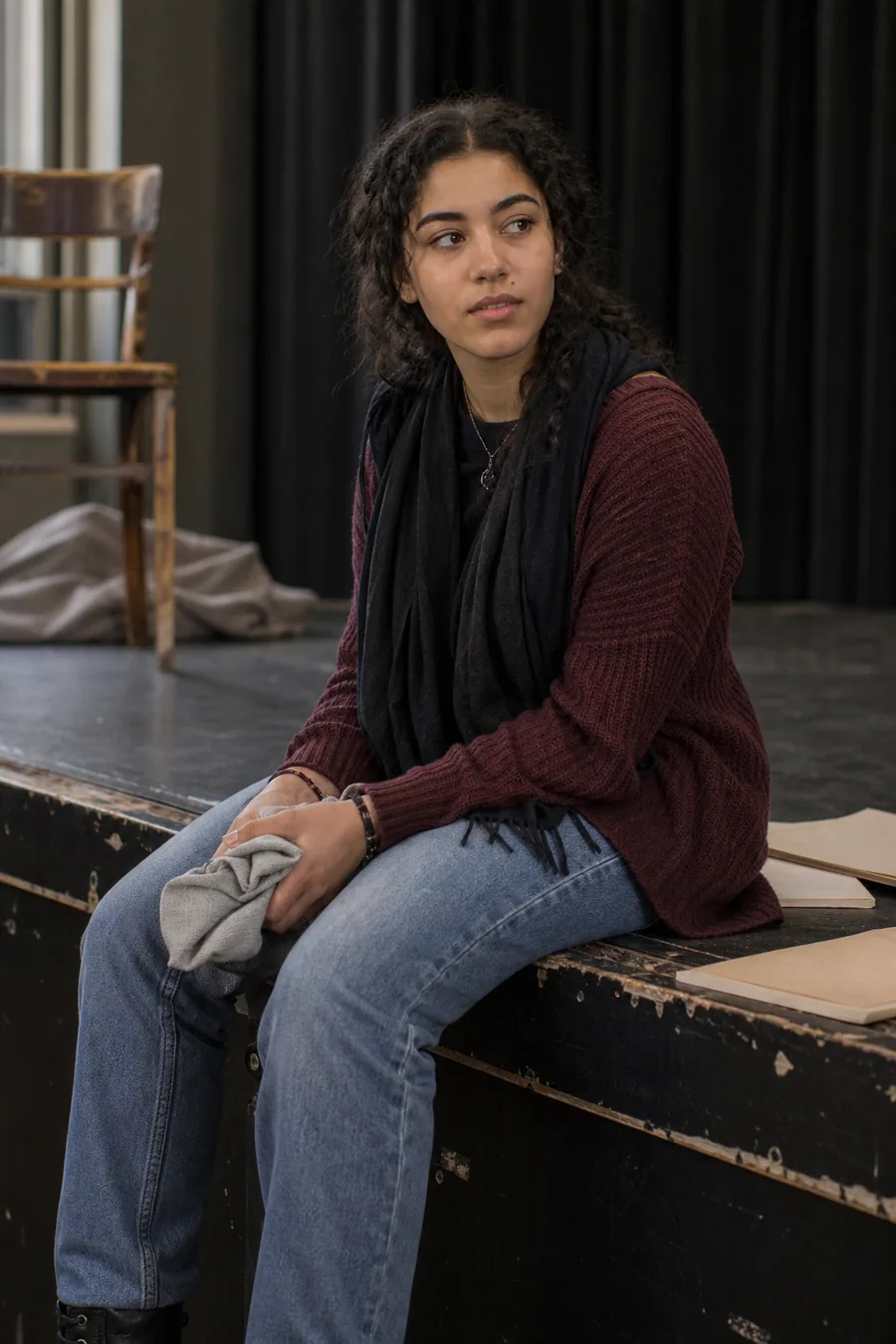
AI-generated representative image; it does not depict the client.
AT A GLANCE

The context behind the decisions.

Entry point
Grade 10 boarding-school admission
Background
French-Moroccan student attending a bilingual school near Paris
Academic direction
History, languages, theatre and comparative culture
Ordinary complication
English writing still developing, no singular “spike” and constant comparison with a high-achieving older sibling
Family consideration
A first extended separation from family and a complicated bilingual identity
Support emphasis
Independent voice, language confidence, school culture and family expectations
Acceptances
Groton School; Cate School; St. Andrew's School
Other result
Waitlisted at Phillips Exeter Academy
Final choice
St. Andrew's School
EXTENDED CASE ANALYSIS

A profile no sibling could supply

M.B.’s application became distinctive when it stopped borrowing her older brother’s model of achievement and allowed multilingual voice, backstage contribution, and historical curiosity to form their own pattern.

THE STARTING READ

Three languages, broad interests, borrowed measures of success

M.B. moved comfortably between French and Arabic at home and studied partly in English at school. She enjoyed history and theatre but did not have a single activity that dominated the file. Her older brother had attended a selective university after accumulating debate prizes, and relatives repeatedly advised her to reproduce his path. M.B. responded by listing activities she thought sounded similarly serious, even when they were not the commitments she valued most.

Her English essays were thoughtful but sometimes over-edited by teachers. The resulting prose was grammatically polished and emotionally distant. She needed an application process that improved clarity without erasing the rhythms of a multilingual writer.

THE CENTRAL DIAGNOSIS

Finding M.B. beneath comparison and editing

What the application already showed

  • Multilingual experience across French, Arabic, and English
  • Broad humanities curiosity
  • Meaningful backstage theatre and peer support

What it did not yet answer

  • Which choices reflected M.B. rather than sibling comparison?
  • Could the English become clearer without sounding adult-authored?
  • Which environment would feel supportive rather than performative?
THE INTELLECTUAL CENTER

Memory, invisible contribution, and an honest English voice

The questions below did not supply an admissions formula. They determined what evidence needed to be checked, which claims needed limits, and what the applicant still had to decide.

Who decides which version of a memory is true?

Two relatives' different memories showed M.B. that history can require listening to what each account preserves rather than selecting an easy winner.

What does contribution look like away from the stage?

Contribution away from the stage appeared in backstage theatre work and helping younger students rehearse, neither of which required a formal title.

What should editing preserve?

Editing needed to preserve the rhythms and choices of a multilingual student while correcting only what blocked meaning.

THE TURNING POINT

Two relatives remembered the same move differently.

The main essay developed from recording two relatives who remembered the same family move differently. M.B. began by trying to decide which account was correct and ended by noticing how memory protects different things. The piece connected history with listening without making family stories into academic research. Activity descriptions gave backstage work and peer support appropriate weight.

School research compared discussion culture, theatre participation, residential intimacy, language support and distance. M.B. prepared for interviews through conversations rather than scripts, practicing how to ask questions when she did not understand an idiom. Family meetings established that her school preference would not be ranked against her brother's experience.

SELECTING EVIDENCE

The facts stayed the same. Their hierarchy changed.

Evidence was made more precise, attributable, and useful. The goal was not to enlarge the record, but to stop one title, institution, hardship, or outcome from carrying more meaning than it could support.

Earlier presentation

Activities were selected to resemble her brother’s profile.

Stronger presentation

Backstage work, peer support, and family-history curiosity received appropriate weight.

Earlier presentation

English prose was polished into emotional distance.

Stronger presentation

Editing addressed meaning while preserving M.B.’s natural rhythm.

Earlier presentation

The absence of one spike felt like a deficit.

Stronger presentation

Voice, listening, and broad humanities interests supplied coherence.

APPLICATION CONTEXT

A multilingual student preparing for a first separation

M.B.'s main obstacle was not lack of material; it was permission to define success differently. She enjoyed backstage theatre work, oral-history conversations with relatives and helping younger students rehearse French presentations. None resembled her brother's achievements. Once the comparison was named, she could decide which activities mattered to her rather than which ones matched a family template.

Language feedback also required discipline. Correcting every unfamiliar construction would make the essays sound like a native adult writer. The goal was readable, precise English that remained plausibly hers. Some sentences were simplified, while culturally specific expressions were retained when their meaning was clear.

STUDENT OWNERSHIP

Independence remained visible in the work.

  • M.B. wrote the essays and decided which family stories could be used. Feedback corrected errors that obstructed meaning but did not replace her phrasing with an adult voice. No relative's story was presented without M.B.'s judgment about privacy.
OUTCOME & DECISION

Choosing the place where comparison could loosen

M.B. was admitted to Groton, Cate and St. Andrew's and waitlisted at Exeter. She chose St. Andrew's because its smaller all-boarding community and approach to discussion felt less performative to her. Groton and Cate offered different strengths, but St. Andrew's was the place where she could most clearly imagine building an identity not organized around comparison.

WHAT CHANGED

  • Activities chosen to resemble her brother's record lost priority.
  • Backstage work and peer support became visible forms of contribution.
  • English editing protected voice instead of maximizing polish.
  • The final school preference was judged against M.B.'s needs, not her brother's experience.

WHAT DID NOT CHANGE

  • M.B. retained broad interests rather than one dominant credential.
  • English remained one of several languages she used.
  • Family stories kept privacy limits and competing versions.
  • Her brother's achievements did not need to be diminished for hers to matter.
HOW THE FILE BECAME LEGIBLE

The reader’s understanding changed in stages.

This sequence describes what the revised evidence made easier to understand. It does not claim to reconstruct an admissions committee’s private deliberations.

Family comparison

A broad humanities student whose record looked less decorated than an older sibling's.

Authorship check

A multilingual writer whose heavily edited English had become less recognizably hers.

Memory and backstage work

A listener and supporter whose contribution did not require visible leadership.

Final match

A student choosing a close community in which she could grow on her own terms.

WHAT COULD HAVE WEAKENED THE CASE

The alternatives were plausible—and less useful.

Reproduce the older sibling's activity pattern

The file would contain respectable commitments without explaining what M.B. actually valued.

Polish every English sentence into native adult prose

Clarity would improve while authorship and emotional proximity disappeared.

Force one family account to be correct

A useful question about memory would collapse into an answer the evidence could not support.

Search for a last-minute spike

Broad, sustained interests would be disguised by an artificial centerpiece.

DECISION DISCIPLINE

Each stage used a different test.

DecisionHow it was tested
Which activities to featureChoose the commitments M.B. valued and could explain, not those that resembled her brother's.
How far to edit EnglishCorrect obstruction and ambiguity while retaining plausible multilingual expression.
How to use family memoryFocus on M.B.'s listening and interpretation while protecting other people's private details.
How to compare schoolsEvaluate discussion culture, theatre, language support, residence, and room for an independent identity.

WHAT THIS CASE SUPPORTS

  • M.B. could make independent choices about activities and school fit.
  • Her multilingual writing could be made clearer without being replaced.
  • She could examine competing accounts through careful listening.

WHAT IT CANNOT PROVE

  • That multilingual background created automatic distinctiveness.
  • That family memories constituted formal historical research.
  • That a smaller community would remove every comparison or language challenge.
QUESTIONS FOR A SIMILAR APPLICANT

Questions that belong only to this student

The profile shows how one applicant’s evidence and decisions were organized. It does not predict another person’s result or supply a story to copy.

  • Which commitment would you keep if no relative ever compared it with someone else's?
  • What do you contribute when an audience cannot see you?
  • Which unusual phrase is genuinely yours and still clear to a reader?
  • What family material may inform your thinking without entering the application?
  • Where could you build an identity without performing an established family role?
M.B. did not need to out-achieve her brother. She needed an application in which her own habits of listening, language, and contribution could be seen. Distinctiveness is not the same as a single spectacular credential. M.B.'s story became coherent through voice, curiosity and the choices she made once sibling comparison loosened. Careful language support strengthened the application without disguising that English was one of several languages she used.
CONTINUE EXPLORING
High School AdmissionsAll 40 client journeysAll student results
YOUR NEXT STEP

Your application should still sound and feel like your own.

We will listen carefully and tell you whether we believe Letrado is the right fit. If another resource would serve you better, we will be honest about that too.

See If We Are a Fit