SMALL BY DESIGN Deep care. Honest fit. Relationships that last. Why we stay small →
Menu
Request a Consultation
← All Master's Admissions journeys
ANONYMIZED CLIENT JOURNEY · M3

M.C.

Brazilian economics graduate / Economics master's / Good theory, limited research independence

M.C. had strong economics training and research exposure, but limited independent ownership and one weaker mathematics course. His materials became more credible by defining those boundaries and clarifying why further training was necessary. Admitted to Oxford, Cambridge and Columbia, he chose Oxford for its two-year preparation and dissertation structure.

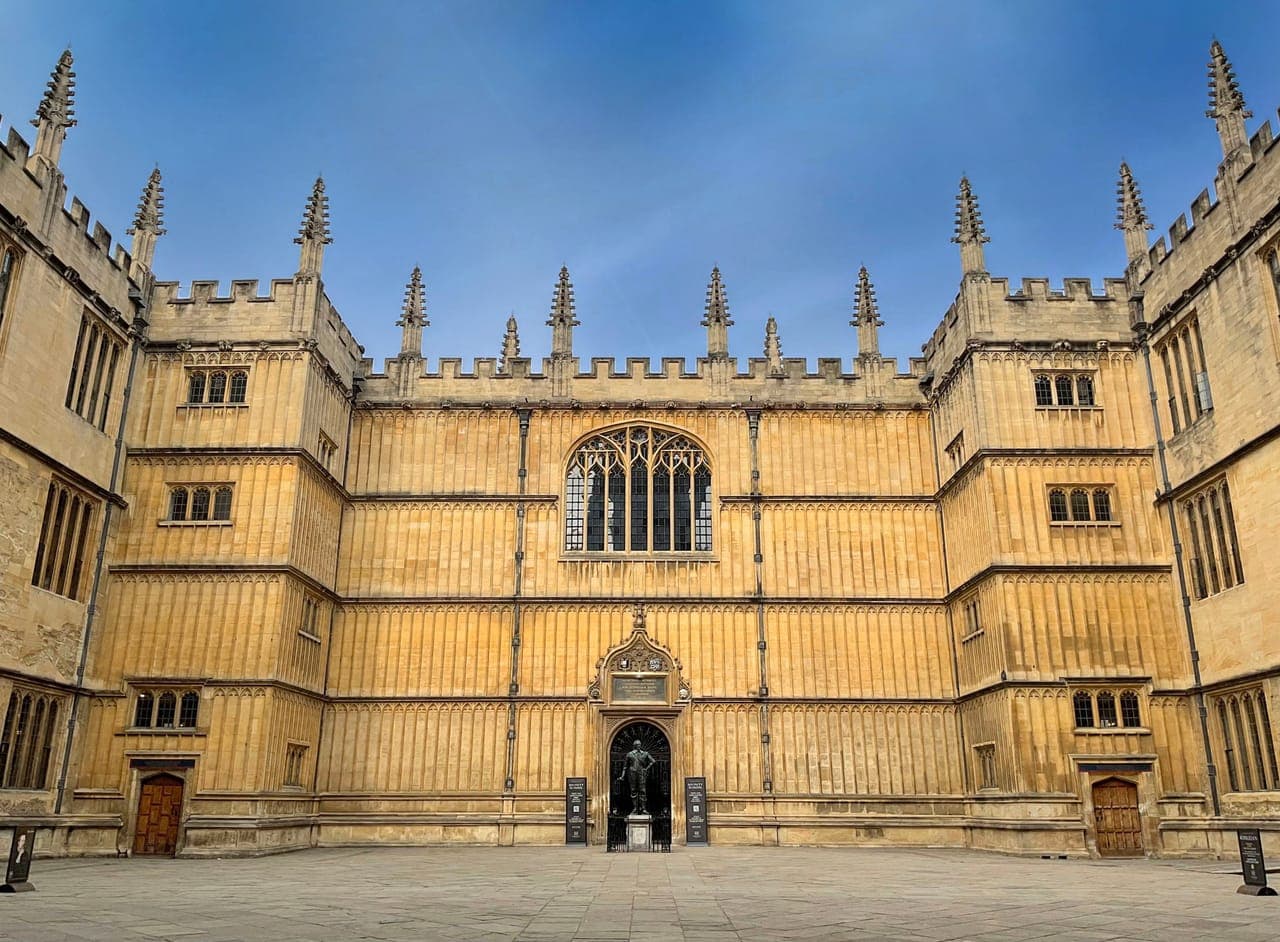
AI-generated representative image; it does not depict the client.
AT A GLANCE

The context behind the decisions.

Entry point
Master's admission directly after undergraduate study and one research-assistant year
Background
Economics degree in Brazil; part-time research assistant at a university center
Academic direction
Applied microeconomics, labor markets and doctoral preparation
Ordinary complication
Strong theory grades, one weaker real-analysis course and an assistantship centered on data cleaning rather than independent research
Support emphasis
Academic candor, research-purpose clarity, writing sample selection and program comparison
Acceptances
University of Oxford MPhil in Economics; University of Cambridge MPhil in Economics; Columbia University MA in Economics
Other result
Rejected by the London School of Economics MSc Economics
Final choice
University of Oxford MPhil in Economics
EXTENDED CASE ANALYSIS

Research maturity began with knowing whose work was whose.

M.C.’s application became stronger when it stopped treating research proximity as research ownership and presented the master’s as a serious test of doctoral study.

THE STARTING READ

Strong theory beside supervised research

M.C. wanted eventually to pursue doctoral research, but his early statement claimed a mature research agenda he had not yet earned. His assistantship involved cleaning survey data, producing tables and checking citations. Those tasks exposed him to serious research, yet he had not designed the study or authored its conclusions. A lower grade in real analysis also raised a legitimate question about mathematical preparation.

The application needed to show readiness and curiosity without converting proximity to research into ownership of it.

THE CENTRAL DIAGNOSIS

The gap between proximity and independence

What the application already showed

  • Strong economics theory preparation
  • Direct exposure to serious research practice
  • A coherent interest in applied microeconomics and labor markets

What it did not yet answer

  • How much of the research agenda was genuinely his?
  • Did the real-analysis result indicate a material gap?
  • Was doctoral study a tested goal or an aspiration?
THE INTELLECTUAL CENTER

Four attribution questions and one open career direction

The questions below did not supply an admissions formula. They determined what evidence needed to be checked, which claims needed limits, and what the applicant still had to decide.

Who selected the question and method?

Separating who chose the question and method prevented M.C.’s assistantship from implying ownership of the study.

Which claims could M.C. defend independently?

Asking what he could defend alone clarified the difference between producing tables and interpreting a research result.

What evidence would make doctoral study more than an early identity?

A dissertation and demanding training sequence gave him a concrete way to test whether doctoral research should become a commitment.

THE TURNING POINT

Four attribution questions changed the research statement.

M.C. mapped each technical course and identified gaps. He completed additional proof-based exercises with a faculty member and used the application to explain preparation rather than promise that one short course erased the weaker grade. His research statement distinguished observed questions from completed findings and explained why labor-market measurement interested him.

The writing sample came from his undergraduate thesis after a careful audit of supervision and original contribution. Revisions improved exposition but did not alter results or add claims. Program research compared mathematical intensity, dissertation expectations, cohort structure, doctoral progression and cost. A decision framework also considered the value of two years of training against shorter alternatives.
SELECTING EVIDENCE

The facts stayed the same. Their hierarchy changed.

Evidence was made more precise, attributable, and useful. The goal was not to enlarge the record, but to stop one title, institution, hardship, or outcome from carrying more meaning than it could support.

Earlier presentation

Assistantship language implied research ownership.

Stronger presentation

Data cleaning, tables, citations, and observed questions were attributed precisely.

Earlier presentation

A mature research agenda appeared settled.

Stronger presentation

A focused direction became something to test and deepen.

Earlier presentation

The weaker mathematics course was minimized.

Stronger presentation

Additional proof-based work showed preparation without erasing it.

APPLICATION CONTEXT

Preparing for doctoral work without pretending certainty

M.C. understood enough research language to sound more advanced than he was. That made the early draft dangerous: every sentence was plausible, but the combined picture implied a level of independence his supervisor would not recognize. Revising the statement meant repeatedly asking who chose the question, who selected the method, who interpreted the results and what M.C. could defend without the research team beside him.

He also had to decide whether a doctoral path was an aspiration or a promise. He enjoyed research but had not yet experienced the full cycle of designing and defending an independent project. The final materials presented doctoral study as a direction to test through demanding master's training, which was both more honest and more intellectually mature.

STUDENT OWNERSHIP

Independence remained visible in the work.

  • M.C. wrote all academic materials and stated precisely which research tasks were his. Faculty recommenders described the work they had supervised. Guidance focused on logic, evidence and how admissions readers might interpret gaps.
OUTCOME & DECISION

Why two years of training earned its place

M.C. received offers from Oxford, Cambridge and Columbia and a denial from LSE. He selected Oxford's two-year MPhil for its training sequence and dissertation opportunity. The LSE denial was not rationalized; the offers were assessed on their own academic and financial terms.

WHAT CHANGED

  • A polished research agenda became a focused direction still being tested.
  • The assistantship was described through actual tasks and supervision.
  • Program length became part of the academic argument rather than a logistical detail.

WHAT DID NOT CHANGE

  • M.C. had not designed the assistantship study.
  • The lower real-analysis grade remained in the transcript.
  • Doctoral study remained possible rather than predetermined.
HOW THE FILE BECAME LEGIBLE

The reader’s understanding changed in stages.

This sequence describes what the revised evidence made easier to understand. It does not claim to reconstruct an admissions committee’s private deliberations.

Academic read

A strong economics student with one visible mathematics concern.

Research read

Meaningful exposure appears, but independent ownership remains limited.

Boundary read

Precise attribution makes the record more credible and the training need clearer.

Program read

Oxford’s sequence and dissertation support a genuine test of doctoral readiness.

WHAT COULD HAVE WEAKENED THE CASE

The alternatives were plausible—and less useful.

Claim a mature research agenda

The statement could outrun both the assistantship and recommender evidence.

Minimize the mathematics concern

Readers would be left to interpret the gap without current evidence or reflection.

Choose a shorter program

M.C. could lose the longer training sequence and independent dissertation he specifically needed.

Present a Ph.D. as certain

The degree rationale would become less honest about his limited experience of independent research.

DECISION DISCIPLINE

Each stage used a different test.

DecisionHow it was tested
How to describe the assistantshipAttribute the question, method, analysis, and writing separately.
Which writing sample to useChoose the work with the clearest original contribution and supervision boundary.
How to address mathematicsShow current preparation without claiming one course resolved everything.
Which master’s to choosePrioritize training sequence and dissertation value against time and cost.

WHAT THIS CASE SUPPORTS

  • M.C. understood the discipline required to support serious research.
  • His thesis provided a bounded example of original academic work.
  • He had a coherent interest in applied microeconomics and labor markets.

WHAT IT CANNOT PROVE

  • That he authored the research center’s findings.
  • That additional exercises erased the real-analysis result.
  • That he was already ready to define a doctoral agenda independently.
QUESTIONS FOR A SIMILAR APPLICANT

Questions for an emerging researcher

The profile shows how one applicant’s evidence and decisions were organized. It does not predict another person’s result or supply a story to copy.

  • Which page of the application shows your strongest independent reasoning?
  • Could a supervisor recognize every boundary in your description?
  • What would a dissertation allow you to learn about yourself as a researcher?
  • Is the longer program buying training you can name or merely additional time?
M.C.’s file gained maturity by making room for supervision, incomplete preparation, and genuine testing rather than presenting research development as already finished. Research exposure is not the same as research ownership. M.C.'s materials became stronger when assistance, supervision and independent work were separated. A master's served as a place to test and deepen a doctoral direction rather than as proof that the direction was already settled.
CONTINUE EXPLORING
Master's AdmissionsAll 40 client journeysAll student results
YOUR NEXT STEP

Your application should still sound and feel like your own.

We will listen carefully and tell you whether we believe Letrado is the right fit. If another resource would serve you better, we will be honest about that too.

See If We Are a Fit