SMALL BY DESIGN Deep care. Honest fit. Relationships that last. Why we stay small →
Menu
Request a Consultation
← All Master's Admissions journeys
ANONYMIZED CLIENT JOURNEY · M4

L.W.

U.S. public-school teacher / Learning design and education technology / Experience richer than the proposed solution

L.W. brought five years of teaching and practical classroom materials, but no startup record and no reason to pretend technology was always the answer. Her application emphasized reflective design and program differences. With offers from Harvard, Stanford and Penn, she chose Stanford's Learning Design and Technology MS.

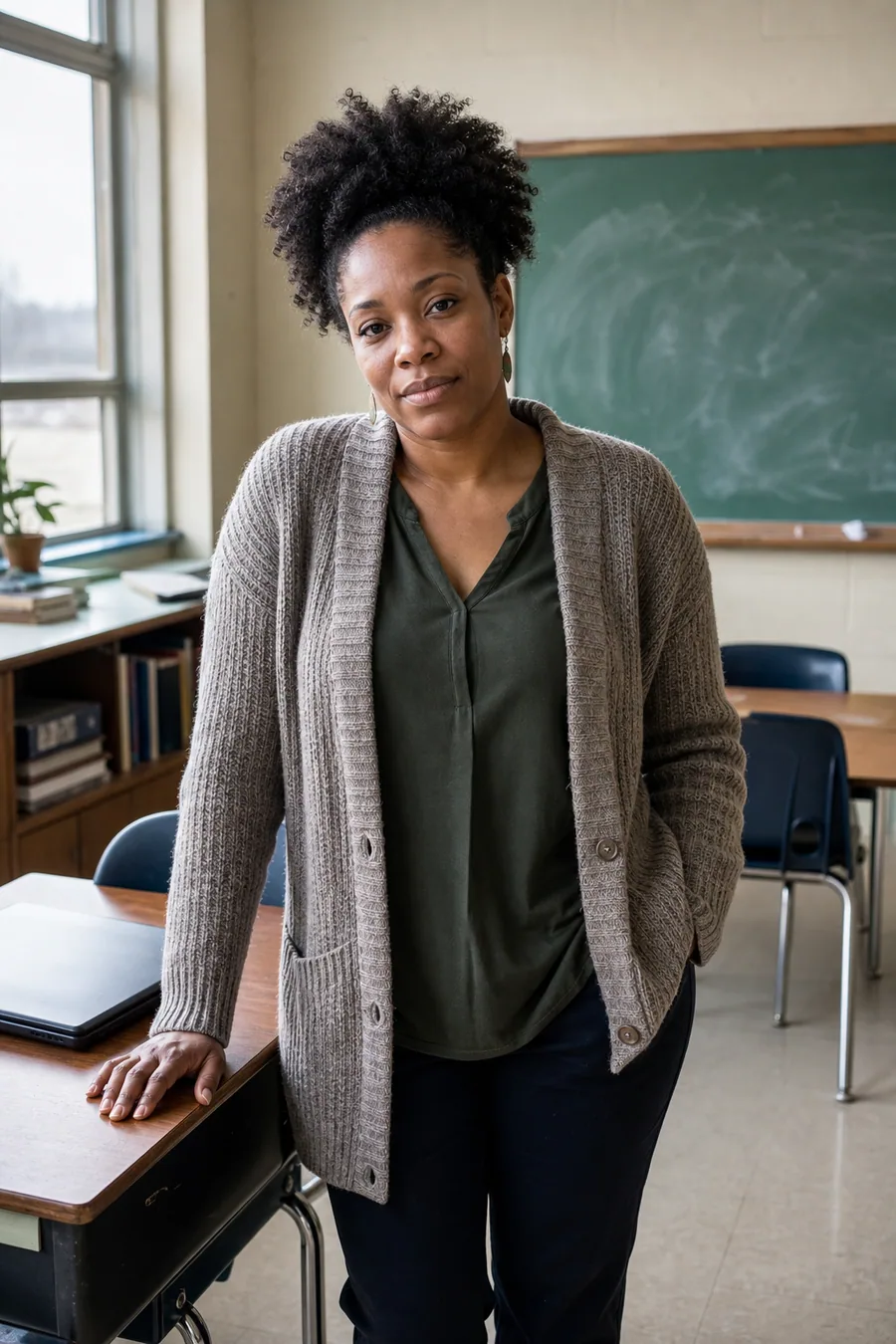
AI-generated representative image; it does not depict the client.
AT A GLANCE

The context behind the decisions.

Entry point
Master's admission after five years of classroom teaching
Background
Middle-school mathematics teacher in a district serving rural communities
Academic direction
Learning design, educational technology and teacher-facing tools
Ordinary complication
No startup experience, little formal design training and an early tendency to propose technology as the answer to every classroom problem
Support emphasis
Reflective practice, program differences, portfolio boundaries and career realism
Acceptances
Harvard Ed.M. in Learning Design, Innovation, and Technology; Stanford MS in Learning Design and Technology; Penn M.S.Ed. in Education Entrepreneurship
Other result
Rejected by Columbia Teachers College
Final choice
Stanford MS in Learning Design and Technology
EXTENDED CASE ANALYSIS

The better application began when the proposed solution became questionable.

L.W.’s classroom experience gave her problems worth studying, not proof that her first technology solution was correct. Her strongest application showed how she changed her interpretation when a digital tool failed students.

THE STARTING READ

Five years of teaching before formal design training

L.W. had adapted mathematics lessons for classrooms with inconsistent internet access and wide variation in reading level. She had created practical teacher materials, but no commercial product and no formal user-research credential. Her first essay proposed an ambitious adaptive-learning platform before establishing whether software was the right response to the problem she had observed.

She also treated three distinct degree models as interchangeable. A residential design program, a broader education degree and an executive entrepreneurship format would lead to different daily experiences and career options.

THE CENTRAL DIAGNOSIS

When experience produces assumptions as well as insight

What the application already showed

  • Five years of direct classroom practice
  • Experience adapting instruction under access constraints
  • A body of teacher-created materials and iterations

What it did not yet answer

  • Was technology the answer or merely the first idea?
  • Could teaching artifacts form an honest design portfolio?
  • Which degree model matched the transition she wanted?
THE INTELLECTUAL CENTER

What students’ behavior changed about the problem

The questions below did not supply an admissions formula. They determined what evidence needed to be checked, which claims needed limits, and what the applicant still had to decide.

What evidence shows the problem is the one L.W. first named?

Reviewing the abandoned practice tool tested whether low participation really reflected weak student motivation.

What did students’ actual use reveal?

Students’ difficulty with feedback and connectivity showed how actual use could contradict an educator’s first explanation.

Which program can test the move from teaching into learning design?

Comparing studios, learning science, and internships clarified which program could turn classroom observation into design practice.

THE TURNING POINT

The abandoned tool mattered more than the proposed platform.

L.W. returned to a smaller question: why students stopped using a digital practice tool after the first week. She documented classroom observations, limits in the available data and changes she made to instructions and feedback. A simple portfolio included lesson iterations and reflection; it did not claim product-market validation.

Application work compared learning-science depth, design studios, entrepreneurship content, modality, internship access and the feasibility of returning to school full-time. Her essays showed that technology can create new barriers as well as solve problems. Career planning considered instructional design, curriculum development and education product roles without promising an immediate founder trajectory.

SELECTING EVIDENCE

The facts stayed the same. Their hierarchy changed.

Evidence was made more precise, attributable, and useful. The goal was not to enlarge the record, but to stop one title, institution, hardship, or outcome from carrying more meaning than it could support.

Earlier presentation

An ambitious future platform carried the essay.

Stronger presentation

A real failed tool and revised interpretation carried it.

Earlier presentation

Low use was described as a motivation problem.

Stronger presentation

Feedback design and connectivity became part of the diagnosis.

Earlier presentation

Several education degrees appeared interchangeable.

Stronger presentation

Learning science, studios, modality, and project structure differentiated them.

APPLICATION CONTEXT

Moving out of the classroom without leaving education

L.W. had a teacher's instinct to keep explaining until a student understood. In product and design work, however, more explanation can conceal a poorly designed tool. Reviewing the abandoned practice platform forced her to see that she had initially blamed low engagement on students' motivation rather than on confusing feedback and unreliable connectivity. That change in interpretation became more important than presenting a successful intervention.

The decision also raised a professional identity question. L.W. did not want to imply that leaving the classroom meant leaving education, nor did she want to promise she would return to the same role. Her goals needed room for exploration while still explaining why graduate study, and why now, made sense.

STUDENT OWNERSHIP

Independence remained visible in the work.

  • L.W. chose the classroom example, removed student-identifying details and created the portfolio. Feedback helped her ask better design questions and distinguish observation from evidence of impact. She remained responsible for every application and decision.
OUTCOME & DECISION

Why a design studio beat a broader promise

L.W. was admitted to Harvard, Stanford and Penn and denied by Columbia Teachers College. She selected Stanford's Learning Design and Technology MS for its design emphasis and project structure. Penn's hybrid executive format would have allowed continued work, while Harvard offered broader flexibility; the final choice reflected the kind of practice she wanted most.

WHAT CHANGED

  • An ambitious adaptive platform gave way to a smaller, tested question.
  • A portfolio of finished materials became a record of iterations and reflection.
  • The career path widened to several education roles without becoming vague.

WHAT DID NOT CHANGE

  • L.W. had no startup or product-market record.
  • The practice tool did not produce a claimed impact result.
  • Technology remained one possible response rather than the answer by default.
HOW THE FILE BECAME LEGIBLE

The reader’s understanding changed in stages.

This sequence describes what the revised evidence made easier to understand. It does not claim to reconstruct an admissions committee’s private deliberations.

Experience read

A thoughtful teacher with extensive practical knowledge.

Proposal read

The first technology solution appears larger than the evidence behind it.

Revision read

A failed tool reveals her ability to observe, question, and redesign.

Program read

Stanford’s design emphasis fits the practice she most wants to develop.

WHAT COULD HAVE WEAKENED THE CASE

The alternatives were plausible—and less useful.

Lead with the future platform

The application would reward scale before demonstrating diagnosis.

Treat low use as low motivation

The design and connectivity failures would remain unexamined.

Choose the format that preserves employment

She could retain income but receive less immersive design practice.

Promise entrepreneurship

A speculative identity would replace a credible transition into learning design.

DECISION DISCIPLINE

Each stage used a different test.

DecisionHow it was tested
Which problem to featureUse the observed failure whose first explanation changed.
What belongs in the portfolioShow iterations, constraints, and reflection without claiming market validation.
How specific the career goal should beName the family of roles and the capabilities she needs to test.
Which degree format fitsCompare learning science, studio depth, modality, internships, and the cost of leaving work.

WHAT THIS CASE SUPPORTS

  • L.W. could revisit an explanation after observing student behavior.
  • Her classroom experience generated useful design questions.
  • She understood that access constraints were part of product performance.

WHAT IT CANNOT PROVE

  • That she had built a successful education product.
  • That software was the correct response to the classroom problem.
  • That leaving teaching guaranteed a product or founder career.
QUESTIONS FOR A SIMILAR APPLICANT

A problem-first check for education applicants

The profile shows how one applicant’s evidence and decisions were organized. It does not predict another person’s result or supply a story to copy.

  • What observation would make you abandon your preferred solution?
  • Does the portfolio reveal revision or only finished work?
  • Which future role can you test during the program rather than promise now?
  • What would be lost by choosing a format that lets you remain employed?
L.W.’s growth came from making the diagnosis smaller, more honest, and more useful—not from making the proposed product larger. Experience can make an applicant more useful without making the proposed solution correct. L.W.'s strongest growth came from recognizing when technology and explanation had failed students. Comparing program formats then turned that reflection into a grounded educational and career choice.
CONTINUE EXPLORING
Master's AdmissionsAll 40 client journeysAll student results
YOUR NEXT STEP

Your application should still sound and feel like your own.

We will listen carefully and tell you whether we believe Letrado is the right fit. If another resource would serve you better, we will be honest about that too.

See If We Are a Fit