SMALL BY DESIGN Every student gets our full attention. Read our story →
All MBA guides

INDIAN SCHOOL OF BUSINESS · PGP GUIDE

Applying to ISB’s one-year PGP? Count your full-time work first: you need at least 24 months, and you’ll live on campus all year.

The Post Graduate Programme in Management (PGP) at the Indian School of Business (ISB) is a full-time, 12-month program in Hyderabad or Mohali. ISB assigns your campus. Start here to understand the program and prepare each part of your application.

Class of 2028

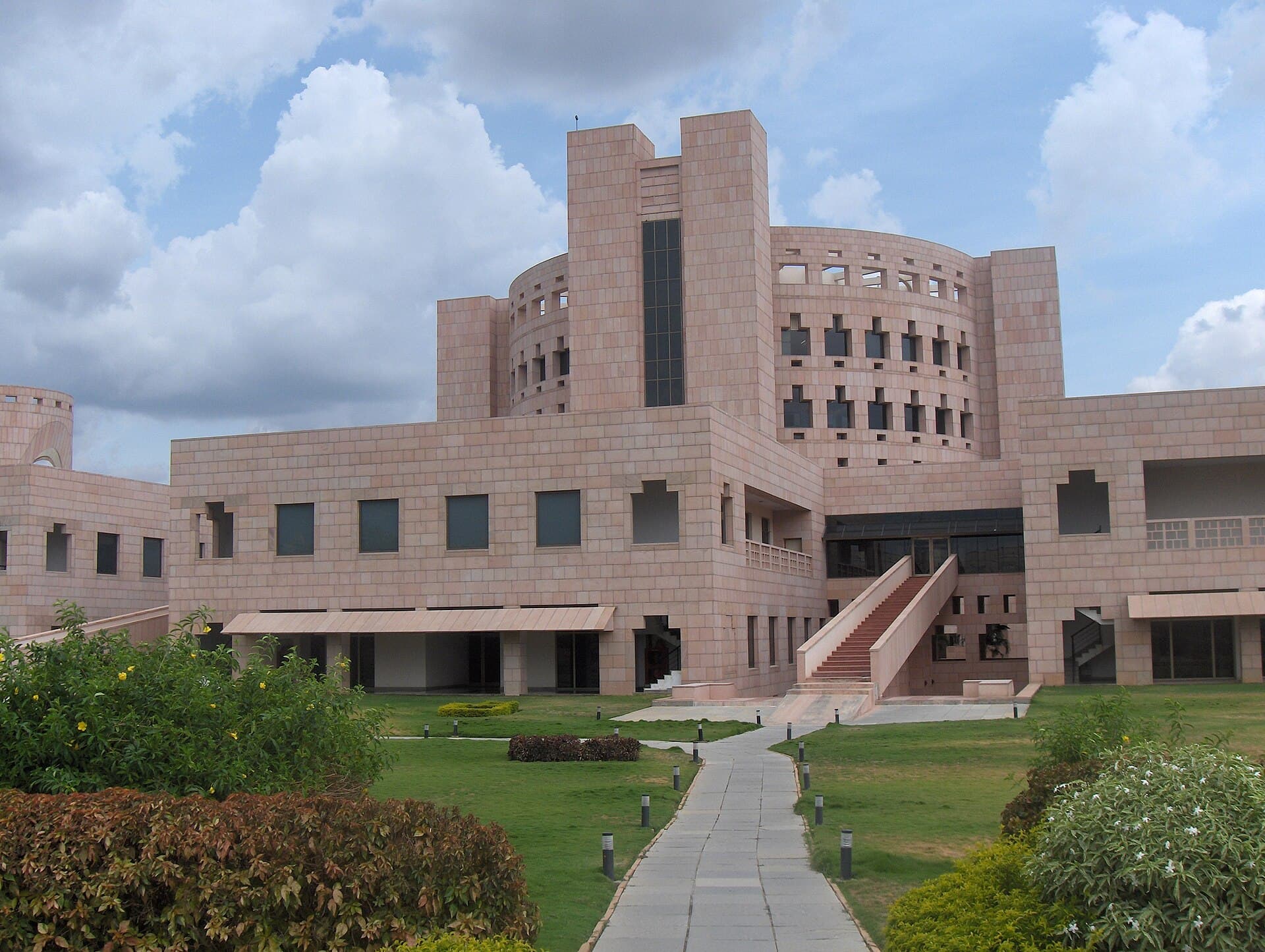
Pink sandstone buildings with a round tower and square windows above a green lawn at the Indian School of Business in Hyderabad
The Indian School of Business’s Hyderabad campus · Photo: Bindaas Madhavi / Wikimedia Commons, CC BY 2.0. Resized and cropped.

GET TO KNOW THE PROGRAM

Take the core in your first three terms, then build the rest of the year from electives.

You finish the PGP with a certificate. ISB says the program is neither a degree nor a diploma. If an employer or a later program will need a recognized degree, check before you apply.

ORIENTATION AND TERM 1

Start with accounting, economics, and statistics.

Orientation covers verbal communication. Term 1 brings financial accounting, economics, statistics, and a course on teams.

TERMS 2 AND 3

Finish the core, choosing part of it yourself.

In these terms, the flex-core options, the part of the core you pick, cover business and society; frontier technologies; macroeconomic uncertainty; and managerial accounting and decision-making. The core totals 14 credits: 10 required courses and 4 flex-core options you pick.

FROM TERM 4

Choose your electives.

You need 18 elective credits, 4 of them from one-week block courses. You can also bid for an exchange at a partner school.

The PGP has no summer internship.

For hands-on work, the Experiential Learning Programme (ELP) puts teams of five on live consulting projects, for credit, with faculty and industry mentors.

Electives, exchanges, and how you’re taught

How you’re taught: Through cases, simulations, debates, field courses, and talks by guest speakers.

Exchanges: ISB has at least 57 partner schools. To go, you need a CGPA (cumulative grade point average) above 2.5, no F grade for academics or attendance, and no honor-code violation. You bid for up to three exchange programs.

When you’d go: An exchange usually takes one or two elective terms, mostly Terms 7 and 8, sometimes 5 and 6. If it overlaps campus recruiting, you may need to come back or recruit remotely.

What an exchange costs: You pay no tuition to the host school, but you pay your own visa, travel, and living costs. ISB puts living and travel at around ₹5 lakh (a lakh is 1,00,000 rupees).

Campus life, housing, and health care

Student life: The Graduate Student Board represents students and coordinates clubs and events. Both campuses have sports and recreation facilities.

With a partner or children: Ask ISB about family housing, schools, and childcare before you accept your offer.

Health care: You pay a hospitalization insurance premium with your fees, at its actual cost. Each campus has an infirmary.

What the PGP certificate is

Recognition: ISB says it hasn’t sought recognition for the PGP from the AICTE (All India Council for Technical Education) or the UGC (University Grants Commission), India’s national recognition bodies.

Accreditation: ISB holds AACSB, AMBA, and EQUIS accreditation, from three international bodies that accredit business schools.

Visas for Indian citizens abroad, Overseas Citizen of India cardholders, and foreign nationals

Indian citizens: With an Indian passport, you don’t need an Indian visa, wherever you live. ISB applies the same criteria and fees to Indian and foreign applicants, with no quota for NRIs (Non-Resident Indians, Indian citizens who live abroad).

OCI cardholders: Overseas Citizen of India (OCI) status is held by foreign nationals, so it isn’t Indian citizenship. Your OCI card and foreign passport take the place of a visa, and OCI status lets you enter India as often as you like, for any purpose except a few, such as research, that need special permission. So ordinary study generally needs no separate student visa, but confirm your own case with ISB.

Other foreign nationals: India’s student visa needs proof of your admission and of your funds, for full-time study on campus. Before you accept, ask ISB which visa it supports for the PGP and what documents it will give you.

Registering: On a visa for the full year, you’ll usually need to register online with India’s immigration authorities within 14 days of arriving, but the conditions on your visa decide. OCI cardholders don’t register, but if you live in India, you report a change of permanent address or occupation online.

Working: Under India’s 2020 visa guidance, a student visa allows the training, projects, or internships your course requires, without special permission. That isn’t general permission to work. If you’re on a student visa and want to work in India after the PGP, you’d generally need an employment visa. It needs proof of a job and its terms, so don’t count on staying to look for work.

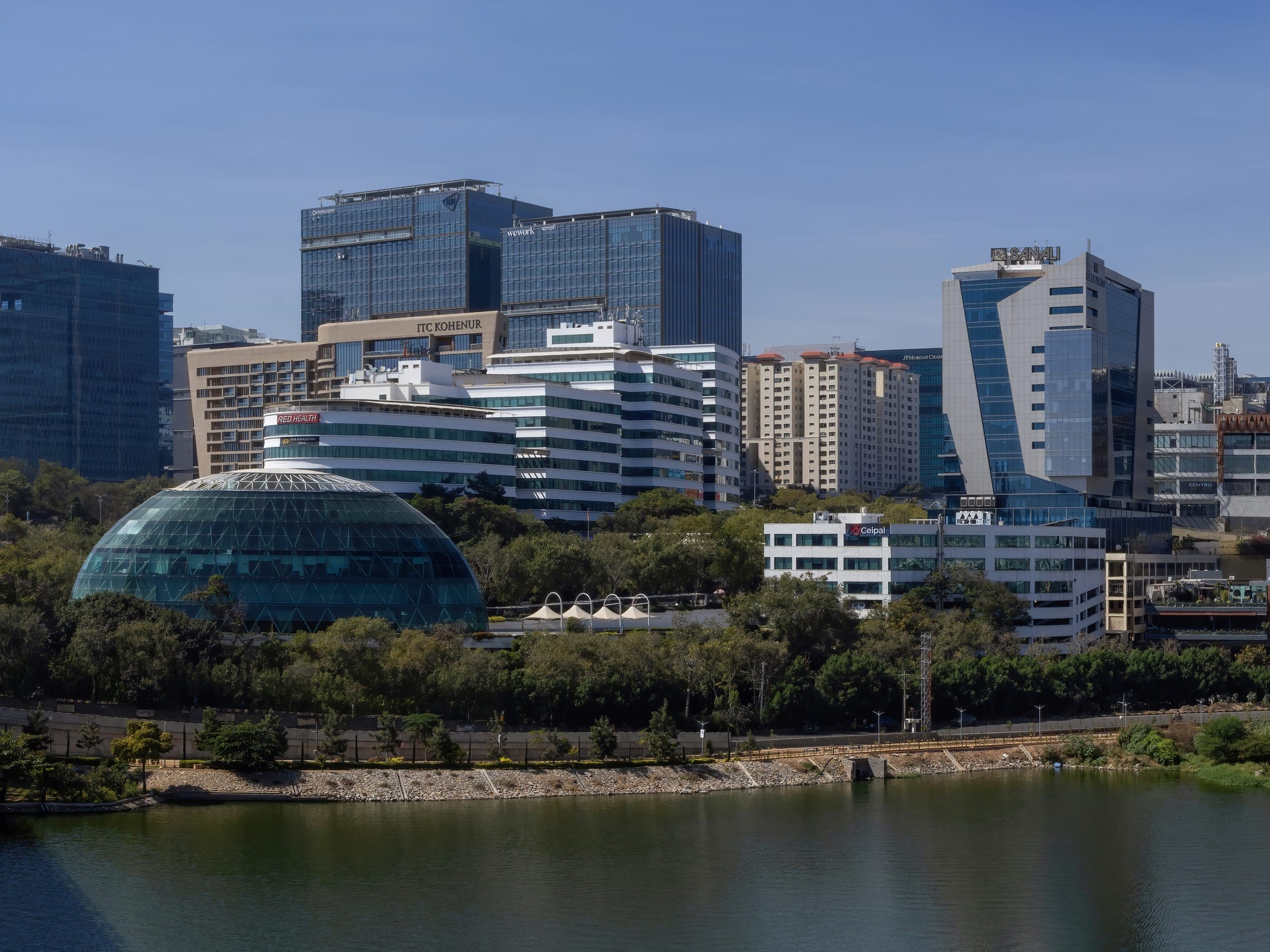
Glass office towers and a domed building on the shore of a lake in Hyderabad
Durgam Cheruvu lake and the offices of HITEC City, Hyderabad · Photo: iMahesh / Wikimedia Commons, CC BY-SA 4.0. Resized and cropped.

UNDERSTAND WHAT ISB LOOKS FOR

ISB’s three criteria are analytical thinking, leadership potential, and a commitment to growth.

ISB looks for them across your academics, test scores, work, essays, and achievements. It also requires at least 24 months of full-time work, counted to March 31 of the year you join.

ANALYTICAL THINKING

Show you’re ready for a quantitative first term.

ISB reads your grades and your GMAT or GRE score, with no minimum for either. Three-year bachelor’s degrees are accepted.

Letrado’s adviceIf your degree was light on numbers, let your test’s quantitative section, or a recent course in accounting or statistics, show you’re ready for Term 1.
DEMONSTRATED LEADERSHIP POTENTIAL

Show where you’ve already led.

ISB looks for leadership you’ve demonstrated, and one of your two required essays is about it.

Letrado’s adviceChoose one moment when people changed course because of something you did, and tell it in the order it happened.

COMMITMENT TO GROWTH

Show what you’re still learning.

The other required essay asks which intellectual experiences shaped your learning and your choice of an MBA.

Letrado’s adviceName a skill your work hasn’t given you yet, and the ISB course or project where you’d build it.

Work experience, and ISB’s program for younger applicants

WHAT ISB DESCRIBES

The PGP asks for at least 24 months of full-time work. For less, ISB has a separate 20-month program for young leaders.

PGP

At least 24 months of full-time work. 12 months, at the campus ISB assigns. No summer internship.

PGP YL (Young Leaders)

Up to 24 months of work, including new graduates. 20 months, in Hyderabad. A required summer internship in the first year.

For the PGP, ISB counts your full-time work up to March 31 of the year you join. Part-time work doesn’t count, and neither does CA articleship, the practical training for chartered accountants. Documented full-time work in a family business can, and so can military service.

The PGP YL, or Post Graduate Programme in Management for Young Leaders, is a separate residential program with its own application, fees, and essays. It ends in a completion certificate, not a master’s degree, and it accepts the GMAT, the GRE, or the CAT (Common Admission Test).

For the PGP YL’s Class of 2027–29, Round 1 closes at 23:59 IST (India Standard Time) on December 20, 2026, and Round 2’s deadline is February 15, 2027.

The Class of 2027 in numbers

CLASS OF 2027

The Class of 2027 had worked for 2 to 18 years before ISB, and 4.10 years on average.

26average age, from 21 to 42
46%women
4.10 yearsaverage work experience
675median GMAT Focus Edition score
723median on the previous GMAT edition
325median GRE score, Verbal and Quantitative combined

On the GMAT Focus Edition, the current version, scored from 205 to 805, the class averaged 672, with a range of 575 to 795. On the previous edition, scored from 200 to 800, it averaged 720, with a range of 640 to 780. GRE scores averaged 325, with a range of 309 to 337.

Students came from at least 12 industries and 15 functions. The largest group, 38%, came from IT-enabled services, professional services, and research and development. Next, at 21%, came banking, financial services, and insurance.

These are the fields students worked in before ISB, not where they went afterward.

How the interview works

WHAT ISB DESCRIBES

A panel interview of about 30 minutes, by invitation, with two essays written on the spot.

Within 20 days

ISB normally verifies your application

3 to 7 days

Notice before your interview, if you’re invited

About 30 min

The panel interview alone. Ask ISB how long the two essays take.

The panel can include faculty, alumni, and senior staff. You can say whether you’d rather interview in person or remotely, but ISB decides the format. There’s no group discussion.

If verification turns up a missing or mismatched document, you have 3 days to fix it.

Each round’s interview weeks are shown with the deadlines below.

Your one recommendation, and AI

WHAT ISB DESCRIBES

One recommendation, online, ideally from someone who has seen your work recently.

ISB prefers a professional who has watched you work recently. Enter their name, phone number, and official email in the application, and ISB sends them a link to the evaluation.

If you work in your family’s business, your recommender should be a professional contact, such as a client or a vendor, and not a friend or relative.

Job offers for ISB’s Class of 2026

CLASS OF 2026

The Class of 2026’s 808 graduates received 1,117 offers, 30 of them international.

808graduates
1,117job offers
30international offers, up from 26 in 2025
25first-time recruiters
67%changed industry
69%changed function

ISB puts the class’s average compensation at ₹37.29 lakh a year, and it talks about that pay as CTC (cost to company): an employer’s total cost for a role, which isn’t the same as base pay.

Consulting and technology firms led hiring, along with banks, financial services firms, and insurers. Accenture made more than 100 offers and Mastercard more than 40, and recruiters included McKinsey, BCG, Bain, Deloitte, Amazon, and Google.

ISB’s Career Advancement and Professional Development team offers one-to-one coaching and mentoring by alumni and industry professionals. It also helps with international résumés, interviews, and research. Campus recruiting usually starts in November or December, with some international firms from October, and runs through March.

A graduate can hold more than one offer, so 1,117 offers isn’t the number of graduates who found jobs. ISB doesn’t guarantee placement, and these are one class’s results.

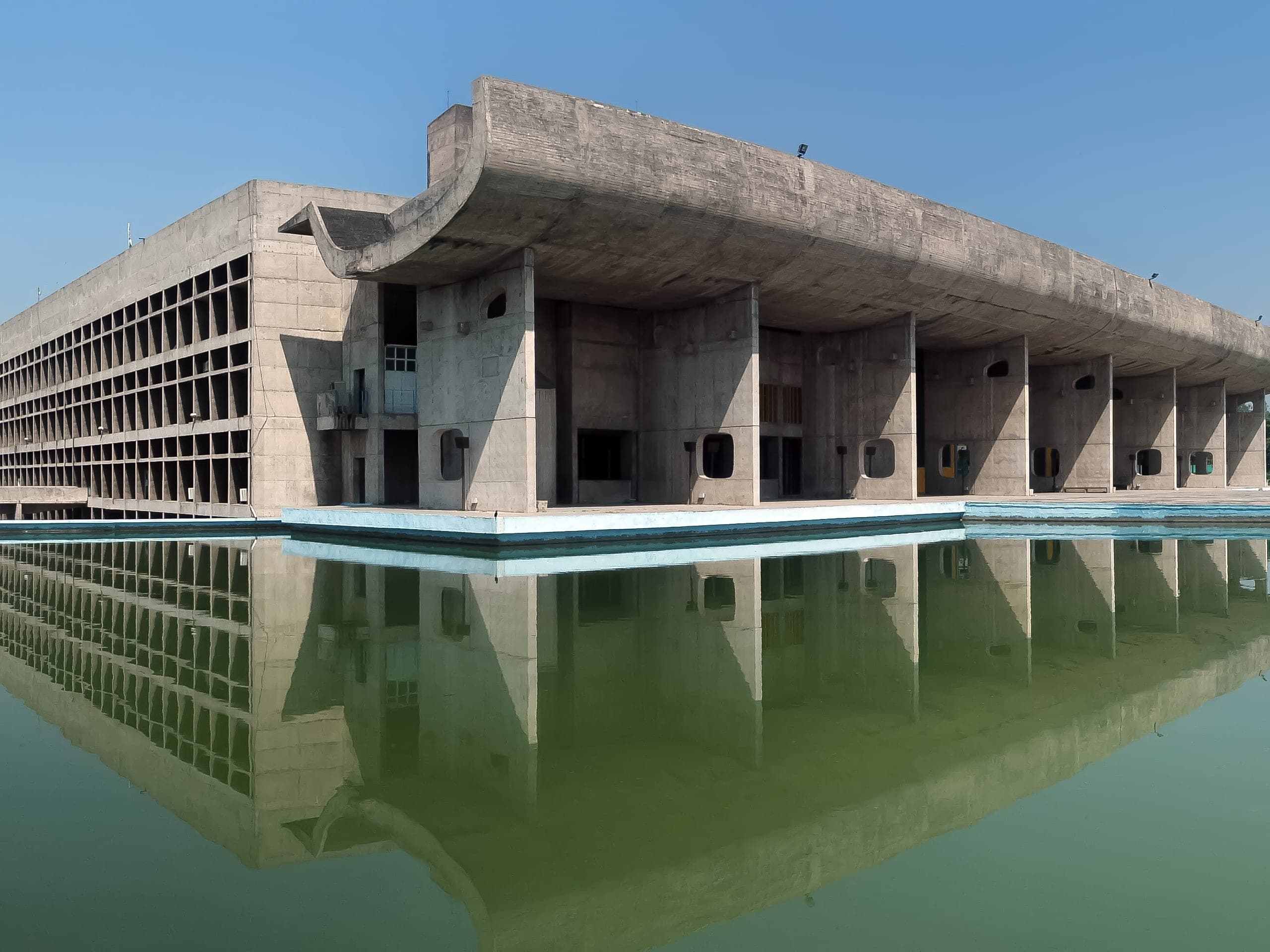
A concrete parliament building with a sweeping curved roof, reflected in a long pool
Le Corbusier’s Palace of Assembly in Chandigarh, the city beside Mohali · Photo: duncid / Wikimedia Commons, CC BY-SA 2.0. Resized and cropped.

PLAN THE APPLICATION

For the Class of 2028, Round 2 closes on December 6, 2026, and the last deadline, Round 3, is January 17, 2027.

ISB has three rounds for the Class of 2028, the class that studies in 2027–28. The Round 1 deadline was September 20, 2026, and ISB considers scholarships in every round.

Round 1

Sep 20, 2026
Interviews
Week 2 of Oct to week 2 of Dec 2026
Decisions
End of Dec 2026

Round 2

Dec 6, 2026
Interviews
Week 4 of Dec 2026 to week 1 of Feb 2027
Decisions
Mid-Feb 2027

Round 3

Jan 17, 2027
Interviews
Weeks 1 to 4 of Feb 2027
Decisions
Mid-Mar 2027

ISB calls the interview weeks tentative. Submit a day or two before your deadline rather than on the day itself.

Prepare these pieces together.

  • Application and essays

    Two required essays of 400 words each and an optional essay of 250, submitted through ISB’s online application portal.

  • GMAT or GRE, taken at a test center

    No minimum, and no preference between the tests. ISB doesn’t accept online tests, and your score must be valid at your round’s deadline.

  • Degree and transcripts

    A bachelor’s degree or equivalent, including three-year degrees, with no minimum percentage or grade average. Upload unofficial transcripts for every degree. ISB verifies them officially if you’re admitted.

  • One recommendation

    Online, ideally from a professional who has seen your work recently.

  • Interview, by invitation

    A panel interview of about 30 minutes, with two essays written on the spot.

  • English test, in some cases

    Needed if your undergraduate degree wasn’t taught in English. If you’re an Indian citizen, check the details below.

Tests, scores, and English

Which tests: The GMAT, on either the current Focus Edition or the previous edition, or the GRE. ISB sets no minimum and has no preference between them. Take your test at a test center, because ISB doesn’t accept tests taken online.

How recent: Your score must be valid at your round’s deadline, so the test must be taken on or after September 21, 2021, for Round 1, December 7, 2021, for Round 2, or January 18, 2022, for Round 3.

Sending scores: If you test by the deadline, you can apply with your unofficial test-day scores. Upload your test confirmation and approximate scores until your score report arrives, then have the testing agency send your official scores directly, within three weeks of applying.

Score codes: Use N2D-J5-01 for the GMAT, and 7010 or 7892 for the GRE.

English: If you’re not an Indian citizen and your undergraduate degree wasn’t taught in English, you’ll need a TOEFL or IELTS score. If you’re an Indian citizen with a degree taught in another language, ask ISB whether you need one. Either way, ask what score it expects.

Reapplying, deferring, and answering an offer

Reapplying: If you’ve applied before to any of ISB’s PGP programs, you’re a reapplicant. Send a complete new application with an essay on how you’ve grown since, and you’ll pay half the usual application fee. A test score you reuse must still be valid for your round, and from a test center.

Deferring: ISB grants deferrals only in exceptional cases, case by case and with supporting documents. A deferral can’t be extended, and you pay the tuition of the class you join.

Answering an offer: You have 10 days to accept. Your offer letter sets the due dates for the admission fee, which is partly refundable, and the commitment fee, which isn’t. If you’re waitlisted, your letter explains what happens next.

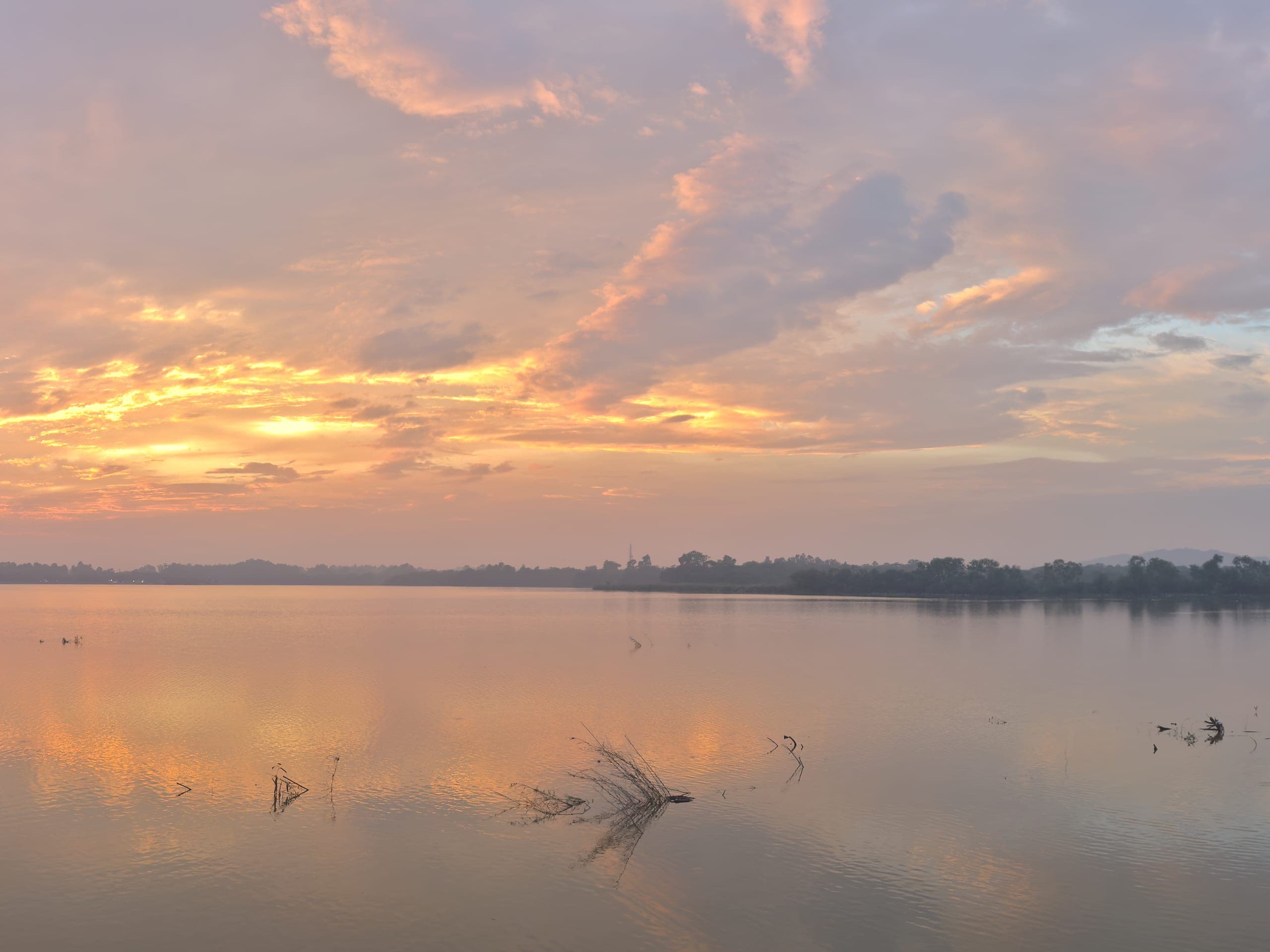
A calm lake under an orange and violet sunset sky
Sukhna Lake at sunset, Chandigarh · Photo: UnpetitproleX / Wikimedia Commons, CC BY-SA 4.0. Resized and cropped.

WRITE IN YOUR OWN VOICE

Write two 400-word essays, on leading and on learning, and be ready to write two more at your interview.

Two essays of 400 words eachBoth are required. A third, of 250 words, is optional, and if you’re invited to interview, you’ll write two more there.

The learning essay asks for personal anecdotes. Some routes add writing: reapplicants write an essay on how they’ve grown, and the need-based waiver, the Bridge to India scholarship, and several named awards have essays of their own.

Letrado’s adviceGive each 400-word essay one or two experiences told in detail, not a tour of your career. Write the optional essay only if it adds something the other two don’t.

Leadership · 400 words

Show the experiences that shaped how you lead.

ISB asks which distinctive experiences shaped you, what they taught you about leadership, and the kind of leader you want to be.

Learning · 400 words

Show how you learn, and why you decided on an MBA.

ISB asks which intellectual experiences shaped your learning and your decision to do an MBA, told through personal anecdotes.

Optional · 250 words

Add the interests that shape how you see the world.

Explain the intellectual interests, perspectives, or experiences that shape your worldview, and what you’d bring to ISB’s learning community.

At the interview · two essays

Expect to write on the spot.

If you’re invited to interview, you’ll write two essays there. Practice answering an unseen question clearly and briefly.

Scholarship essays · some awards

Write any scholarship essay as carefully as your application.

The need-based waiver asks for an essay with proof of income, and the Bridge to India scholarship asks for an essay sent with your application. Some named awards have their own forms and essays.

MAKE ROOM FOR THE FINANCIAL QUESTION

Budget ₹40,46,520 for ISB’s fees with shared housing, or ₹44,45,000 with a studio.

Those are ISB’s own totals for 2027–28, paid in a single installment, including GST (India’s Goods and Services Tax) and a ₹20,000 refundable security deposit. Hospitalization insurance comes on top at its actual cost, and ISB estimates another ₹2,25,000 for the year’s meals, laptop, books, and other expenses.

CONSIDERED AUTOMATICALLY

Merit waivers of 25% to 100%

You don’t apply separately for merit or merit-by-diversity tuition waivers.

BASED ON FAMILY INCOME

Need-based waivers

These are for you if your family income, counting your own earnings before ISB, is within ISB’s limit. You write an essay and send proof of income. Ask ISB for the current income limit before you count on one.

INTERNATIONAL AWARDS

Destination India and Bridge to India

Destination India gives 25 full-tuition awards to non-Indian nationals on merit, with no separate application. Bridge to India gives 5 awards of 25% to Indian passport holders living abroad, on merit and an essay sent with your application.

ISB gives each student only one tuition waiver, and it can withdraw a waiver if you leave before graduating or face disciplinary action. If you hold an OCI card, ask ISB which of these awards you can apply for.

ISB fees and scholarships (opens in a new tab)

PUBLISHED FEES · CLASS OF 2028 (2027–28)

₹40,46,520

ISB’s total with shared housing, paid in a single installment, including GST and the refundable security deposit.

See the published costs
Admission fee, including GST (partly refundable)
₹3,99,500
Commitment fee, including GST (nonrefundable)
₹2,49,500
Tuition, the same with shared housing or a studio
₹26,64,000
Shared accommodation, exempt from GST
₹2,34,000
GST, with shared accommodation
₹4,79,520
Security deposit, interest-free and refundable after any recoveries
₹20,000
Studio accommodation, if you choose one instead
₹5,36,000
GST, with a studio
₹5,76,000
ISB’s total with a studio
₹44,45,000
Hospitalization insurance, paid with your fees
At actual cost
Meals for the year (ISB’s estimate)
₹80,000
A laptop (ISB’s estimate)
₹75,000
Books (ISB’s estimate)
₹20,000
IT, laundry, electricity, documents, and photocopies (ISB’s estimate)
₹50,000

These are ISB’s 2027–28 figures for a single installment. To pay in two installments instead, ask ISB for that schedule and the interest it charges.

ISB’s 2027–28 fee sheet (PDF) (opens in a new tab)

Check the awards that need their own application, and compare loans early.

  • Armed Forces awardsISB gives up to six awards of 50% to applicants who are moving to a civilian career within two years or hold a release order.
  • Awards for IAS officersUp to three full-tuition awards go to serving IAS (Indian Administrative Service) officers with at least two years’ service who undertake to return.
  • Vidula Jalan awardsTwo awards, one for a woman and one for a man, cover tuition, the admission and commitment fees, and accommodation. They’re given on need and merit.
  • Other awards you apply forThese support sole family earners, applicants with a disability, social-sector careers, and armed-forces personnel and their dependents.
  • Donor awardsAwards such as J.C. Flowers (five full-tuition awards), Bajaj Auto (three of ₹10 lakh, or ₹10,00,000 each), and Deepak Parayanken (two of ₹15 lakh, at least one for a woman) need no application unless the award asks for one. The Manasa Mandava scholarship gives women 50% on merit, paid as 25% at the start and 25% after the core.
  • LoansISB lists Axis Bank, Bank of Baroda, Canara Bank, Central Bank of India, and Credila. Axis and Canara lend only to Indian nationals. Bank of Baroda lends up to ₹40 lakh without collateral, with a parent or guardian jointly responsible. Canara lends up to ₹50 lakh without collateral, and Central Bank up to ₹50 lakh without a co-borrower. Those three banks also ask you to assign your future income to the loan. Credila lends up to the full cost of your education, with a family co-borrower, and collateral isn’t required. Terms change, and if you’re not an Indian national, ask each lender whether you qualify.
  • After you graduateIf you take a qualifying job in social impact, a nonprofit, development, a PSU (public sector undertaking, a government-owned company), or government, ISB’s Develop India award can help with your education loan’s monthly payments (EMIs) for up to 24 months. You apply with a statement of purpose.

Letrado’s adviceYou can hold only one tuition waiver, so aim for the award that fits you best, and ask Admissions for its deadline when you apply. ISB considers scholarships in every round, so choose your round by when your essays are ready.

ADMITTED TO ISB · S.K.

S.K. kept her organization’s reach, her team’s results, and her own work apart.

She worked in education operations, coordinating programs for a growing organization across several cities. We helped her plan her testing and her school list. We didn’t invent impact or push her to start a social venture for her application.

She used only numbers she could vouch for.

Each metric in her application was one she had verified herself.

She tied the MBA to the work she wanted to do.

Her aim was to help education organizations grow without losing the quality of their service. That would take finance, strategy, and leadership, which is why she wanted an MBA.

She prepared to talk about failure and conflict.

Her interview practice covered a failure, a conflict with a senior leader, and how she’d contribute without presenting the social sector as morally superior.

ISB’s leadership essay (opens in a new tab) asks what your experiences taught you about leading. S.K.’s application centered on her implementation judgment: keeping operations consistent across cities and solving the problems that came up in practice.

AI illustration

S.K. · EDUCATION SERVICES

She let her operating judgment, not a dramatic student story, show her commitment.

Read S.K.’s full story
Indian School of Business

HER ISB OUTCOME

Offered a place in ISB’s PGP
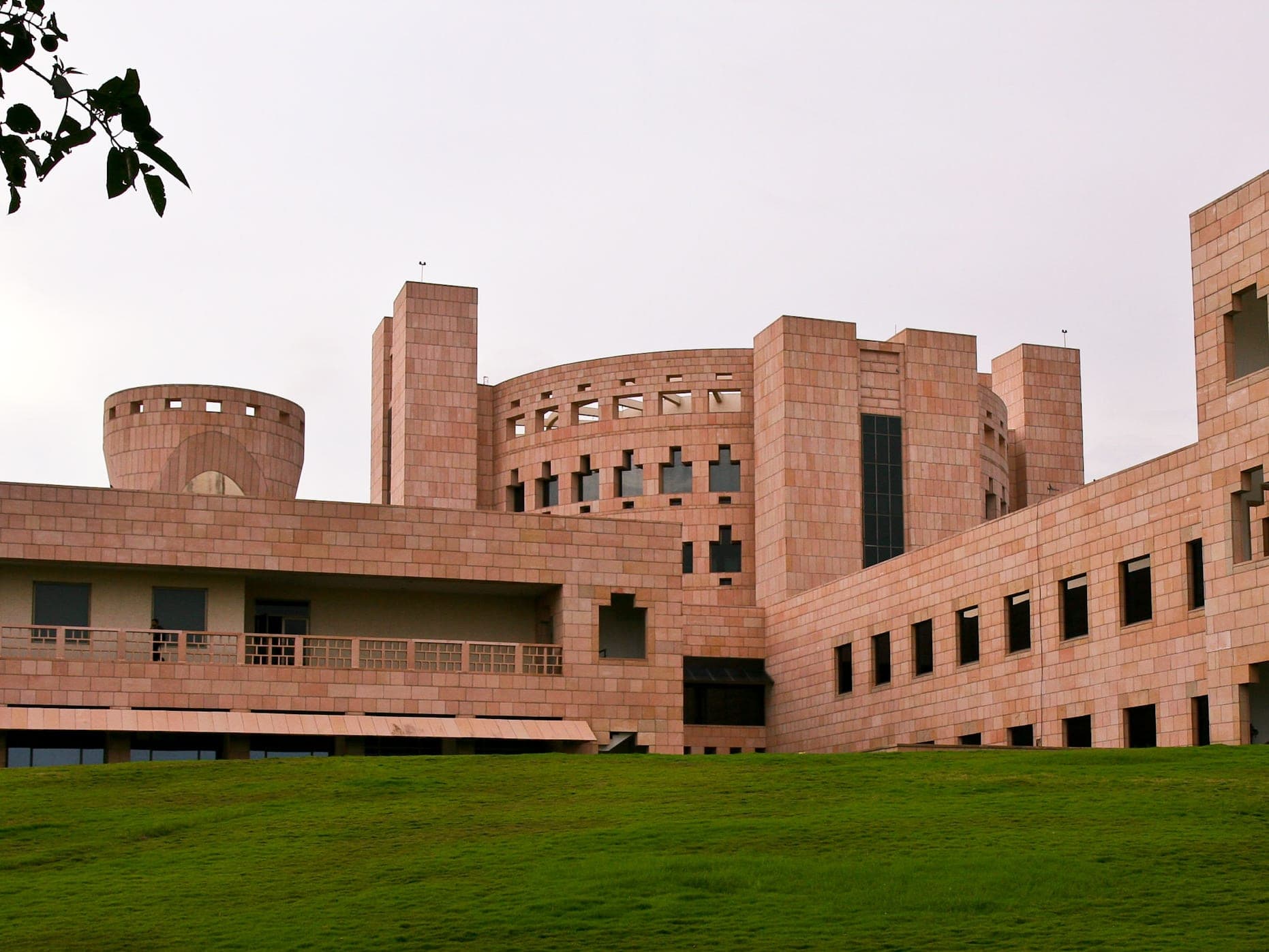
The pink sandstone main building of the Indian School of Business in HyderabadHER CHOICE: ISB

Indian School of Business, India · Photo: Curtis Palmer / Wikimedia Commons, CC BY 2.0. Cropped.

With a scholarship in hand, she picked ISB over two offers abroad.

She expected to build her career in India, and family responsibilities made a year abroad costly. Weighing her scholarship, recruiting, and those risks together, she judged ISB the sounder choice.

ALSO ADMITTED TO

  • INSEAD
  • Cambridge Judge Business School

Anonymized client journeys, shared with initials to protect privacy. Portraits are AI illustrations, not photographs of our clients.

Browse all client journeys

WHEN YOU’D LIKE A HAND

A conversation can help you find a useful place to start.

Bring your questions to a free 45-minute introduction with your proposed mentor. Afterward, we’ll email a personalized plan with recommended next steps.

Official Indian School of Business and Government of India sources are linked beside the relevant guidance.

ISB PGP eligibility and requirements (opens in a new tab)