SMALL BY DESIGN Every student gets our full attention. Read our story →
All graduate guides
UCLA

UCLA FIELDING · MASTER OF PUBLIC HEALTH GUIDE

Looking at UCLA for a master’s in public health? Choose one department, then send two applications in the right order.

The shared application for public-health programs comes first, then UCLA’s own application, both due by the priority deadline, December 1, 2026. UCLA Fielding’s Master of Public Health (MPH) is a full-time, in-person degree, with weekday classes in Los Angeles.

Fall 2027 entry

Bronze letters reading Jonathan and Karin Fielding School of Public Health on a pale wall beside red brick, under a lit canopy
The UCLA Fielding School of Public Health’s main entrance · Photo: Jurriaanlinsen / Wikimedia Commons, CC BY-SA 4.0. Resized and cropped.

GET TO KNOW THE PROGRAM

Study for two years in one department, with 400 hours of field work, usually in the summer between them.

You can start only in the fall. UCLA’s fall 2027 quarter runs from Monday, September 20, with classes from Thursday, September 23. The daytime schedule leaves some room for part-time work.

THE CORE

Learn the basics of every public-health field.

An introduction to each of the four other fields, plus a course on the profession and practice of public health.

THE PLACEMENT

Put your training into practice.

In Health Policy and Health Management, it’s an internship of at least ten weeks with a health care organization.

THE FINISH

Meet your department’s final requirement.

Community Health Sciences sets a comprehensive exam, and Epidemiology a written exam and report. Environmental Health Sciences ends with your placement and its summary paper, and Health Policy and Health Management with a consulting report on your internship.

Choose your department with care, since UCLA rules allow one Fielding program per applicant.

The only exceptions are UCLA’s established dual degrees. Compare the departments below.

What each department adds to the core

Community Health Sciences: Program planning and evaluation, with focus areas such as health education, international health, nutrition, and women’s health.

Epidemiology: Epidemiologic methods, infectious disease, data management, and scientific communication.

Environmental Health Sciences: Toxicology, risk assessment, and environmental health policy, plus a written chemistry exam on entry, or Environmental Health Sciences 101 if you don’t pass.

Health Policy and Health Management: Policy analysis, health-sector economics, and data analytics, plus six electives.

Accreditation: The Council on Education for Public Health accredits the school.

One-year, weekend, and dual-degree routes

Epidemiology in one year: For holders of a clinical doctorate, such as an MD, from an accredited U.S. institution, and U.S. medical students.

The one-year MPH in Health Policy and Management: For people with a doctoral-level degree, such as an MD, JD, or PhD, and several years of work in health care.

Weekend MPHs: If you’ve worked full time for three years or more, consider the MPH for Health Professionals or the Executive MPH. Both use UCLA’s application only, with a priority deadline of February 1, 2027. For the first, ask whether that work must be in health.

Dual degrees: Some departments pair the MPH with a UCLA degree such as medicine, law, business, or public policy. These take three or four years, and you submit both applications.

Studying at UCLA on a student visa

Your I-20: After you’re admitted and submit UCLA’s Statement of Intent to Register, the Dashew Center explains how to request your I-20, the form behind an F-1 student visa. Fielding requires its Confidential Financial Statement from every international applicant.

Part-time work: On a student visa, campus jobs can total 20 hours a week during the quarter, and off-campus work needs separate permission.

Your placement summer: Before you accept a placement, ask Fielding and the Dashew Center how to get it authorized before your first day. As of October 2026, federal guidance from August 24, 2026, limits that permission, Curricular Practical Training (CPT), to training the whole program requires.

A large hospital clad in pale stone panels with an entrance canopy, under a deep blue sky
The Ronald Reagan UCLA Medical Center · Photo: Coolcaesar / Wikimedia Commons, CC BY 4.0. Resized and cropped.

UNDERSTAND WHAT FIELDING LOOKS FOR

Match your courses and experience to the department you choose.

You can apply without a background in public health, but not with a three-year ordinary pass degree. Faculty from your department decide, and Fielding’s pages mention no interview.

YOUR COURSES

Check your department’s prerequisites against your transcript.

Epidemiology and Environmental Health Sciences set prerequisites, listed in the department comparison below. Community Health Sciences, Health Policy, and Health Management add none.

Letrado’s adviceIf a course is missing, you can still be admitted, but you’d take it at UCLA in your first year. Ask whether one you finish before enrolling would count.

YOUR GRADES

Expect your last two years of college to count most.

UCLA asks for at least a B average (3.0 on a 4.0 scale), counting any study after your degree. Below it, your department can still admit you through a dean’s exception that needs nothing from you.

Letrado’s adviceFielding says a couple of bad grades won’t have a large impact, so don’t spend your statement of purpose on them. If a hard period explains a longer dip, use the personal statement’s prompt on barriers.

YOUR EXPERIENCE

Show the experience your department weighs.

Community Health Sciences strongly considers work in community health or health education, and Health Policy and Health Management strongly consider hospital or clinical work. Epidemiology considers training in quantitative methods.

Letrado’s advicePut that experience near the top of your résumé, with your role and how long you held it.

How the departments’ MPHs compare

THE DEPARTMENTS SIDE BY SIDE

Each department sets its own courses, units, and test rule.

Community Health Sciences

68 units, no Graduate Record Examinations (GRE) required, and not listed as STEM

Epidemiology

68 units, the GRE optional, and listed as STEM

Environmental Health Sciences

No unit total printed, no GRE required, and listed as STEM

Health Policy or Health Management

78 units, no GRE required, and not listed as STEM

Epidemiology’s prerequisites are a physical-science course and at least two courses each in math or statistics; biology, public health, or health sciences; and social sciences.

Environmental Health Sciences expects a science or engineering degree. Without one, its prerequisites are a course each in calculus, linear algebra, or statistics; chemistry; and biology.

Biostatistics: before you choose it, ask the department whether it admits MPH students for fall 2027, since Fielding’s list of MPHs has none. UCLA’s 2027–28 page asks for a year of college calculus and, unlike Fielding’s GRE chart, requires the GRE.

What UCLA says about AI in your essays

WHAT UCLA SAYS

“Submitting work that is not your own, including material written by AI, may be considered academic dishonesty and could affect your admission.”

Allowed

Checking spelling and grammar, suggesting clearer word choices or translations, and organizing ideas into an outline

Not acceptable

Having AI write all or part of your essay, submitting generic or fabricated content, and misrepresenting your experiences, goals, or research

A curving path through a leafy garden beside a sculptural canopy of white metal fins
The Mildred E. Mathias Botanical Garden at UCLA · Photo: Daderot / Wikimedia Commons, CC0. Resized and cropped.

PLAN THE APPLICATION

The priority deadline for admission and funding is December 1, 2026, for both applications. Submit the shared application first, then UCLA’s own.

Start with the Schools of Public Health Application Service (SOPHAS), a shared application. Once you submit it, UCLA emails you instructions for its own. Use the same email address, degree, and department in both. Fielding starts its review once both fees are paid.

Shared application, priority deadline

Dec 1, 2026
Order
Submit it first
Fee for one program
$155

UCLA’s graduate application, priority deadline

Dec 1, 2026
Order
After the shared one
Fee, U.S. citizens and permanent residents
$135
Fee, all other applicants
$155

Admission offers, typically

By mid-March

You don’t have to accept a funded offer before

Apr 15

Facts checked against official pages on November 7, 2026.

Submit the shared application several days before December 1, since UCLA’s email can take one or two business days and no closing time or time zone is printed. Dates without a year are as UCLA lists them.

Gather these before you start the shared application.

  • Statement of purpose

    Up to 1,500 words.

  • Personal statement

    Up to 500 words.

  • Three letters of recommendation

    Usually one academic letter and two professional ones.

  • Résumé or CV

    A résumé or curriculum vitae.

  • Transcripts

    One official set from every institution you’ve attended. International applicants send theirs through World Education Services for evaluation.

  • An English test, and the GRE where it applies

    The Test of English as a Foreign Language (TOEFL) iBT or the International English Language Testing System (IELTS) Academic, unless your degree exempts you. Each department’s GRE rule is in the comparison above.

Tests, English, transcripts, and letters

English minimums: UCLA asks for TOEFL iBT 4.5 (87 on tests before January 21, 2026) or IELTS Academic 7.0, under two years old when you apply. At-home versions count, but TOEFL MyBest scores don’t. U.S. citizens and permanent residents must meet it too.

Exemptions: You’re exempt with a bachelor’s degree or higher from an accredited university in the U.S. or in a country the World Higher Education Database lists as teaching only in English.

Sending scores: On the shared application, use code 5688 for the TOEFL and 4225 for the GRE, and its instructions for IELTS. UCLA’s own TOEFL code, 4837, is for reporting to UCLA directly.

Transcripts from outside the U.S.: If you’re admitted, UCLA asks for official, final records in the original language, with a complete, authorized English translation.

Three-year degrees: UCLA expects an international degree to represent at least four years of study. If yours took three, check with the department before you pay two fees.

Letters: With more than three years of professional experience after college, you may send three professional letters. Confirm with your department, since one line of Fielding’s checklist says five years out of school.

Fees, waivers, late applications, replies, and deferrals

Two fees: The shared application adds $65 for each program after the first, and you can’t get either fee back.

Fee waivers: Ask for a shared-application waiver before you submit, since later requests aren’t honored and Fielding gives out no codes. Waivers cover financial need (based on a U.S. tax return), service, and applicants from the United Nations’ least developed countries.

UCLA’s own waivers: For U.S. citizens, permanent residents, and others who meet UCLA’s criteria.

Applying after December 1: Ask your department first whether it’s still accepting applications. For Health Management, UCLA says late applications have reduced chances of admission and aid.

Replying: Admitted students get links to UCLA’s Statement of Intent to Register and a Statement of Legal Residence. Ask when to reply and whether a deposit is due, since neither is published.

Deferring or applying again: Fielding’s FAQ says, “UCLA does not offer deferrals,” so plan to start in fall 2027. Applying later means two new applications and fees.

A sunny lawn with tall pine trees and sculptures in front of low modern buildings
The Franklin D. Murphy Sculpture Garden at UCLA · Photo: Simon Cobb / Wikimedia Commons, CC0. Resized and cropped.

WRITE IN YOUR OWN VOICE

Use the statement of purpose for your path and goals, and save a different experience for the personal statement.

Up to 1,500 wordsThat’s Fielding’s limit for the statement of purpose.

Fielding reads the statement of purpose for your writing and fit, and uses it to help decide merit funding. UCLA uses the personal statement for its Eugene Cota-Robles Award and Graduate Opportunity Program.

Letrado’s adviceAnswer Fielding’s four questions in turn, each backed by your own work. If that work involved patients, describe what you did, and leave out names, places, dates, and any detail that would point to one person.

Statement of purpose · 1,500 words at most

Cover the four points Fielding asks for, and your path into the field.

Fielding asks for your reasons for interest in public health, in your program or concentration, and in UCLA, and for your career goals.

Personal statement · 500 words at most

Answer one or more of UCLA’s four prompts.

They ask about experiences your statement of purpose doesn’t cover, barriers in your education, leadership or service for a wider community, and UCLA’s Principles of Community. UCLA suggests about one page, single spaced.

Résumé or CV · no page limit printed

Upload your résumé to the shared application only.

Your letters, transcripts, and test scores go there too, not to UCLA’s own application. The MPH needs no writing sample.

A red-brick Gothic-style building with a pointed tower behind green hedges and a lawn
Kerckhoff Hall at UCLA · Photo: Josh Lee / Wikimedia Commons, CC BY-SA 3.0. Resized and cropped.

MAKE ROOM FOR THE FINANCIAL QUESTION

Plan on UCLA’s 2026–27 mandatory fees for a new MPH student: $43,606.19 if you’re not a California resident.

For a California resident, it’s $30,875.19. Both include a one-time document fee and health insurance you can waive, but not housing, food, or travel.

MOST AWARDS

Considered automatically

Once you’re admitted, Fielding considers you for most awards, with nothing to file, except those marked “student application.”

DEAN’S LEADERSHIP GRANTS

$40,000 over two years

For incoming MPH students, with one to six awards a year in each department.

YOUR PLACEMENT

A separate application in winter

Limited funding for unpaid or partly paid placements, through a form Fielding generally opens each winter quarter.

International students should count only on UCLA funding confirmed in writing.

Fielding’s scholarships (opens in a new tab)

PUBLISHED 2026–27 · NEW STUDENT TOTAL MANDATORY FEES · NONRESIDENT

$43,606.19

International students should plan on this total.

See the published fees
Tuition, residents and nonresidents
$13,722
Professional Degree Supplemental Tuition, residents
$7,647
Professional Degree Supplemental Tuition, nonresidents
$8,133
Nonresident Supplemental Tuition
$12,245
Student Services Fee
$1,344
UC Student Health Insurance Plan, unless you waive it
$7,516.98
Document Fee, charged once
$97.43
Ten other campus fees, each
$7 to $150

Ask Fielding or UCLA Financial Aid for the MPH’s own cost of attendance, since UCLA’s general graduate budget doesn’t match these fees. Fees for 2027–28 aren’t posted yet.

UCLA Registrar: 2026–27 fees (opens in a new tab)

Ask UCLA Financial Aid which loan rules apply to the MPH before you accept an offer.

  • Federal loans: two UCLA pages disagreeFielding’s cost page lists federal Graduate PLUS loans, but UCLA Financial Aid says they end for new borrowers after July 1, 2026.
  • Federal loan limitsUCLA Financial Aid gives caps of $20,500 a year and $100,000 overall for graduate degrees, and $50,000 and $200,000 for professional ones, expected to include dentistry, law, medicine, and clinical psychology. Fielding calls the MPH “a professional degree.”
  • The federal aid form, for U.S. applicantsFielding requires the Free Application for Federal Student Aid (FAFSA) for any aid. It opens October 1 each year, and Fielding’s due date is March 2 of the year you enroll.
  • Living costsUCLA’s 2026–27 budget for all graduate students lists $18,221 for housing, $10,546 for food, $3,819 for transportation, $3,219 for personal costs, and $2,004 for books and supplies.
  • Health insuranceTo waive it, you need approved insurance of your own each year. International students must meet extra criteria, and travel plans and health care sharing ministries don’t qualify.
  • Funds for your student visaYou must show money for the first year’s tuition, fees, transportation, and living costs. Ask the Dashew Center or Fielding what amount the MPH requires, since the Dashew Center’s 2026–27 estimates have no MPH row.
  • Jobs on campusResearch and teaching assistants across campus receive stipends and may have their fees covered, though Fielding doesn’t say how many MPH students hold these jobs.
  • California residence for year twoIf you’re from another U.S. state, you can petition after your first year, with evidence that you intend to stay. Living in California for 366 days, or only for your studies, isn’t enough.

Letrado’s adviceTreat your statement of purpose as your scholarship essay.

Other awards include departmental awards of $3,000 to $20,000, Fama Fellowships of up to $36,000 over two years, and, for the Environmental Health Sciences MPH, the Benenson Fellowship of $80,000 over two years.

Fielding’s list of awards (opens in a new tab)

ADMITTED TO UCLA FIELDING · N.T.

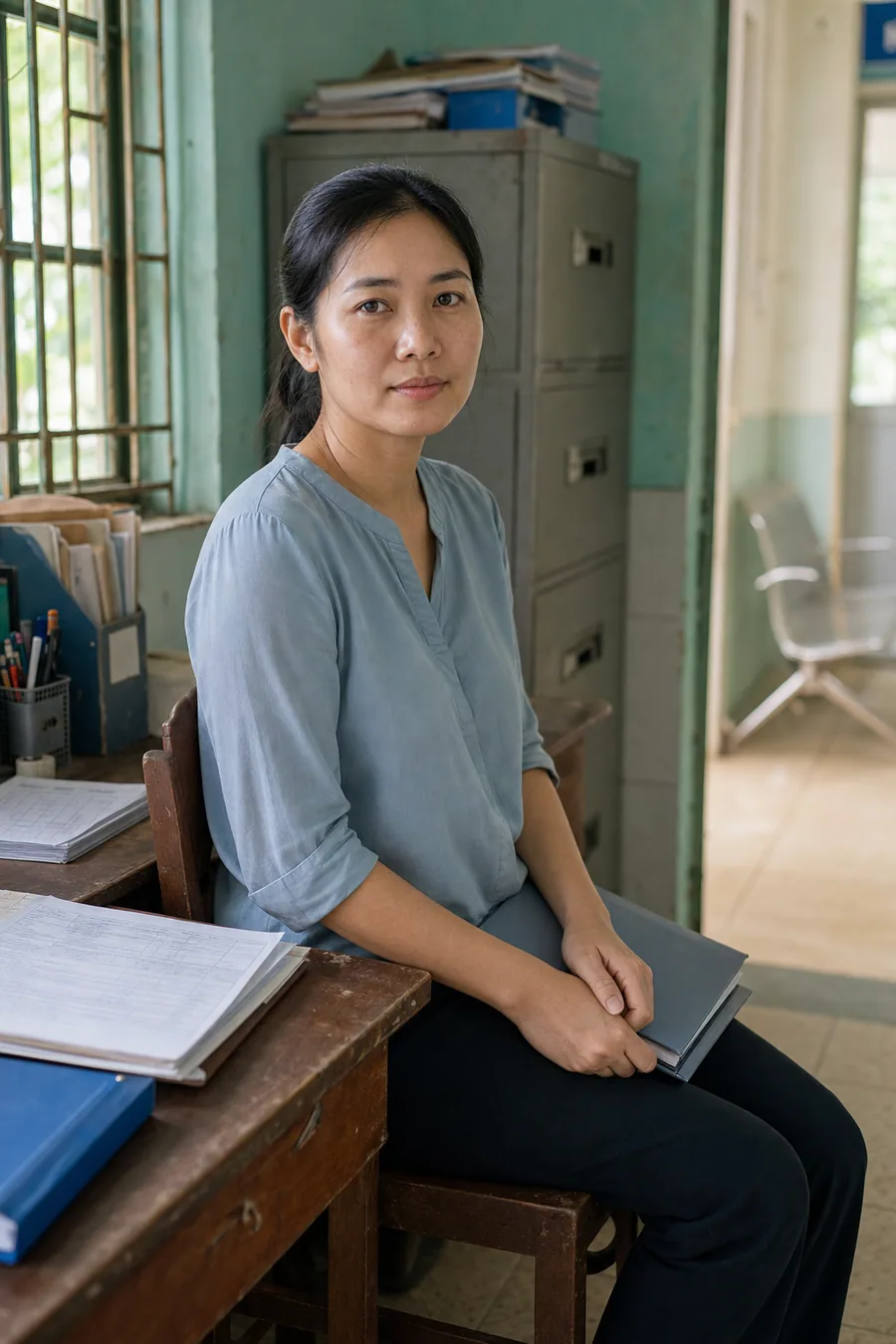
N.T. protected every patient’s identity without making her essays vague.

After training as a physician, N.T. joined a maternal-health program at the provincial level and hoped to study epidemiology. Privacy narrowed what her essays could show, so our work focused on concrete examples that kept everyone anonymous.

Every example had to protect both the program and its patients.

She could write about patterns and systems, but not about any patient’s experience in a way someone might recognize.

Her statement’s main example was a mismatch in the program’s reports with more than one cause.

At first it looked as if the rules weren’t being followed, but part of the cause was a form that was hard to use in practice.

She claimed her own part and nothing more.

She described updating the staff training and bringing the issue to a higher level, and took no credit for what happened in the program afterward.

Fielding’s FAQ on the statement of purpose (opens in a new tab) asks for your path into public health. If yours runs through patient care, as N.T.’s did, you can tell it with the records, rules, and training you worked on.

AI illustration

N.T. · EPIDEMIOLOGY & HEALTH SYSTEMS

She wrote about moments from her job, like spotting duplicate records and changing the order of a staff training.

Read N.T.’s full story
UCLA

HER UCLA OUTCOME

Offered a place in UCLA Fielding’s Master of Public Health
The arched stone entrance to Columbia’s Mailman School of Public HealthHER CHOICE: COLUMBIA

Mailman School of Public Health, Columbia University · Photo: ajay_suresh / Wikimedia Commons, CC BY 2.0. Cropped.

UCLA admitted her, and she chose Columbia.

Her full story explains what decided it.

ALSO ADMITTED TO

  • Harvard University
  • Columbia University

Anonymized client journeys, shared with initials to protect privacy. Portraits are AI illustrations, not photographs of our clients.

Browse all client journeys

WHEN YOU’D LIKE A HAND

A conversation can help you find a useful place to start.

Bring your questions to a free 45-minute introduction with your proposed mentor. Afterward, we’ll email a personalized plan with recommended next steps.

Official UCLA, UCLA Fielding, University of California, and U.S. government sources, with the shared application’s help pages, are linked beside the relevant guidance.

UCLA Fielding: application checklist (opens in a new tab)