SMALL BY DESIGN Deep care. Honest fit. Relationships that last. Why we stay small →
Menu
Request a Consultation
← All Undergraduate Admissions journeys
ANONYMIZED CLIENT JOURNEY · U1

D.K.

International IB student / Economics and philosophy / Strong ideas, overextended application

D.K. began with excellent academics, too many competing activities and an essay that sounded more like an argument than a person. Her application became clearer when it centered on economics, philosophy and her willingness to revise a belief. Admitted to Yale, Penn and UChicago, she selected Penn after comparing aid, curriculum and fit.

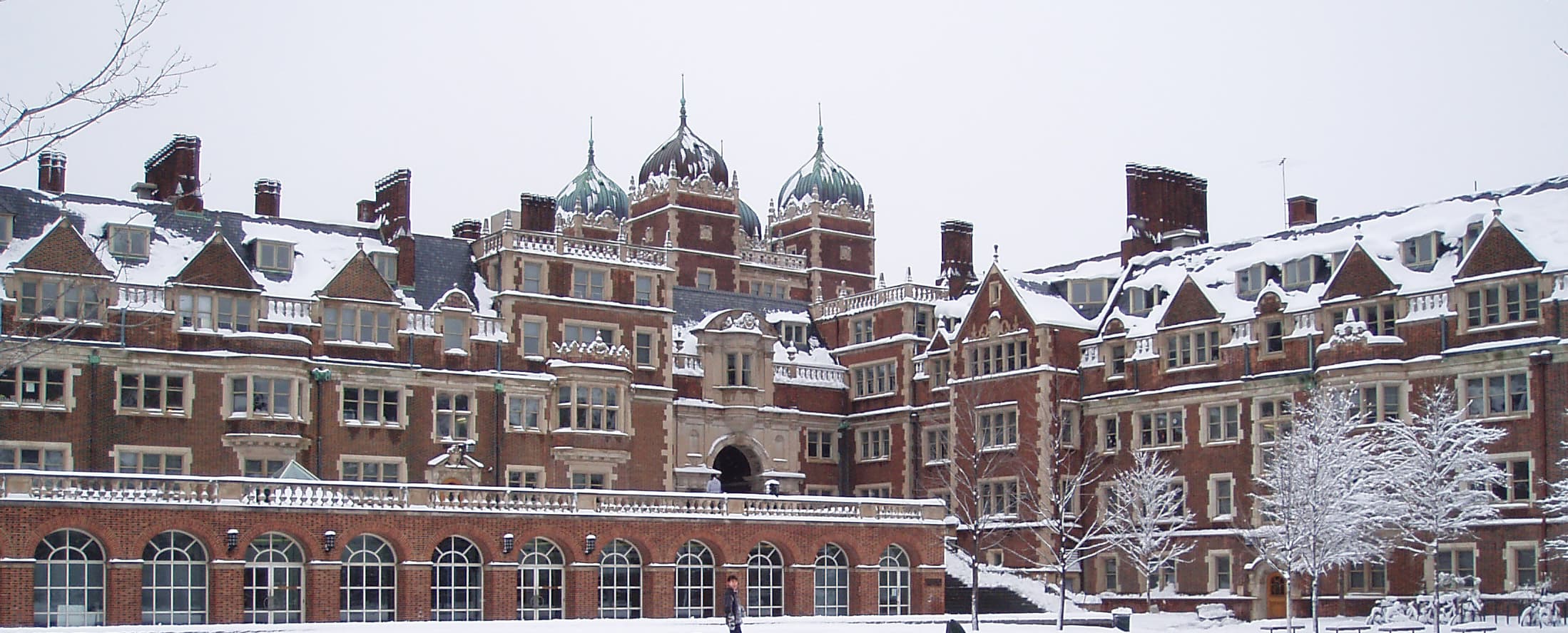
AI-generated representative image; it does not depict the client.
AT A GLANCE

The context behind the decisions.

Entry point
First-year undergraduate admission
Background
International IB school in Hong Kong; U.S. citizen living abroad
Academic direction
Economics, philosophy and political thought
Ordinary complication
High academic performance, but too many loosely connected activities and an initially abstract personal essay
Support emphasis
Intellectual focus, school-list balance, essay development and financial-aid comparison
Acceptances
Yale University; University of Pennsylvania; University of Chicago
Other results
Rejected by Harvard University; waitlisted at Princeton University
Final choice
University of Pennsylvania after comparing aid and curricular flexibility
EXTENDED CASE ANALYSIS

Strong ideas were not the problem. Showing how she used them was.

D.K. did not need another activity or a more impressive vocabulary. She needed a clearer hierarchy: which ideas mattered most, which experiences showed them in action, and which universities genuinely supported the education she wanted.

THE STARTING READ

A strong file that was difficult to read.

D.K. entered the process with excellent academics, several meaningful commitments, and serious interests in economics, philosophy, and public policy. Her application became stronger when it stopped trying to display every interest equally and began showing the questions that connected them—and the moments when those questions changed how she thought.

On paper, the promising signals were already present: student government, a school economics publication, tutoring, short summer courses, and a demanding IB curriculum. The first version of the application was still difficult to read because it gave each experience similar weight. A reader could see that D.K. was busy and intellectually able, but not yet what she kept returning to, what she had learned through experience, or which parts of the record mattered most.

Her main essay had the same problem. It presented a position with confidence, but it read more like a policy paper than a personal account. It showed what D.K. believed. It revealed much less about how she formed a belief, encountered resistance, or decided to revise it.

THE CENTRAL DIAGNOSIS

Breadth needed a structure.

What the application already showed

  • Strong academic performance in a demanding international curriculum
  • Serious interests spanning economics, philosophy, and public life
  • Several genuine commitments rather than one manufactured theme
  • The confidence to form and defend an argument

What it did not yet answer

  • What connected economics and philosophy for her?
  • Which activities involved sustained responsibility rather than brief participation?
  • How did she respond when an idea failed in practice?
  • What made one university a better fit than another?
  • How would affordability affect the final decision?
THE INTELLECTUAL CENTER

Three questions connected the record.

Trying to force D.K. into one narrow interest would have made the application less accurate. The stronger answer was to identify the questions underneath her range.

How do people make choices when their options are constrained?

Economics supplied tools for examining incentives and behavior; lived examples kept the question from remaining abstract.

What does fairness require?

Philosophy helped D.K. examine the assumptions underneath a policy rather than treating efficiency as the only test.

Why can a rational system still produce unequal outcomes?

This question joined her academic interests and gave the activity record a coherent center without pretending every experience was the same.

THE TURNING POINT

The most useful story was not a major award.

The strongest personal evidence came from a school lunch-subsidy proposal. D.K. had worked with a cost model that appeared logical. A classmate challenged one of its assumptions, pointing out that the model did not fully reflect the daily choices of the people affected by it. D.K. initially found the criticism uncomfortable. She then reconsidered the proposal.

The episode was valuable precisely because it was ordinary enough to be believable. It did not depend on presenting D.K. as the founder of a large initiative or the person who solved a major social problem. It showed something more revealing: she could build an argument, discover that it excluded relevant experience, and change her thinking.

The essay therefore became less interested in proving that D.K. was right. It showed how she behaved when she might be wrong.

SELECTING EVIDENCE

The facts stayed the same. Their hierarchy changed.

Evidence was made more precise, attributable, and useful. The goal was not to enlarge the record, but to stop one title, institution, hardship, or outcome from carrying more meaning than it could support.

Earlier presentation

Every activity received similar weight.

Stronger presentation

Space reflected responsibility, duration, and what D.K. could explain in detail.

Earlier presentation

Short courses helped fill the narrative.

Stronger presentation

Short programs remained accurate but secondary to sustained work.

Earlier presentation

Economics and philosophy appeared as separate interests.

Stronger presentation

Recurring questions showed why the subjects belonged together.

Earlier presentation

The main essay argued a position.

Stronger presentation

The essay showed how D.K.’s thinking changed in response to another person.

Earlier presentation

Prestige helped define the school list.

Stronger presentation

Curriculum, flexibility, culture, and eventual cost shaped comparison.

APPLICATION CONTEXT

Citizenship, schooling, timing, and aid did not collapse into one rule.

D.K. was a U.S. citizen studying at an international IB school in Hong Kong. The family initially assumed that citizenship would settle the practical questions surrounding financial aid and residency. It did not make every university’s policies identical, so each institution still required its own review and the real aid offers still needed to be compared later.

Application work also overlapped with school examinations, predicted grades, and required school submissions. A detailed plan protected writing time without allowing the application to weaken the academic record on which it depended.

This was more than a calendar exercise. It prevented urgency from deciding which essays received thought, which requirements were checked carefully, and which academic responsibilities were neglected.

STUDENT OWNERSHIP

Independence remained visible in the work.

  • D.K. selected the disagreement she wanted to discuss and wrote every draft herself.
  • She rejected suggested language when it sounded more polished than her natural speaking voice.
  • Guidance focused on questions, structure, evidence, and factual consistency.
  • Letrado did not communicate with a university on her behalf.
OUTCOME & DECISION

Several excellent outcomes could still lead to one personal choice.

D.K. was admitted to Yale, the University of Pennsylvania, and the University of Chicago. She was waitlisted at Princeton and denied by Harvard.

She chose Penn after comparing the final aid packages and the flexibility to combine economics and philosophy while exploring courses across schools.

The choice did not require arguing that Penn was universally better than her other options. Several outcomes were excellent. The decision became personal only when D.K. compared educational structure and actual financial terms against what she wanted from university.

WHAT CHANGED

  • The application gained a clear intellectual center.
  • Activities were presented according to their real significance.
  • The main essay moved from abstract argument to lived revision.
  • School research became more specific.
  • Cost became part of the decision rather than an afterthought.

WHAT DID NOT CHANGE

  • D.K.’s academic interests remained broad.
  • Her activities were not inflated or reinvented.
  • Her writing remained her own.
  • Letrado did not contact institutions for her.
  • No admissions result was treated as proof of personal worth.
HOW THE FILE BECAME LEGIBLE

The reader’s understanding changed in stages.

This sequence describes what the revised evidence made easier to understand. It does not claim to reconstruct an admissions committee’s private deliberations.

First read

A highly able student with many interests, several commitments, and no obvious order of importance.

After the evidence audit

A student repeatedly drawn to choice, fairness, and the gap between elegant systems and lived experience.

After the essay revision

A confident thinker who can notice when her model excludes relevant experience and revise it.

At the final decision

A student choosing among several excellent outcomes through academic structure and real aid—not through a league label.

WHAT COULD HAVE WEAKENED THE CASE

The alternatives were plausible—and less useful.

Add another economics credential

More activity could have increased volume while leaving the central intellectual and personal questions unresolved.

Keep the policy-paper essay

The reader would understand D.K.’s position but learn little about how she behaves when challenged.

Force one interdisciplinary label

A polished identity could have made genuine range look strategically manufactured.

Choose by university shorthand

The final decision could have ignored curricular structure and the difference between estimated price and the real aid offer.

DECISION DISCIPLINE

Each stage used a different test.

DecisionHow it was tested
What to foregroundResponsibility, duration, and explanatory value—not the prestige of the activity.
What to write aboutA moment D.K. could describe precisely, including discomfort and revision.
Where to applyEducational models D.K. could defend, with balance and affordability considered.
Which offer to chooseThe criteria built before results, updated with actual academic and financial terms.

WHAT THIS CASE SUPPORTS

  • A broad record can become clearer without inventing a narrower person.
  • An ordinary disagreement can reveal judgment when the applicant explains what changed.
  • School choice becomes more useful when curriculum and actual cost are compared before prestige shorthand.
  • Close guidance can improve structure while the student remains the author and decision-maker.

WHAT IT CANNOT PROVE

  • That one essay, activity, or mentoring decision caused any admission result.
  • That Penn is a better choice for another economics-and-philosophy applicant.
  • That the Harvard denial or Princeton waitlist reveals a hidden weakness in the file.
  • That another student should copy D.K.’s subject combination, disagreement, or school list.
QUESTIONS FOR A SIMILAR APPLICANT

Use the journey as a lens, not a formula.

This case does not suggest that every economics applicant should write about fairness or that every student needs a dramatic change of mind.

  • Can a reader identify the questions connecting your interests?
  • Does your main essay show how you think, or only what you believe?
  • Which activities demonstrate sustained responsibility?
  • Are brief programs taking up more space than they deserve?
  • Can you explain the educational differences among the schools on your list?
  • Will you compare actual aid offers before deciding?
  • Does the final language still sound like you?
D.K.’s strongest evidence was not the number of activities attached to economics. It was her willingness to examine an assumption and revise an argument.
CONTINUE EXPLORING
Undergraduate AdmissionsAll 40 client journeysAll student results
YOUR NEXT STEP

Your application should still sound and feel like your own.

We will listen carefully and tell you whether we believe Letrado is the right fit. If another resource would serve you better, we will be honest about that too.

See If We Are a Fit