Enough context, without surrendering privacy
C.M. needed enough context to explain an academic interruption without turning family privacy into application material or routine health-fair work into clinical experience.
A strong student, one difficult semester, no laboratory credential
C.M. volunteered at a community health fair, wrote for her school newspaper and helped care for a grandparent during a prolonged recovery. Her grades dipped during that period, particularly in chemistry. By senior year she had recovered academically, but she worried that any explanation would either sound like an excuse or reveal more private family information than she wanted to share.
She had not worked in a university laboratory. Early positioning tried to compensate by making routine health-fair tasks sound like clinical experience, which neither reflected her role nor supported the independence the application needed to show.
What the application needed—and did not need—to know
What the application already showed
- Academic recovery after a weaker semester
- Interest in neuroscience and public health
- Journalistic and communication experience
What it did not yet answer
- How much family context was necessary?
- Would the chemistry dip remain an academic concern?
- Could a neuroscience interest be credible without laboratory research?
Privacy, communication, and scientific access
The questions below did not supply an admissions formula. They determined what evidence needed to be checked, which claims needed limits, and what the applicant still had to decide.
How much context does a reader need?
A reader needed the timing and academic effect of C.M.'s family responsibilities, not a private diagnosis or an emotionally complete family history.
Why do people ignore accurate health information?
Accurate health information failed when a confusing handout caused visitors to skip it, making communication and trust part of the public-health question.
What evidence of scientific interest is available without a laboratory?
Without laboratory access, C.M.'s scientific interest could still be shown through demanding classes, reading, journalism, and accurately described volunteering.
The handout was accurate, but visitors still skipped it.
C.M. established a privacy boundary first. A concise additional-information note explained the timing and academic effect of family responsibilities without naming a diagnosis. Activity descriptions separated logistical volunteering from medical work. Her strongest thread became health communication: what people misunderstand, why instructions fail and how trust affects whether advice is followed.
The personal statement drew on editing a confusing health-fair handout after watching visitors skip it. It did not claim a measurable public-health outcome. School research compared neuroscience access, public-health pathways, urban clinical environments, undergraduate advising and cost. Scholarship and financial-aid work proceeded on a parallel calendar.
The facts stayed the same. Their hierarchy changed.
Evidence was made more precise, attributable, and useful. The goal was not to enlarge the record, but to stop one title, institution, hardship, or outcome from carrying more meaning than it could support.
Family context felt either absent or emotionally exhaustive.
A short note explained timing and academic effect within a privacy boundary.
Routine health-fair tasks sounded clinical.
Logistical and communication work was described accurately.
No laboratory access seemed to weaken neuroscience interest.
Coursework, reading, writing, and volunteering showed the available path.
Care responsibilities inside a public-school record
C.M. was tired of adults praising her resilience. The word made a difficult year sound complete when the consequences were still present: less time with friends, anxiety about another emergency and a chemistry grade that remained on the transcript. Her essays needed to acknowledge growth without forcing gratitude or suggesting that hardship had been useful. Establishing that emotional boundary made the writing more controlled and more believable.
She also faced a common mismatch between interest and formal opportunity. Neuroscience fascinated her, but her school offered no specialized course and she could not commute to an unpaid laboratory placement. The application therefore relied on rigorous classes, reading, journalism and public-health volunteering rather than trying to imitate the profile of a student with different access.
Independence remained visible in the work.
- C.M. decided which family facts stayed private and approved every contextual sentence. She drafted her essays and verified that no activity description implied care, diagnosis or research she had not performed. Mentoring supported decisions; it did not contact universities or speak for her.
Choosing a place where two health interests could meet
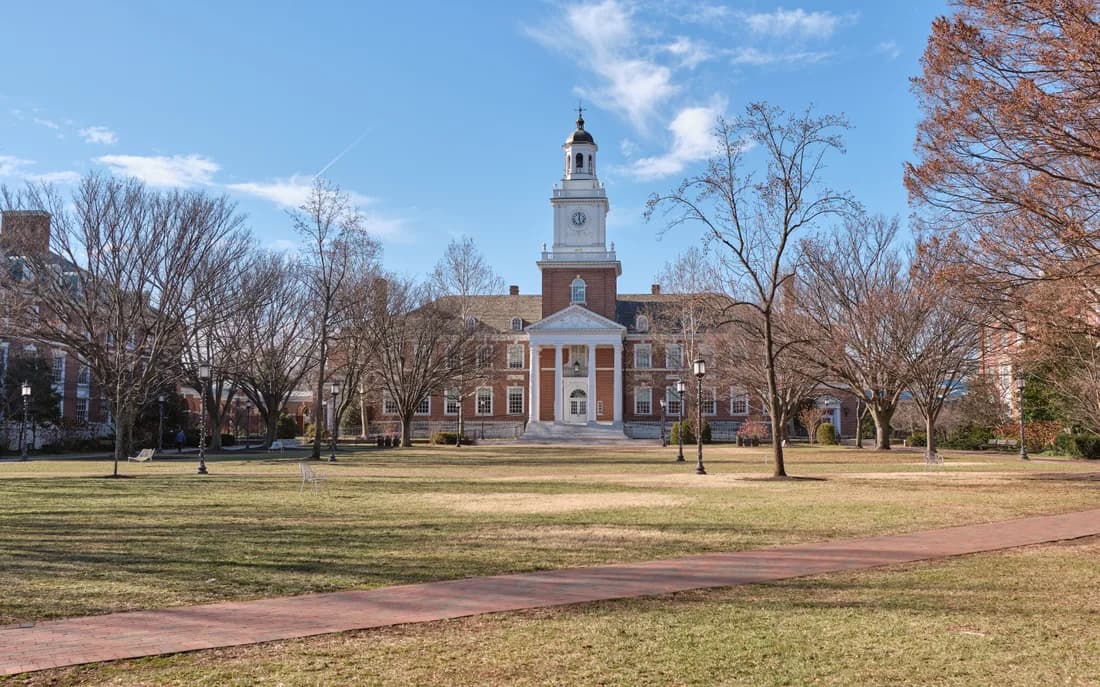
C.M. received offers from Johns Hopkins and UCLA, waitlists at Duke and Columbia and a denial from Yale. She chose Johns Hopkins after reviewing aid, academic access and the fit between neuroscience and public health. The final file acknowledged a difficult semester while showing recovery and sustained responsibility.
WHAT CHANGED
- A short context note replaced both silence and emotional overexposure.
- Health-fair duties were separated from clinical work.
- Science interest was built from the access C.M. actually had.
- Recovery appeared through later academic work rather than a resilience slogan.
WHAT DID NOT CHANGE
- The weaker chemistry semester remained on the transcript.
- Family medical details remained private.
- C.M. had not worked in a university laboratory.
- The consequences of the difficult year were not presented as finished or beneficial.
The reader’s understanding changed in stages.
This sequence describes what the revised evidence made easier to understand. It does not claim to reconstruct an admissions committee’s private deliberations.
A strong student with one marked semester of weakness, especially in chemistry.
A caregiving period affected available time without making private medical detail necessary.
A student connecting health, writing, and communication without imitating laboratory access she did not have.
C.M. compared aid and a credible route between neuroscience and public health.
The alternatives were plausible—and less useful.
Omit the family context entirely
The weaker semester would remain visible without the timing needed to interpret it.
Tell the full medical story
Another person's privacy would become application material without adding necessary academic context.
Call health-fair work clinical experience
Ordinary communication and logistics would imply authority C.M. did not possess.
Manufacture laboratory evidence
A credible access-aware record would be replaced by a weaker imitation of a different student's opportunities.
Each stage used a different test.
| Decision | How it was tested |
|---|---|
| How much family context to share | Explain timing, responsibility, and academic effect while withholding diagnosis and unnecessary detail. |
| How to describe health-fair work | Separate communication and logistics from clinical care or research. |
| How to establish academic interest | Use later coursework, reading, journalism, and volunteering available within C.M.'s context. |
| How to choose among offers | Compare aid, neuroscience access, public-health pathways, and advising rather than thematic reputation alone. |
WHAT THIS CASE SUPPORTS
- Family responsibilities coincided with a documented academic dip and later recovery.
- C.M. contributed to health communication and logistics at a community event.
- She could build an academic interest through evidence available outside a laboratory.
WHAT IT CANNOT PROVE
- That C.M. performed clinical or research work.
- That the revised handout produced a measured health outcome.
- That hardship itself caused later strength or deserved an admissions reward.
Questions before hardship becomes the whole file
The profile shows how one applicant’s evidence and decisions were organized. It does not predict another person’s result or supply a story to copy.
- What is the minimum context needed to make the academic sequence understandable?
- Which sentence crosses from your experience into another person's private information?
- What did people misunderstand even though the content was accurate?
- Which evidence of scientific interest was realistically available to you?
- Does your account show recovery without thanking the hardship for happening?
C.M.’s application gained credibility by saying enough, but not everything—and by showing scientific interest without borrowing the appearance of clinical authority. Context can be sufficient without becoming emotionally exhaustive. C.M. protected family privacy, avoided clinical overstatement and still explained a meaningful academic interruption. The application showed recovery through later work and choices rather than asking hardship to prove character by itself.