SMALL BY DESIGN Every student gets our full attention. Read our story →
All graduate guides
University of Cambridge

UNIVERSITY OF CAMBRIDGE · LLM GUIDE

Aiming for Cambridge’s LLM? The Faculty won’t reconsider its decision, so the file due December 8, 2026, has to be complete.

Cambridge’s Master of Law (LLM) runs from October to June: nine months of taught papers for about 190 students from 40 to 50 countries. About 1,500 people apply, and the Faculty of Law waits for the deadline, then ranks the whole field.

2027–28 entry

Daffodils under bare trees beside a gravel path and lamp at Downing College, with its long classical range across the lawn
Downing College, Cambridge · Photo: The wub / Wikimedia Commons, CC BY-SA 4.0. Resized and cropped.

GET TO KNOW THE PROGRAM

Pick your four papers, and pass three in one field to earn a named specialism.

Most papers have about 30 students or fewer, and the Faculty of Law teaches every class in its David Williams Building.

OCTOBER TO MAY

Four papers, taught in seminars.

A paper is a course, usually with 16 two-hour seminars or lectures, small-group workshops, and two practice essays for feedback.

OPTIONAL

One dissertation, in place of a paper.

Up to 12,000 words on an approved topic, if the paper allows it. Title due in your first term; dissertation due May 1.

JUNE

Results, and any specialism.

Results come in late June or early July. Three papers in one field, or two and a dissertation, put the specialism on the class list and your transcript.

Check each paper’s assessment before you choose it.

Cambridge’s course page says most papers end in a year-end exam, but the Faculty is still reviewing its assessment options.

Papers, dissertations, and specialisms

Papers: About 30 run each year, and most 2026–27 papers will run again in 2027–28, though one or two popular papers usually drop out, almost always for research leave.

Choosing: Very popular papers may be capped, and timetable clashes or barred combinations can limit your choice.

Dissertations: The latest notice, for 2025–26, marked 22 of its 36 listed papers as allowing one.

Specialisms: Which papers count toward each field was last published for 2025–26, so check the 2027–28 list before you plan around a specialism.

Your College, housing, and visas

Your College: Every offer holder gets a College, but not always one they named. You can name two, and you can’t change them after an offer.

What it gives you: Housing, meals, sports, support, and a Director of Studies. Most Colleges also have law societies.

Where you live: For at least three terms, LLM students must live within 3 miles of Great St Mary’s Church, in the city center. Most other postgraduates can live up to 10 miles away.

Visas: Getting a visa is your responsibility, and delays are common, so meet your offer conditions early. Meeting the LLM’s English requirement also covers the visa’s English rule.

A sunlit lawn and paved walk on the Sidgwick Site, with a raised modern faculty building on columns and a birch tree
The Sidgwick Site, home of the Faculty of Law · Photo: Cmglee / Wikimedia Commons, CC BY-SA 4.0. Resized and cropped.

UNDERSTAND WHAT THE FACULTY LOOKS FOR

The Faculty ranks applicants on academic merit, and its minimum is a First-class law degree or the overseas equivalent.

Successful applicants usually rank well inside the top tenth of all law students in their jurisdiction. Even a First, the top class of UK degree, doesn’t guarantee a place.

YOUR GRADES

You’re judged on the grades you have when you apply.

Final-year students are welcome, with an academic condition on their offer.

Letrado’s adviceIf your early grades are good but not outstanding, the Faculty says waiting a year for stronger results can be the better choice.

YOUR LAW DEGREE

Bring a law degree. Other subjects count only rarely.

Another subject counts only with substantial legal experience or a top professional result. UK LLM holders are generally refused unless this one would take them in a clearly new direction.

Letrado’s adviceCivil-law graduates are welcome, but this isn’t an introduction to the common law. For common-law papers, prepare before or during the year, for example with a summer course in English legal methods.

YOUR FOCUS

Build your case on a field the LLM covers every year.

The next year’s paper list usually comes out in July, after decisions.

Letrado’s advicePick a field such as competition, international, or European law, not one paper that might not run.

How the Faculty decides

WHAT THE FACULTY DESCRIBES

Every complete file is ranked against the others after the deadline.

After December 8

offers go out in order of strength, up to the University’s quota

By March 1, 2027

all decisions are made, though formal notice can take longer

The Faculty’s pages describe no interview. There’s no waiting list, no feedback, and no reconsideration, even if new grades or a scholarship arrive later.

The LLM or the Master of Corporate Law (MCL)?

WHAT THE FACULTY DESCRIBES

The MCL is a smaller, corporate-only degree with its own deadline and fee.

About 25

MCL students, against about 190 to 210 on the LLM

Six subjects

a full-year Deals course, one LLM corporate paper, and four one-term modules, with no dissertation

£58,300

the MCL’s 2027–28 fee, for home and overseas students alike

The MCL’s deadline is January 6, 2027, and its target date for decisions is April 30, 2027. An offer asks for a non-refundable £5,000 reservation fee within a month. If you hold both offers, your choice is final, and you can’t transfer later.

After the LLM: practice, research, or a PhD

WHAT THE FACULTY DESCRIBES

Firms and chambers recruit in Cambridge, and the dissertation can lead to a PhD.

The Faculty doesn’t publish employment figures for LLM graduates.

A PhD needs a fresh application. Its entry standard is a First, or a very good upper second (the next class down) with a first or distinction in a relevant master’s.

A paved walk between faculty buildings, framed by leaves, leading toward the tower of Cambridge University Library
The University Library from the Sidgwick Site · Photo: Michael Behrend / Wikimedia Commons, CC BY-SA 2.0. Resized and cropped.

PLAN THE APPLICATION

Your application, both references, and your English scores must all be in by December 8, 2026, at 11:59 p.m. UK time.

Apply through Cambridge’s Applicant Portal, and ask your two referees now. Unlike most Cambridge courses, the LLM needs English scores in the application itself, and the Faculty considers no late or incomplete files.

Application and funding deadline

Dec 8, 2026
Closes
11:59 p.m. UK time
IELTS Academic
7.5, with 7.0 in each part

Decisions

Mar 1, 2027
After that
Your College is decided

Offer conditions met

Jul 31, 2027
If missed
The offer lapses

The LLM begins

Oct 1, 2027
Teaching from
Oct 5, 2027

Facts checked against official pages on November 7, 2026.

If you need a visa or an application fee waiver, apply well before December 8 to allow extra processing.

Prepare these pieces together.

  • Reasons for Applying, 5,000 characters

    The LLM’s only statement, and it’s mandatory. Its question appears inside the Applicant Portal.

  • Two references

    Current students need two academic referees. Graduates may use one professional referee, or two after more than six years out of higher education.

  • Transcripts and CV

    Upload each degree’s transcript (interim if you’re still studying) as a scanned PDF under 2MB. Anything not in English needs a registered translator; your own translation won’t count.

  • English scores

    Uploaded before you submit, unless you qualify for an exemption.

  • Nothing extra

    The committee won’t review school certificates, work letters, or published articles. Put achievements in the form or your CV.

English scores and exemptions

IELTS: IELTS Academic 7.5 overall, with at least 7.0 in each part.

TOEFL: A TOEFL iBT taken before January 21, 2026, needs 110 overall, with at least 25 in each section. For a later test, scored on TOEFL’s new scale, Cambridge’s pages disagree, so before December 8, get written confirmation from llm@law.cam.ac.uk, or take the IELTS.

On the new scale, the Faculty asks for 5.5 overall, with at least 5.0 in each section. The University’s LLM course page still prints only 110 and 25, and a University offer guide mentions an extra assessment that both LLM pages rule out.

The rules: Scores must come from one sitting (no TOEFL MyBest) and be under two years old at the October 2027 start. There are no waivers, however strong the case, but some applicants are exempt.

Exemptions: You’re exempt if you’re a national of a majority English-speaking country on the UK government’s list. So are final-year students and recent graduates (within two years) of a three-year degree taught in English in such a country. An offer can still ask for proof.

After you apply: offers, conditions, and deferral

Offers: Every offer has conditions: a College place, a finance form showing you can pay, and your final results if you’re still studying. Miss the July 31, 2027, deadline, and the offer lapses.

Extensions: Waiving an academic condition is very unlikely, but once your other conditions are met, you can ask for more time on it.

Deposits and withdrawing: The LLM pages mention no deposit, and pulling out before registration costs nothing in fees.

Deferral: Deferred entry is possible only in very limited circumstances.

Two applications: You can apply to the LLM and another course separately, but with two offers you choose one.

The stone Front Court of Trinity Hall, with a cupola, sash windows, and ivy around a doorway
Front Court, Trinity Hall · Photo: TrinityHall1350 / Wikimedia Commons, CC BY-SA 4.0. Resized and cropped.

WRITE IN YOUR OWN VOICE

Connect what you’ve studied to what you now need to learn.

5,000 charactersYour Reasons for Applying statement.

The Faculty’s LLM pages set no AI rule of their own, so the University’s rules apply: write your Reasons for Applying and CV without any AI help, including help with your English.

Reasons for Applying · up to 5,000 characters

Name the field, then the question inside it.

Make both clear early, then show how your record prepares you and which kinds of paper would serve your question.

Results that don’t reflect you

This is your one place to explain them.

Cambridge won’t accept an appeal later on grounds such as an illness or a hard term.

St Catharine’s Jacobson Scholarship · 500 words

Studying international law? Add the Jacobson statement.

St Catharine’s College gives one or more LLM awards of about £10,000 to £15,000 if you take at least three international law papers.

The statement goes in the Applicant Portal with your LLM application, which is due December 8, 2026. Winners must join St Catharine’s, other funding reduces the award, and the College aims to decide in June.

References

Choose referees who can rank you.

With grades this central, a referee who can place you among your classmates helps most.

MAKE ROOM FOR THE FINANCIAL QUESTION

Budget £63,777 for an overseas student’s LLM year, or £43,191 at the home rate.

Those are Cambridge’s 2027–28 totals for a student without dependents. The home rate applies mainly to UK students.

BY NATIONALITY

Cambridge Trust LLM scholarships

The Prathiba M Singh Scholarship is for applicants from India, and the Paul Martin Sr Scholarship is for Canadians nominated by the Canadian Institute for Advanced Legal Studies.

BY COLLEGE

College studentships

Trinity offers LLM studentships (scholarships), including one for a focus on European law. Christ’s and St Catharine’s also fund LLM students.

FROM THE FACULTY

Two bursaries from the profession

The 3 Verulam Buildings award supports a commercial law student aiming for the commercial Bar, and Herbert Smith Freehills Kramer funds two half-fee bursaries. Neither award’s page says how to apply or confirms 2027–28, so ask the Faculty.

Law-specific funding (opens in a new tab)

PUBLISHED 2027–28 TOTAL · OVERSEAS LLM STUDENT

£63,777

£48,252 in tuition and £15,525 to live for nine months. At the home rate: £27,666 in tuition, £43,191 in all.

See the monthly living costs
Accommodation
£925
Food
£305
Personal items
£175
Social activities
£160
Study costs
£35
Miscellaneous
£125
All living costs
£1,725 a month

Cambridge estimated living costs in May 2026. Budget separately for travel and visas.

LLM fees and costs (opens in a new tab)

Apply for funding by the same December 8 deadline as your place.

  • Cambridge Trust awardsMost consider you automatically once you’re admitted, and most weigh financial need.
  • Prathiba M Singh and Paul Martin SrThe Prathiba M Singh also looks for a strong interest in intellectual property law, a plan to practice in India, and financial need, and it interviews its shortlist in New Delhi. For the Paul Martin Sr, apply to the Institute too, on its own deadlines.
  • The 3 Verulam Buildings awardOne Faculty page says it pays the home-rate fee; another calls it fully funded, for students in financial need.
  • Trinity’s Hollond StudentshipIt can cover fees, maintenance, and a return ticket for overseas students, though awards can be partial. Trinity doesn’t have to be your first choice, and between outstanding candidates it may prefer non-commercial fields and future academics. Decisions are likely by the end of March or the end of May.
  • Christ’s Spyrou-Lintott StudentshipUp to £15,000 for one LLM student a year, on academic excellence alone, if Christ’s accepts you as a member by April 23, 2027. The award decision is due by May 7, 2027.

Letrado’s advicePlan as if no award will come. Law-specific awards are few, many depend on your nationality or College, and they arrive separately from your place.

ADMITTED TO CAMBRIDGE’S LLM · C.S.

C.S. tied the questions her practice raised to the training she now needed.

Three years into practice in Milan, she had a strong academic record, though not the very top of her class, and a thesis in comparative contract law, not technology. Her early statement read like a list of legal trends: AI, privacy, competition, and arbitration.

One question replaced the list.

Her statement narrowed to comparative technology regulation and how it is put into practice in commercial work.

Her examples were junior, and said so.

She had never led a major case, so her examples showed judgment and limits in careful junior work, not a headline result.

The writing stayed hers.

She wrote every part of her application, and her referees wrote their own letters.

The Faculty’s admissions criteria (opens in a new tab) put academic merit first. C.S.’s statement added what grades can’t show: the question her practice had raised.

AI illustration

C.S. · COMPARATIVE REGULATION

She researched cross-border questions without claiming to lead them.

Read C.S.’s full story
University of Cambridge

HER LLM OUTCOME

Offered a place on the University of Cambridge’s Master of Law (LLM)
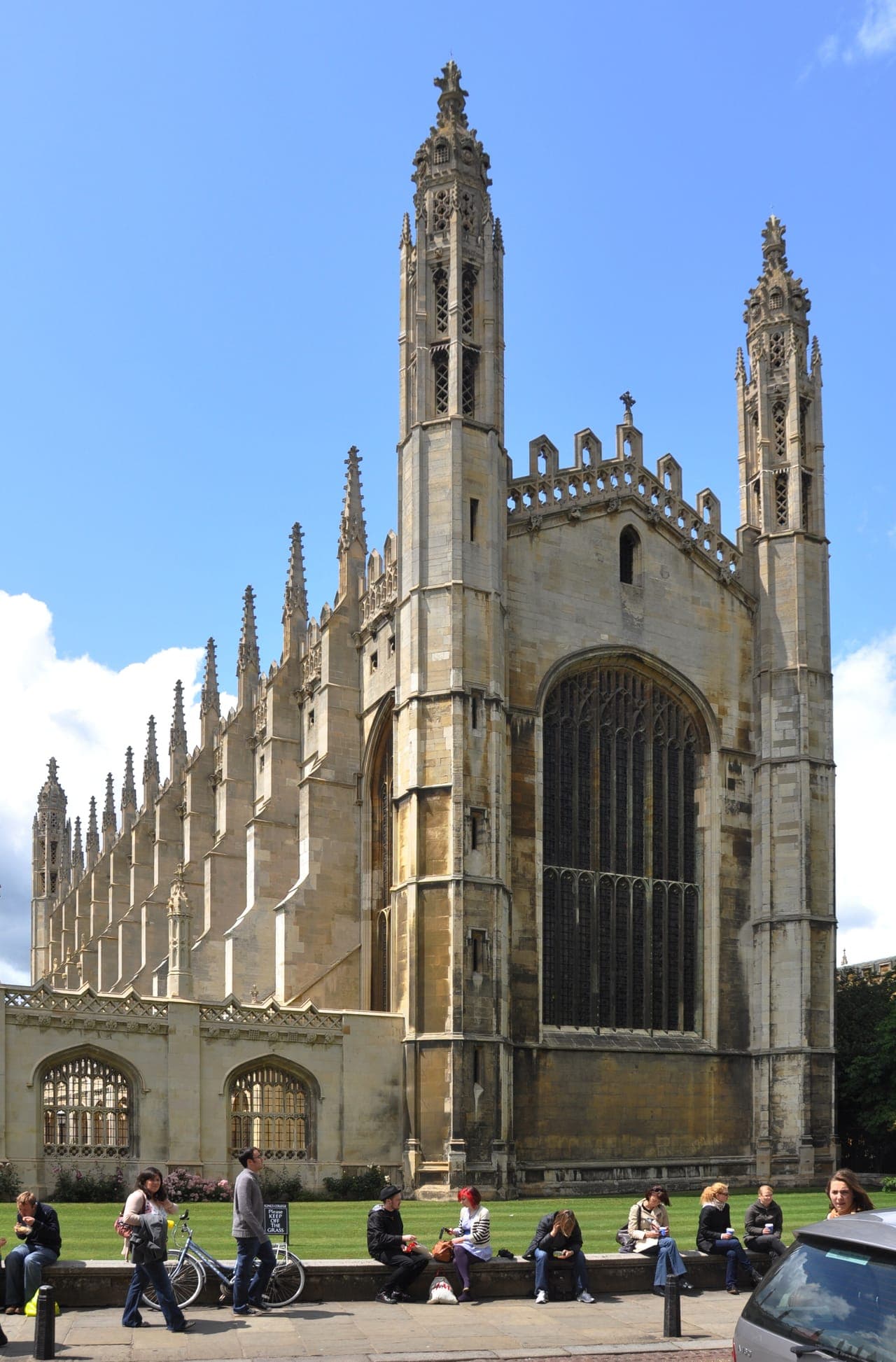
The Gothic towers of King’s College Chapel in CambridgeHER CHOICE: CAMBRIDGE’S LLM

King’s College Chapel · Photo: Andreas Praefcke / Wikimedia Commons, CC BY 3.0. Cropped.

She took her Cambridge place over offers from Columbia and Berkeley.

A concentrated nine-month program, its comparative orientation, and her plan to return to European practice with more responsibility all pointed the same way.

ALSO ADMITTED TO

  • Columbia University
  • University of California, Berkeley

Anonymized client journeys, shared with initials to protect privacy. Portraits are AI illustrations, not photographs of our clients.

Browse all client journeys

WHEN YOU’D LIKE A HAND

A conversation can help you find a useful place to start.

Bring your questions to a free 45-minute introduction with your proposed mentor. Afterward, we’ll email a personalized plan with recommended next steps.

Official Cambridge, Cambridge Trust, SRA, Bar Standards Board, and New York State Board of Law Examiners sources are linked beside the relevant guidance.

Cambridge LLM admissions (opens in a new tab)