SMALL BY DESIGN Every student gets our full attention. Read our story →
All graduate guides

COLUMBIA LAW SCHOOL · LL.M. GUIDE

Want a Columbia LL.M. and a fellowship? Name the ones you want in your application, due December 2, 2026.

Columbia Law School’s Master of Laws (LL.M.) is one full-time year in New York for lawyers who already hold a law degree. The class that started in August 2026 has 334 students, with first law degrees from 54 countries.

Fall 2027 entry

Columbia Law School’s Jerome L. Greene Hall: a tall ribbed stone tower above a green glass wing, at a street corner under a deep blue sky
Jerome L. Greene Hall, Columbia Law School · Photo: Ajay Suresh / Wikimedia Commons, CC BY 2.0. Resized and cropped.

GET TO KNOW THE PROGRAM

Spend August to May on campus in New York, and shape the year around the work you’ll do next.

There’s no online version, and students on a visa can’t study part-time.

AUGUST

Orientation and the U.S. law basics.

Two 2-credit courses start here: Introduction to American Law, and Legal Research and Writing. Both are required unless you hold a U.S. J.D. (Juris Doctor) or opt out.

FALL AND SPRING

11 to 15 credits a term.

24 credits in all, including at least 1 experiential credit, with a grade average of at least 2.67 (B-), or mostly B grades or better.

AFTER MAY

Then practice, a bar exam, or a postgraduate fellowship.

Of the LL.M. class that graduated in 2026, 15 were set to start fellowships that fall. The Parker School’s LL.M. Pathways Fellowship is open only to Columbia LL.M.s.

Heading for the New York bar? Plan your courses before you arrive.

Columbia allows only one professional responsibility course, and only LL.M. Legal Research and Writing meets the writing requirement. Essay, supervised research, experiential study, research assistant, and teaching fellow credits don’t count toward the 24 credits New York requires.

Courses, research, and certificates

The required courses: You take the Introduction to American Law exam in September, and Legal Research and Writing counts toward your experiential credit.

Research and writing: Up to 8 of your 24 credits can come from supervised research or an LL.M. Essay, a thesis that needs a B or better. Columbia’s pages disagree on whether you need a writing project, so ask the Office of Graduate Degree Programs.

Beyond the Law School: Up to 6 credits can come from other Columbia graduate courses or the NYU Law exchange, but not from language courses. There are no joint degrees for LL.M. students.

Clinics and journals: You can join clinics, externships, journals, moot courts, and pro bono projects, but only one clinic.

Certificates: The Parker School recognizes LL.M. graduates who complete 10 credits in international or comparative law and apply by its deadline.

Housing, visas, and work

Housing: You can enter a lottery for university housing, including the Law School’s Lenfest and Lionsgate buildings. Admitted students get the details in the spring.

Health insurance: Every visa holder must enroll in the Columbia Plan, the university’s student health insurance. Some can waive it by September 30 if their own coverage meets its rules.

Your visa: Once admitted, request your I-20, the form for an F-1 visa, from Columbia’s International Students and Scholars Office (ISSO), with your admission letter, passport, proof of first-year funds, and a $121 fee. It takes about a week.

Arriving: You can apply for the visa up to 365 days before your I-20 start date and enter the U.S. up to 30 days before it. Visa applicants must set their social media profiles to public.

Working during the year: You can’t work off campus. On a student visa, you can work on campus up to 20 hours a week while classes are in session.

Internships for credit: Curricular Practical Training (CPT) needs a full academic year in F-1 status first, unless your program requires an earlier internship. Columbia’s international office points to recent federal guidance that limits it further.

After you graduate: OPT needs two consecutive semesters of F-1 study. Apply to ISSO from 90 days before your program ends, pay its $340 fee, and pick a start date within 60 days after it ends.

Approval can take more than three months, and OPT allows at most 90 days without a job. No Columbia page says the LL.M. qualifies for the STEM extension.

The brick and stone front of St. Paul’s Chapel, with columns under a frieze reading Pro Ecclesia Dei, framed by tall trees
St. Paul’s Chapel at Columbia University · Photo: Ajay Suresh / Wikimedia Commons, CC BY 2.0. Resized and cropped.

UNDERSTAND WHAT COLUMBIA LOOKS FOR

Make your academics, your work, and your English all hold up.

Columbia says no single factor outweighs the others, but adds, “Academic strength is essential.”

YOUR LAW DEGREE

Hold the law degree that qualifies you at home.

You need a first law degree, generally the one that qualifies you to practice; another field usually isn’t enough. Columbia doesn’t list bar admission as a requirement.

Letrado’s adviceIf one term was weak, add a short line on what you learned. Columbia says that helps its review.

YOUR EXPERIENCE

Aim for at least a year of full-time work after law school.

Columbia strongly encourages it, and most of its LL.M. students have several years. Final-year law students are admitted only in exceptional circumstances.

Letrado’s adviceApply when your work has raised a question you want to study. One or two years can be enough if you can name it.

YOUR ENGLISH

Aim for scores near the top of each test.

Columbia looks for 8 on the IELTS Academic or 5.5 on the new TOEFL. Lower scores can hurt even a strong application.

Letrado’s adviceAn early first test leaves room for a retake on or before the deadline, December 2, 2026.

Planning to sit the New York bar?

WHAT NEW YORK’S BAR EXAMINERS AND COLUMBIA SAY

An LL.M. can make up one shortfall in your law degree, in length or in substance, but not both.

October 1, 2027

New York’s Board of Law Examiners wants your evaluation request and foreign records by then

Up to six months

for the Board’s decision, once it has all your documents

July 2028

New York’s first NextGen bar exam, which replaces the Uniform Bar Examination

Your law degree must meet your country’s education rules for practicing law. Its length is judged against a U.S. law degree, and its substance against a common-law education.

A qualifying LL.M. needs at least 24 classroom credits on the U.S. campus within 24 months; research papers, independent study, and bar preparation don’t count. The 24 must include at least these, and no course can count twice:

2credits in professional responsibility
2credits in legal research and writing
2credits in American legal studies
6credits in subjects the bar exam tests

Columbia also lists the other steps toward admission: a 17-hour online course on New York law, the New York Law Exam, the Multistate Professional Responsibility Examination (MPRE), and 50 hours of pro bono work.

For New York’s skills requirement, LL.M. graduates need a six-month supervised apprenticeship, in the U.S. or abroad, or practice in another jurisdiction.

Careers after the LL.M.

WHAT COLUMBIA DESCRIBES

Columbia runs an interview program that brings law firms to LL.M. students from seven schools.

U.S. and foreign law firms hire there for permanent and training positions after graduation. For May 2027 graduates, the virtual interview day was October 30, 2026; firms also collect résumés in November, January, February, and March.

Columbia’s employment statistics don’t cover LL.M. graduates.

The Executive LL.M. in Global Business Law

WHAT COLUMBIA DESCRIBES

For lawyers with at least five years of experience, the Executive LL.M. combines online terms with a summer in New York.

February 19 to May 17, 2027

the online spring semester, which you can take while working full-time

May 21 to August 13, 2027

the full-time summer residency on campus

August 20 to September 29, 2027

the online fall semester, with the degree awarded in October

It awards a Master of Laws for 24 credits but doesn’t qualify you for the New York bar exam. Online courses take about 20 hours a week, plus live lectures.

Its regular deadline is also December 2, 2026, with rolling decisions from December to early February. Its 2026 budget was $103,924. One application can cover both LL.M.s, but if both admit you, you choose one.

Butler Library’s long colonnade, with the names Homer, Herodotus, Sophocles, Plato, Aristotle, Demosthenes, Cicero, and Vergil carved above it
Butler Library at Columbia University · Photo: Ajay Suresh / Wikimedia Commons, CC BY 2.0. Resized and cropped.

PLAN THE APPLICATION

Everything is due at Columbia and LSAC by December 2, 2026. Columbia accepts nothing late.

You apply through Columbia’s portal and the Law School Admission Council (LSAC), with no interview. Columbia strongly encourages sending letters and records to LSAC by November 15, so recommenders need early notice.

Supporting documents · suggested

Nov 15
Send to
LSAC

Application deadline

Dec 2, 2026
Fee
$85
Fellowships
Same application
English test
Taken by this date

Decisions, by email

Mid-March
Aid offers
Shortly after

Facts checked against official pages on November 7, 2026.

For fellowships, say yes to the merit-award question, fill in the merit section, and name your choices in your statement. Dates without a year are as Columbia lists them. Columbia gives no closing time, so submit early.

Prepare these pieces together.

  • Statement, résumé, and fee, on Columbia’s portal

    The $85 fee isn’t refundable. For a waiver, granted rarely and only in extenuating circumstances, ask the Office of Graduate Degree Programs.

  • Every university record, through LSAC

    Include every university you attended, exchanges too, even without a degree. Records from abroad go through LSAC’s International Transcript Authentication and Evaluation Service (ITAES).

  • Two letters, through LSAC

    Columbia takes exactly two. Ideally, one comes from a law professor and one from a work supervisor, unless you’ve been out of school more than five years. Any letter you wrote or translated, even in part, can be disqualified.

  • English scores, through LSAC

    TOEFL iBT or IELTS Academic results, sent to LSAC with code 8395, unless you qualify for an automatic waiver.

English tests, dates, and waivers

Accepted tests: Only the IELTS Academic (Columbia looks for 8) or the TOEFL iBT, Home Edition included (5.5 with 5 in each section, or 105 before January 21, 2026). TOEFL MyBest scores don’t count.

Dates: For this cycle, scores must be from December 2, 2024 or later, and a retake after the deadline may not be considered.

Automatic waivers: A first law degree taught entirely in English, in a country where English is an official language, or a four-year U.S. degree. Columbia can still ask for a score.

LSAC’s fees and translations

LSAC’s fees: $45 for the electronic application service, $63 for document assembly, $159 for authenticating and evaluating records from abroad, and $38 for each report sent to a school. LSAC doesn’t waive the first three.

Translations: Records not in English need an official, certified translation. Columbia and New York’s Board of Law Examiners won’t take one you made yourself, though LSAC will.

Class rank: A statement of your rank is encouraged but not required.

Decisions, deposits, and reapplying

Your deposit: Tuition deposits aren’t refundable. Columbia doesn’t publish the amount or the reply date, so ask before you turn down another offer.

Deferring: Apply in the year you plan to attend. Columbia doesn’t say whether you can defer, so if your timing is unsure, ask the Office of Graduate Degree Programs first.

Reapplying: Columbia gives no feedback on denials. Reapply through the same LSAC account, with a new personal statement, an updated résumé, and two letters, new ones if possible. Columbia says extra years of work often help.

The tall ribbed stone and glass facade of Jerome L. Greene Hall above a row of leafy trees
Jerome L. Greene Hall, home of the Arthur W. Diamond Law Library · Photo: Ajay Suresh / Wikimedia Commons, CC BY 2.0. Resized and cropped.

WRITE IN YOUR OWN VOICE

In two pages, explain why an LL.M., why the U.S., why Columbia, and why now.

No more than two pagesDouble-spaced, in 12-point type with 1-inch margins.

Write the statement in your own words. Columbia’s rules bar AI tools from every part of the application, so read them before you start.

Personal statement · up to 2 pages

Answer Columbia’s four whys through your own story.

Tell Columbia things your résumé can’t, and name the fellowships you want to be considered for.

Final-year law students

Show a career goal that couldn’t wait a year.

If you apply before finishing your law degree, your statement must show a specific career goal you couldn’t reach by waiting at least another year.

Human Rights Fellowship

Make the case for it inside your statement.

Explain why you qualify, and ask your recommenders to speak to your human rights work and potential.

Merit awards

Answer yes to the merit-award question.

Then complete the application’s merit section to be considered. Columbia doesn’t publish that section’s questions.

MAKE ROOM FOR THE FINANCIAL QUESTION

Budget $130,724 for 2026–27, and expect most awards to cover only part of tuition.

For your I‑20 visa form, you must show funds of $131,074, the international office’s own figure, plus $1,000 a month for a spouse and $500 a month for each child.

ONE APPLICATION

No separate award form

Answering yes to the merit-award question puts you in the running for every named fellowship. Admission and award decisions are made separately.

25 NAMED FELLOWSHIPS

Some favor a place or a field

Several name a place, such as Greece; Latin America; or China, Hong Kong, and Macau. Others name a field, such as human rights, legislation, or public interest. In the class that started in 2026, 30 students held one.

HOW MUCH

Usually a partial tuition waiver

Some come with loans. Columbia’s pages say full waivers are rarely if ever granted, though the Human Rights Fellowship offers partial to full waivers.

Report every outside award to Columbia within seven days. If your total funding passes the cost of attendance, Columbia can reduce its award.

Financing your Columbia LL.M. (opens in a new tab)

PUBLISHED 2026–27 BUDGET · LL.M. AND J.D.

$130,724

Columbia’s standard cost of attendance for the nine-month year: $98,017 in university charges and $31,312 in living costs, plus a one-time document fee and books.

See the published budget
Tuition
$88,996
Student activity fee
$390
University services and support fee
$1,290
Health and related services fee
$1,518
Student health insurance (U.S. students can waive it with comparable coverage)
$5,823
Housing: rent and utilities ($2,236 a month)
$20,124
Food
$7,552
Personal expenses
$3,636
Document fee, once
$105
Books and supplies
$1,290
International services fee for visa holders, a year (not in the total)
$350

For August 2027 entry, use Columbia’s 2027–28 budget once it’s published. Its international office tells students to expect tuition and fees to rise about 3 to 5% a year.

J.D. and LL.M. tuition and fees (opens in a new tab)

Line up your loans early, especially if you’re applying from outside the U.S.

  • International studentsYou can’t use U.S. federal loans, and private U.S. education loans need a U.S. cosigner, so find one as early as possible.
  • U.S. federal loansU.S. citizens and eligible noncitizens may borrow up to $20,500 a year in Direct Unsubsidized Loans, and up to $100,000 across all their graduate study. Grad PLUS loans ended for new borrowers on July 1, 2026, though some Columbia pages still describe them.
  • Columbia’s own loansColumbia considers you for its institutional loans at the same time as its grants. They’re repaid in full, with interest.

Letrado’s adviceCompare Columbia’s offer with your other offers before any deposit is due.

ADMITTED TO COLUMBIA LAW · C.S.

C.S. showed exactly where her part in each matter began and ended.

Qualified in Italy, she applied after three years in practice, as a junior lawyer at a mid-sized Milan firm. Confidentiality limited what she could say, so her application had to show her own part accurately without naming a client.

She wrote one short summary for each matter.

Each named the question she researched, what she read, what she concluded, and what was left to others.

A partner’s argument stayed the partner’s.

She could describe the kind of question she handled and the judgment it took, but never the client, the strategy, or a senior lawyer’s reasoning as her own.

She weighed New York against her road home.

What drew her to Columbia was its exposure to New York legal practice. She set that against how each program would lead back to practice in Europe.

Columbia’s statement instructions (opens in a new tab) ask for what your résumé can’t show. Like C.S., describe your own part in your work plainly, and leave out what you can’t share.

Columbia University

HER COLUMBIA OUTCOME

Offered a place in Columbia Law School’s LL.M. program
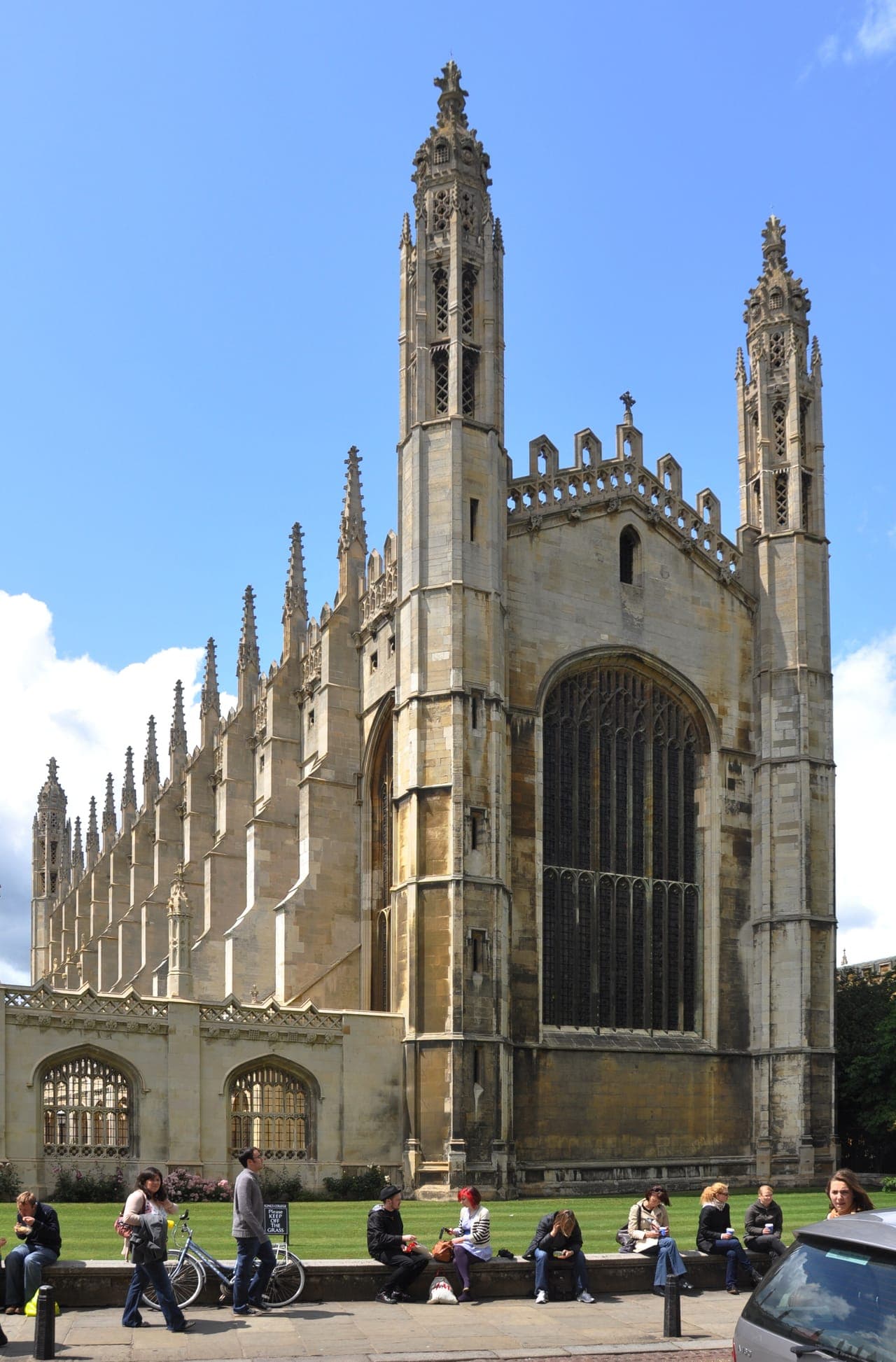
The Gothic towers of King’s College Chapel in CambridgeHER CHOICE: CAMBRIDGE

King’s College Chapel, University of Cambridge · Photo: Andreas Praefcke / Wikimedia Commons, CC BY 3.0. Cropped.

She chose Cambridge, because the career she was building was in Europe.

She meant to return to European practice with more cross-border responsibility, so geography and continuity counted as much as the courses. Cambridge’s concentrated year of comparative study suited that plan.

ALSO ADMITTED TO

  • University of Cambridge
  • University of California, Berkeley

Anonymized client journeys, shared with initials to protect privacy. Portraits are AI illustrations, not photographs of our clients.

Browse all client journeys

WHEN YOU’D LIKE A HAND

A conversation can help you find a useful place to start.

Bring your questions to a free 45-minute introduction with your proposed mentor. Afterward, we’ll email a personalized plan with recommended next steps.

Official Columbia Law School, Columbia University, LSAC, and New York State Board of Law Examiners sources are linked beside the relevant guidance.

Columbia Law School LL.M. admissions (opens in a new tab)