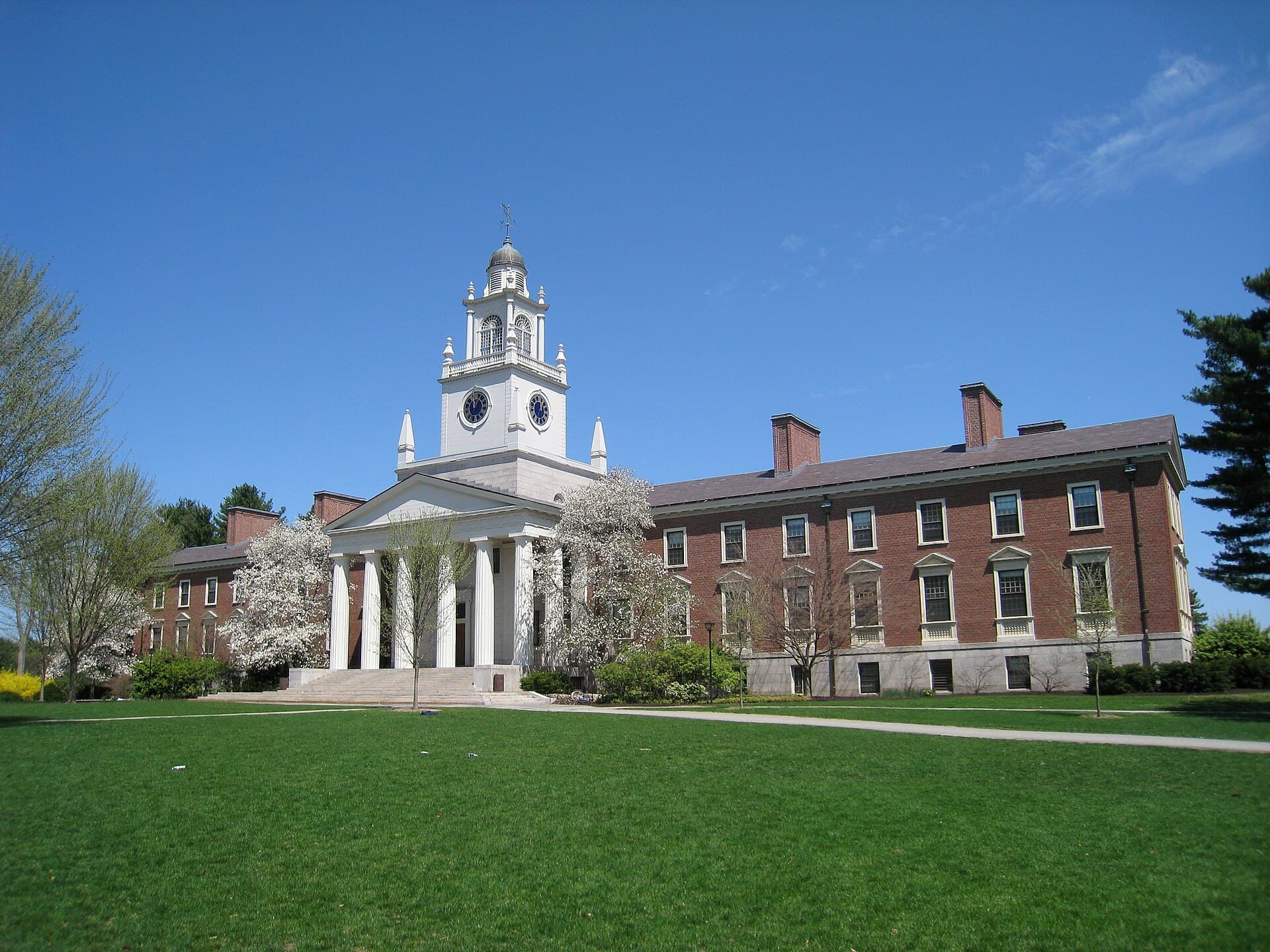
Phillips Academy Andover
Andover, Massachusetts · Boarding and day school
We separate what the school publishes from what it means for an applicant. When the school does not reveal a rule or weight, the guide says so.
Andover offers a very wide curriculum, but breadth is not the same as fit. The student should show how they choose, go deep, use support, and take part in a large residential community.
Andover's breadth rewards students who can choose—not applicants who simply collect options.
Andover combines extensive academic choice with a residential community and an explicit need-blind admission policy. The central fit question is how a student will use abundance: what they pursue deeply, how they connect interests, and whether they can ask for guidance when the menu becomes overwhelming.
The application should preserve developmental truth. Teacher recommendations and school records can show curiosity, reliability, collaboration, and growth in ways that standardized achievements cannot. Student and parent materials should add different information rather than repeat a coordinated brand.
Families should distinguish admission access from the lived transition. Need-blind review and aid can make enrollment possible; they do not answer whether the student is ready for residential life, a demanding schedule, or a community in which independence grows quickly.

The strongest case predicts thoughtful use of freedom, resources, and other people.
Academic strength establishes access to the curriculum; evidence of judgment shows how the student will navigate it.
The interview and writing should make real interests and relationships visible while leaving room for the person to change after arrival.
Contextual record
- What the school says it does
- School records, recommendations, and required application materials establish readiness and context.
- What this means for the application
- Explain the learning environment and development without converting every childhood experience into an accomplishment.
Student encounter
- What the school says it does
- Writing and conversation help the school understand interests, voice, and community fit.
- What this means for the application
- Specific ordinary detail is often more revealing than a catalogue of programs or institutional names.
Family and aid review
- What the school says it does
- Andover states that admission is need-blind and financial need is assessed separately.
- What this means for the application
- Build the educational case independently, then model the actual family contribution and incidental costs carefully.
Each part answers a different question. Together, they still need to describe one person.
The middle column stays close to what the school publishes. The last column explains what that means without pretending there is a secret formula.
Academic range
- What this part can prove
- Andover offers substantial choice across disciplines and levels.
- What the reader is trying to learn
- Range is valuable when a student can explain patterns, priorities, and where they want to accept difficulty.
Independence
- What this part can prove
- Boarding life combines structure with increasing personal responsibility.
- What the reader is trying to learn
- Look for routines, judgment, help-seeking, and recovery rather than an unrealistic claim of complete self-sufficiency.
Community contribution
- What this part can prove
- The school evaluates students as members of a shared residential and academic community.
- What the reader is trying to learn
- Small, sustained acts of reliability and inclusion can predict contribution better than formal leadership titles.
Growth capacity
- What this part can prove
- Recommendations and school history show development over time.
- What the reader is trying to learn
- An honest trajectory—including setbacks and changed habits—can be more informative than a polished static portrait.
Use the data to ask better questions.
Past-class ranges describe prior cohorts. They are not minimums, targets, or guarantees. We call a figure a minimum only when the institution publishes it as a requirement.
Admission policy
The admission decision does not consider the family's ability to pay; demonstrated need is evaluated for admitted students.
Andover affordability ↗Community models
The same academic program can produce different practical experiences depending on residence, commute, access, and family rhythm.
Andover admission ↗Institutional ideal
The school's language of 'not for self' makes contribution and relationship a meaningful fit test, not an essay slogan.
About Andover ↗Courses
Andover reports eight world languages and roughly 150 electives. The application should explain how the student would choose, not collect, options.
Andover fast facts ↗Average class size
Small classes make preparation, questions, revision, and relationships with teachers visible.
Andover fast facts ↗Students receiving aid
Andover says admission is need-blind and that it meets one hundred percent of demonstrated need with grants.
Andover tuition and financial aid ↗Follow the reasoning, not just the final sentence.
The detailed scenario below is illustrative. It shows the starting facts, the weak version, the stronger evidence, and the question a careful reader would ask next.
Breadth became useful only after the student made choices.
An illustrative applicant loved Andover's course range and named many subjects she hoped to explore. The draft celebrated abundance but gave no sign that she could choose, manage a demanding week, or ask for help when an approach failed.
With hundreds of courses, Andover will let me explore every interest and discover my full potential.
The student connects two interests already visible in her work: environmental chemistry and documentary storytelling. She identifies which foundation courses must come first, what she would postpone, and how one field could sharpen questions in the other. A mathematics teacher describes a failed approach, the student's decision to attend office hours, and how she used the feedback on the next problem set. In the interview, she explains that independence means noticing when a plan is not working and using the people around her—not handling every problem alone.
- Breadth follows a believable starting point.
- The student can prioritize instead of collecting options.
- Help-seeking is shown as judgment rather than weakness.
A second way the same kind of application can weaken.
Independence includes asking for help
I handle every problem on my own.
When my math approach failed, I went to office hours, tested the feedback on the next set, and could explain what I changed.

The school is choosing a student, not a finished résumé.
Natural voice, learning habits, relationships, and readiness for daily school life matter more than adult-perfect language.
Every document has a different job.
Repeating the same story can sound polished without adding proof. A stronger file uses each part to answer a different question and lets other people back up the claims that matter.
School record and graded work
- What the reader needs from it
- Show readiness, classroom habits, development, and the educational context appropriate to the entry grade.
- What weakens it
- Adult-polished materials or testing treated as the child's entire academic identity.
- What stronger evidence looks like
- Authentic schoolwork, teacher context, age-appropriate strengths, and honest evidence of how the student learns.
Student writing
- What the reader needs from it
- Make interests, reflection, voice, relationships, and growing independence visible.
- What weakens it
- A miniature college essay written in adult language.
- What stronger evidence looks like
- Concrete, age-appropriate detail and a student whose humor, uncertainty, and thought remain recognizable.
Parent statement
- What the reader needs from it
- Add family history, growth, support needs, and context unavailable to the student or school.
- What weakens it
- Repeating the student's accomplishments or directing the committee toward a predetermined verdict.
- What stronger evidence looks like
- A candid complementary account of development, environment, practical needs, and the child's emerging independence.
Recommendations
- What the reader needs from it
- Show classroom contribution, learning behavior, relationships, response to feedback, and readiness for the environment.
- What weakens it
- Generic praise from teachers who cannot describe specific moments.
- What stronger evidence looks like
- Examples of curiosity, collaboration, setbacks, help-seeking, kindness, and change across the school year.
Interview
- What the reader needs from it
- Allow mutual assessment of personality, curiosity, communication, and residential or community fit.
- What weakens it
- A rehearsed adult performance optimized for prestige.
- What stronger evidence looks like
- Natural conversation, specific interests, honest questions, and age-appropriate self-awareness.
Make every important claim easy to check.
These questions turn the school's process into a practical checklist for this applicant.
Navigation and self-advocacy
Show how the student selects priorities, asks for help, and develops interests when many pathways are available.
Authentic intellectual range
Breadth should arise from real curiosity and connection, not a list designed to mirror the course catalog.
Teacher and family context
Recommendations and parent materials should explain growth, learning habits, and support needs without scripting the child's voice.
Questions to settle before polishing the application.
The program-specific questions test this exact option. The second set tests whether the wider degree plan still makes sense.
Questions specific to Phillips Academy Andover.
- Map the current interview, recommendation, testing, and application steps
- Help the student identify authentic examples and interests
- Give recommenders useful context without scripting them
- Compare financial aid and the full family commitment early
Questions that remain true across the category.
- Would the student flourish in the school's actual weekly rhythm?
- What academic, residential, and pastoral support would the transition require?
- Can the family explain why this environment fits this child?
- Is the total financial and travel commitment sustainable?
Common strategic misreads.
- Confusing opportunity count with fit
- Adult-polished student essays
- Ignoring how a student seeks support in a large school
- Assuming aid without completing the current process
Decisions the applicant should be able to defend.
- Would the student flourish or become scattered in this breadth?
- How do they choose, organize, and seek help?
- Does day or boarding life fit the family?
- What does the student want from a large, varied peer community?
Read the rule where the institution publishes it.
These sources support the analysis above and remain the authority for application requirements, assessment, costs, aid, and deadlines.
Andover admission
Official admission and school-fit starting point.
Open official source ↗How to apply
Current components, interview, and deadlines.
Open official source ↗Academic curriculum
Course breadth and learning environment.
Open official source ↗Tuition and financial aid
Current aid model and family process.
Open official source ↗This is Letrado's educational analysis, not an admissions prediction or institutional endorsement. The institution's own instructions control the live application.
Build a Phillips Academy Andover strategy around the person—not the name.
We will listen carefully and tell you whether we believe Letrado is the right fit. If another resource would serve you better, we will be honest about that too.
See If We Are a Fit
Representative image
Turn the published rules into a strong application.
Abundance can become noise
A student who needs every option may struggle to use any one deeply. The application and family conversation should show emerging criteria for choosing, committing, and stopping.
Independence includes asking for help
Boarding readiness is not emotional invulnerability. Knowing when to approach an adviser, teacher, house counselor, or peer is part of mature self-management.
The parent statement should release control
The most useful family account explains development and support needs while allowing the school to encounter a child who will increasingly make their own decisions.