
SMALL BY DESIGN Every student gets our full attention. Read our story →
All undergraduate guides

UNDERGRADUATE ADMISSIONS GUIDE

Show Princeton the questions you want to pursue.

Princeton has about 5,200 undergraduates, and every senior writes a thesis or completes a substantial independent project. Start here to understand how you’d study, then prepare each part of your application.

Fall 2027 entry

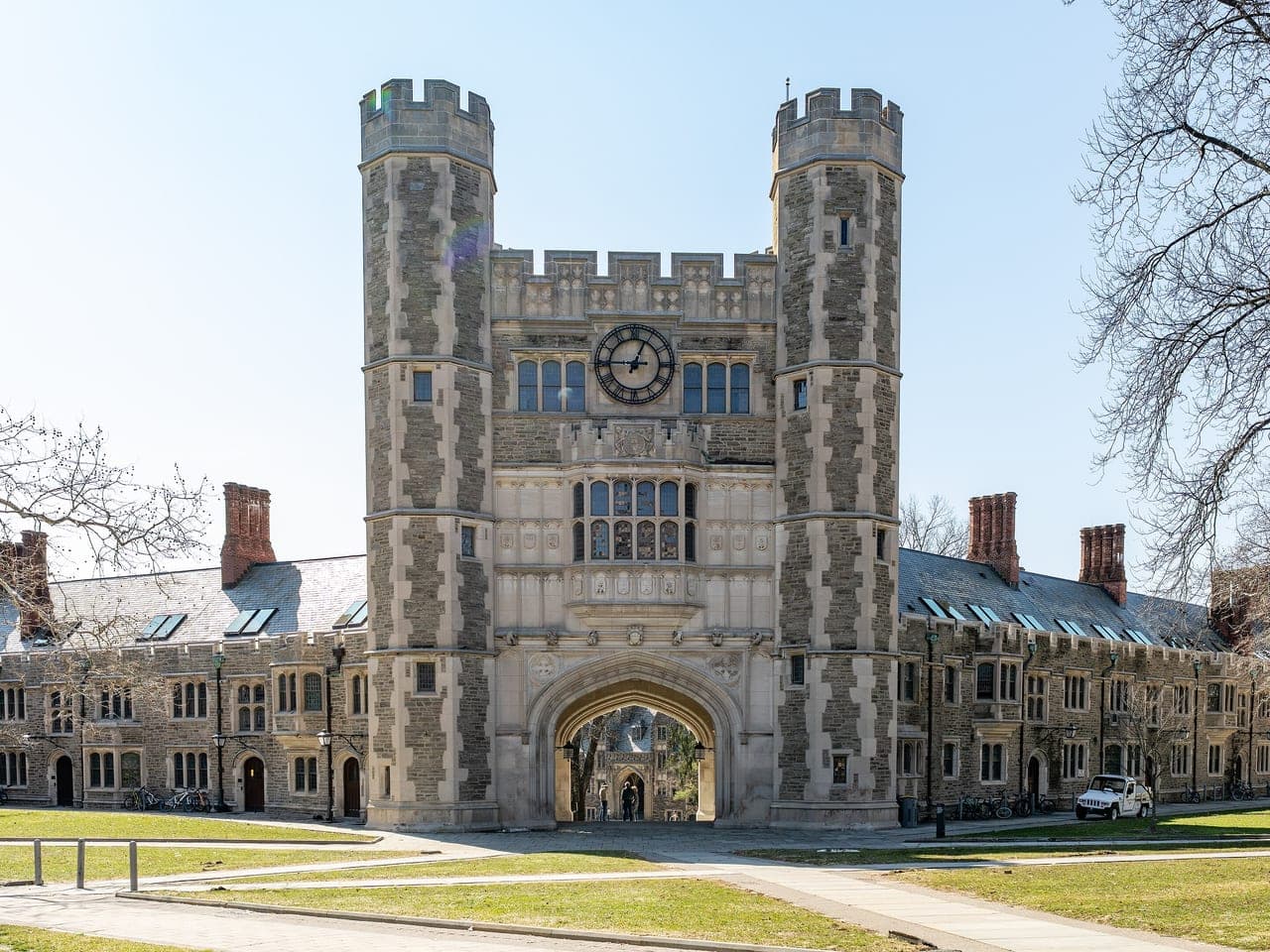
Blair Arch and its two towers at Princeton University
Blair Arch, Princeton · Photo: ajay_suresh / Wikimedia Commons, CC BY 4.0. Resized and cropped.

GET TO KNOW THE EDUCATION

Explore widely first, then follow a question of your own.

You apply to Princeton University, not to a department. You’ll study for a Bachelor of Arts (A.B.) or a Bachelor of Science in Engineering (B.S.E.), and in your last two years you’ll do independent research in your department.

FIRST YEAR

Begin with writing and small seminars.

Every first-year student takes a writing seminar. You can also choose from about 75 first-year seminars, each limited to 15 students and taught by Princeton faculty.

YOUR MAJOR

Choose it after one or two years.

B.S.E. students choose a major after their first year, and A.B. students after their second. What you list on your application doesn’t commit you.

JUNIOR AND SENIOR YEARS

Research something of your own.

Planning starts in junior year, with a research project known as the junior paper. As a senior, you’ll write a thesis, or complete a substantial project in some engineering departments, guided one-on-one by a faculty member.

Breadth runs through both degrees.

A.B. students take courses across several broad areas and become proficient in another language. B.S.E. students share a base in math, physics, computing, and chemistry or molecular biology, and take at least seven humanities and social science courses.

Choosing between the A.B. and the B.S.E.

On your application: You pick the A.B., the B.S.E., or undecided, as well as the departments that interest you. Princeton says these choices don’t affect your chances or commit you to a course of study.

If engineering draws you: Princeton looks closely at B.S.E. applicants’ math and science background. The degree takes 36 courses, including four semesters of math and two of physics.

UNDERSTAND WHAT PRINCETON CONSIDERS

Your transcript comes first, and Princeton reads everything.

Princeton has no formula for weighting the parts of an application. It calls your transcript the most important part, then considers every other piece and each applicant’s particular strengths.

YOUR CLASSES

Take on the challenges your school offers.

Princeton expects English, math, a foreign language, lab science, and history where possible, and looks for students who took the honors, AP, or dual-enrollment courses available to them.

Letrado’s adviceTake the most demanding classes you can handle well at your school. If it offers few advanced courses, your counselor’s school profile can explain that.

YOUR CURIOSITY

Let your curiosity show in what you did.

Princeton values liveliness of mind, motivation, creativity, perseverance, and independent thought. It calls intellectual curiosity and academic excellence the most important factors in its decisions.

Letrado’s adviceShow curiosity through actions: a question you kept following, a source you tracked down, a draft you rewrote. That says more than calling yourself curious.

BEYOND THE CLASSROOM

Show where you’ve made a difference.

Princeton looks for students who make a difference in their schools and communities, and asks about your leadership, interests, special skills, and other involvements.

Letrado’s adviceDescribe what you actually did, for whom, and for how long. Paid work and family responsibilities belong in this picture too.

How the optional alumni interview works

WHAT PRINCETON DESCRIBES

An informal conversation with a graduate, if one is near you.

After you apply

Unless you opt out, you may be emailed an invitation to meet a member of the Princeton Alumni Schools Committee.

30–45 min

An informal conversation about what matters to you, with time for your own questions.

Opting out won’t put you at a disadvantage. Alumni reach most applicants, but Princeton can’t promise everyone an interview, since it depends on alumni near you. If you aren’t offered one, that won’t count against you either. None take place on campus.

The class that entered Princeton in 2026

CLASS OF 2030 PROFILE

A class of 1,414, and most qualify for financial aid.

1,414students enrolled
71%qualify for financial aid
25%are eligible for federal Pell Grants
19%are the first in their families to go to college
12.9%are international citizens
62.2%went to public schools

Princeton’s statistics describe who enrolled. They don’t say how many students applied or were admitted.

PLAN THE APPLICATION

Early Action won’t bind you, but it limits where else you apply early.

Apply through the Common App, or the QuestBridge Application if you’re a QuestBridge finalist, with the Princeton-specific questions. If Princeton admits you early, you still have until May 1 to decide.

Single-Choice Early Action Next deadline

Nov 1, 2026
Aid application
Nov 9, 2026
Decision
Mid-December
Reply by
May 1, 2027

Regular Decision

Jan 1, 2027
Aid application
Feb 1, 2027
Decision
Late March
Reply by
May 1, 2027

Applying early to Princeton rules out early applications to other private U.S. colleges, even nonbinding ones. You can still apply early to public universities, service academies, universities outside the U.S., and colleges with rolling admission, if the decision isn’t binding.

Prepare these pieces together.

  • Application, questions, and fee

    The Common App or QuestBridge Application, plus the Princeton-specific questions. All low-income students, and anyone who is serving or has served in the U.S. military, can use Princeton’s own fee waiver.

  • A graded written paper

    Required: a graded paper of at least one page from an English, social studies, or history class in your last three years of school.

  • School records and three letters

    Your transcript, school report, counselor recommendation, and midyear report, plus letters from two teachers of higher-level courses in different core subjects.

  • SAT or ACT, if you choose

    Optional for fall 2027 entry, and applying without scores won’t put you at a disadvantage. Princeton will require them again for fall 2028 entry.

  • An optional alumni interview

    After you apply, you may be invited to talk with a Princeton graduate. You can opt out without any disadvantage.

If you’re applying from outside the U.S.

English tests: If English isn’t your native language and your school doesn’t teach in English, take the TOEFL, IELTS Academic, Duolingo English Test, or PTE Academic by your deadline. Three years at a secondary school that teaches mainly in English exempts you.

The same review: Princeton reviews every application in the same way, whatever your citizenship or country.

Fee waivers: They’re open to international students applying for financial aid who come from a lower-income background, or for whom the fee is a hardship.

The graded paper, QuestBridge, deferral, and the arts supplement

Your graded paper: Include the whole paper, the prompt, your grade, and any comments. If your school doesn’t grade work, send teacher comments and a rubric instead.

QuestBridge finalists: Princeton’s National College Match is binding, with all materials due November 1. If you rank Princeton and don’t match, you’re considered in Regular Decision automatically.

If you’re deferred: Your early application moves into Regular Decision, and Princeton considers it again with that group.

Arts supplement: If you’ve devoted significant time to an art form, you can send optional work by November 6 for Early Action or January 8 for Regular Decision.

WRITE IN YOUR OWN VOICE

Three essays, three short answers, and a paper you’ve already written.

Up to 1,150 words in allTwo essays of up to 250 words, one of 400 to 500 words, and three short answers of up to 50 words each.

Princeton asks these questions alongside the Common App or QuestBridge Application, and when you apply, you certify that your essays are your own work. Its application pages set no AI rule, but in an August 2025 blog post, its dean of admission cautioned against using AI in your application.

Letrado’s adviceAI can help you brainstorm, check spelling and grammar, or understand a topic, but every sentence you submit must be your own. Given the dean’s caution, you may want to leave AI out of this application altogether. Write the way you talk, with plain words and specific details.

Read Princeton’s exact questions (opens in a new tab)
Your academic interests · up to 250 words

Connect your curiosity with what Princeton offers.

A.B. and undecided applicants say which academic areas most pique their curiosity and how Princeton’s programs suit them. B.S.E. applicants explain why they want to study engineering at Princeton, including any experience of it.

Your Voice: lived experience · 400 to 500 words

Show what you’d bring to conversations on campus.

Princeton asks how your lived experience has shaped you and how it will affect your conversations in class, in the dining hall, or elsewhere on campus. It also asks what your classmates will learn from you. A few real moments will say more than a summary of your life.

Your Voice: service · up to 250 words

Find where your own story meets service.

Princeton describes a longstanding commitment to service and civic engagement, and asks how your own story intersects with those ideals. Everyday responsibilities to your family or community can be an honest answer.

More About You · up to 50 words each

Answer three quick questions as yourself.

A new skill you’d like to learn in college, what brings you joy, and the song that represents the soundtrack of your life at this moment.

Graded written paper · at least one page

Choose analytical writing from a real class.

Princeton prefers thesis-driven analytical writing to science research, creative writing, personal narratives, or papers mostly focused on data analysis. The paper should be written in English originally, not translated.

MAKE ROOM FOR THE FINANCIAL QUESTION

Princeton meets your full need with grants, wherever you’re from.

Admission is need-blind, so asking for aid won’t count against you. If you’re admitted, Princeton meets 100% of your demonstrated need with grants, not loans, under the same policy for international students.

U.S. FAMILY INCOME UP TO $150,000

$0

family contribution for most U.S. families, when assets are under $175,000.

U.S. FAMILY INCOME OF $250,000

$25,000 a year

average family contribution, with assets under $175,000 and one child in college. At $200,000, it’s $12,500.

INTERNATIONAL FAMILIES

The same policy

Princeton meets the full need of every admitted international student, just as it does for U.S. students.

For most U.S. families, the contribution is 25% of income above $150,000, plus 5% of student and parent assets above $175,000. Your family’s main home and retirement savings don’t count as assets. For families outside the U.S., Princeton adjusts the contribution for the cost of living.

How Princeton sets the family contribution (opens in a new tab)

PUBLISHED 2026–27 COST · BEFORE AID

$94,624

Tuition is $68,140. The rest covers housing, food, fees, books, and personal expenses. Travel isn’t included and may range from $50 to $5,000.

See the full budget
Tuition
$68,140
Housing
$13,010
Food
$9,110
Activities fee and class dues
$314
Books, supplies, and equipment
$1,050
Personal expenses
$3,000
Travel (not in the total)
$50–$5,000

For fall 2027 entry, use the 2027–28 budget when Princeton publishes it. Without family health coverage, add the Student Health Plan: $4,220 in 2026–27, with aid available.

Princeton’s student budget (opens in a new tab)

Apply for aid when you apply for admission.

  • The Princeton Financial Aid ApplicationDue November 9 for Early Action or February 1 for Regular Decision, with your parents’ tax returns. U.S. citizens and permanent residents also file the 2027–28 FAFSA.
  • No CSS ProfilePrinceton doesn’t use the CSS Profile or IDOC. If your parents file taxes outside the U.S., upload the original return and, if it isn’t in English, a certified translation.
  • Aid based on need alonePrinceton offers no academic or athletic merit scholarships. Outside scholarships replace Princeton grant aid dollar for dollar.

Letrado’s adviceTry Princeton’s net price calculator as a family before you apply. It’s built for families in the U.S. and Canada, so if you live elsewhere, apply for aid anyway: asking won’t hurt your chances.

Princeton estimates the average grant for an aid student at $83,000, and 89% of recent seniors graduated debt free.

Princeton’s cost and aid overview (opens in a new tab)

ADMITTED TO PRINCETON · N.S.

N.S.’s small project raised the questions he wanted to study.

He went to a CBSE school in India and was applying abroad for the first time. His application leaned on grades, coding competitions, and technical terms, while his interest in language, which came from family life and translation, barely appeared. We helped him connect the two.

He described his tool at its real size.

He had built a simple tool to help younger cousins practice pronunciation in two languages. Early drafts called it an education platform. He rewrote it with its real number of users, fewer than thirty, and dropped claims of learning impact, since it had never been formally evaluated.

His essays grew from testing it with relatives.

Relatives ignored instructions he thought were obvious, accents challenged the model, and some corrections felt discouraging. Those scenes let him write about listening, usability, and language without pretending the project was a startup.

He answered his parents’ worry with research.

His parents were planning a large expense and hoped for a clear computer science path. He compared computer science, linguistics, independent work, and breadth requirements. He showed how linguistics strengthened his technical interest, and he made the final preference order himself.

Princeton’s own advice (opens in a new tab) is to create an application that helps it see your achievements, inside the classroom and out, in their true context. Describing a project at its real size does exactly that.

Princeton University

HIS PRINCETON OUTCOME

Offered a place at Princeton University
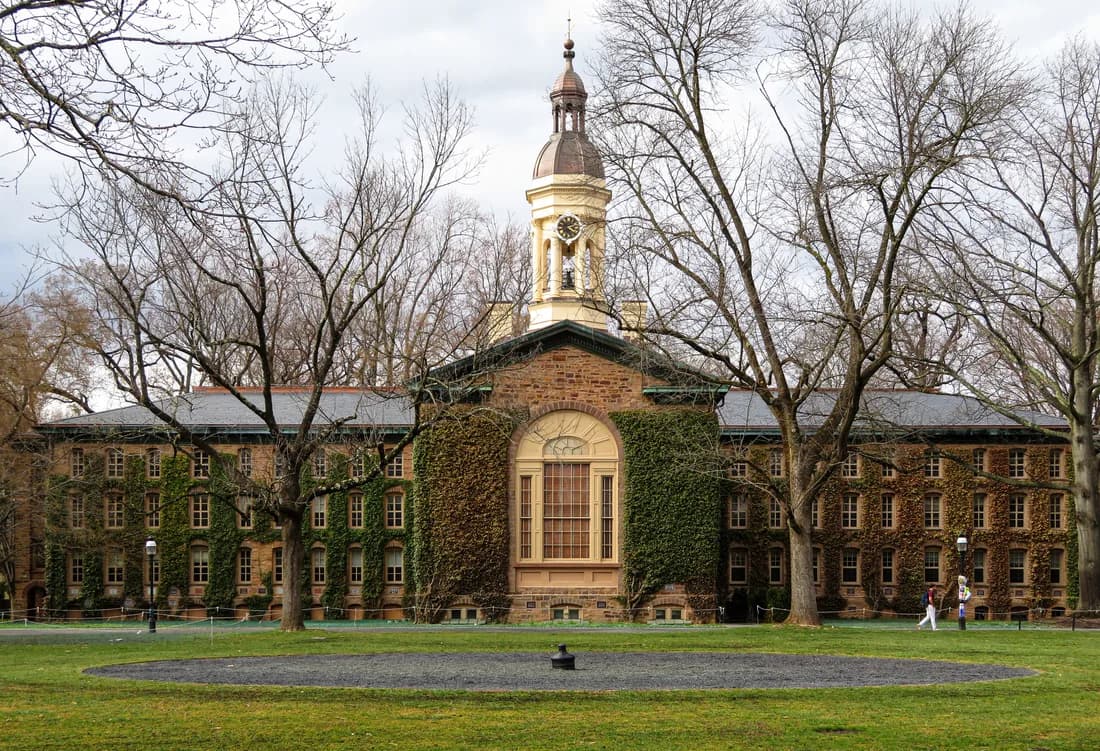
Cannon Green and Nassau Hall at Princeton UniversityHIS CHOICE: PRINCETON

Princeton University · Photo: Ken Lund / Wikimedia Commons, CC BY-SA 2.0. Cropped.

He chose Princeton for independent work, computer science, and access to linguistics.

He compared three offers with his academic interests in view. MIT and Stanford said no. He had talked through results like these before decisions arrived, and treated them as normal results in an uncertain process.

ALSO ADMITTED TO

  • University of California, Berkeley
  • Cornell University

Anonymized client journeys. T.R. also received a Princeton offer and chose the University of Chicago.

Read N.S.’s full story Read T.R.’s story Read our guide to applying from India

WHEN YOU’D LIKE A HAND

A conversation can help you find a useful place to start.

Bring your questions to a free 45-minute introduction with your proposed mentor. Afterward, we’ll email a personalized plan with recommended next steps.

Official Princeton sources are linked beside the relevant guidance.

Princeton’s first-year application checklist (opens in a new tab)
