SMALL BY DESIGN Every student gets our full attention. Read our story →
All East Asia guides

EAST ASIA · MAINLAND CHINA

Applying from mainland China starts with the qualification you’ll finish school with.

Students in mainland China finish school in different ways: with the gaokao, A Levels, the IB Diploma, or an American diploma with AP courses. Yours shapes where you can apply and what each university will ask of you.

For 2027 entry

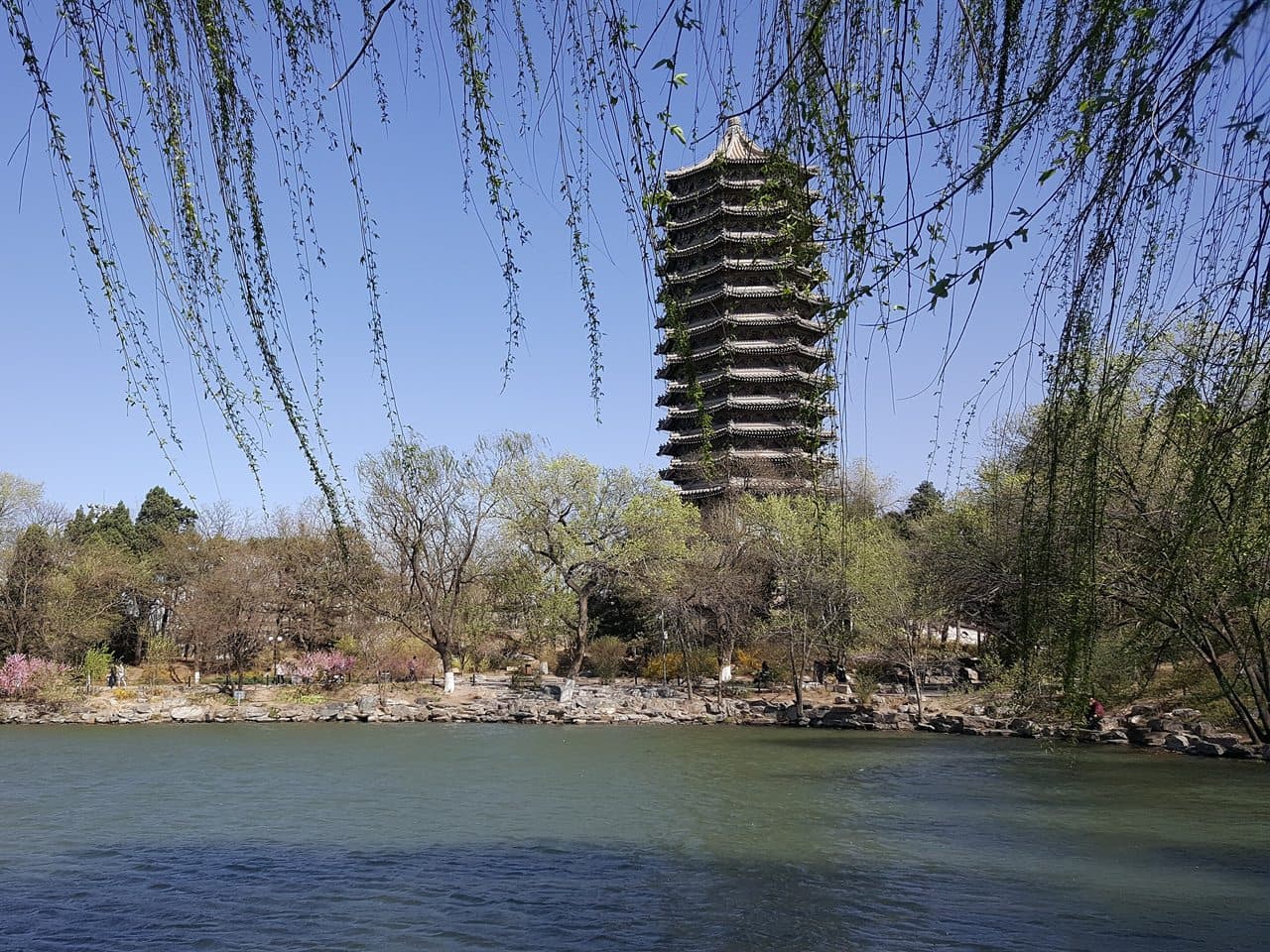
Boya Tower rising above Weiming Lake at Peking University, framed by spring willows
Boya Tower and Weiming Lake, Peking University, Beijing · Photo: Antigng / Wikimedia Commons, CC BY-SA 4.0. Cropped.

START WITH YOUR QUALIFICATION

The gaokao leads to mainland universities, and some universities abroad accept it too.

If you’re taking the gaokao, you apply to mainland universities through your province once results are out. With A Levels, the IB, or an American diploma, universities abroad look at your results, your school’s grading, and your subjects, each in its own way.

  • NATIONAL CURRICULUM

    The gaokao

    You sit the national college entrance exam at the end of high school: Chinese, mathematics, and a foreign language, plus other subjects you’ve chosen.

    U.S. colleges
    Read your school record in context, plus test scores where they ask for them. Your gaokao results arrive after their deadlines.
    UK universities
    Oxford doesn’t accept it, but some others do. Sheffield, for example, asks for at least 75% of the total marks for courses that usually need AAA or higher.
  • BRITISH CURRICULUM

    A Levels

    You usually take three or four A Levels in your last two years, for example in the international division of a public high school or at an international school.

    U.S. colleges
    Read your A Level subjects and predicted grades alongside your school profile.
    UK universities
    Set offers in A Level grades, often in particular subjects.
  • INTERNATIONAL BACCALAUREATE

    The IB Diploma

    You take six subjects, three or four at Higher Level, plus the core. Your teachers predict your grades before the final exams in May.

    U.S. colleges
    Look at your courses, grades, and predicted results in the context of your school.
    UK universities
    Usually set offers in total points and grades in named Higher Level subjects.
  • AMERICAN CURRICULUM

    A high-school diploma with AP courses

    Your school’s diploma and GPA, usually with Advanced Placement (AP) courses and exams.

    U.S. colleges
    Read it much as they would a U.S. school’s record, alongside your school profile.
    UK universities
    Look at your AP exam results. What each asks for varies by course, so check its international qualifications page.

Letrado’s adviceAsk your counselor for your school profile early. It explains your curriculum and grading, and U.S. colleges read it alongside your transcript. If you’re in an international division, ask how your school reports your grades and predicted results.

If you’re taking the gaokao

The exams: In 2026, the national exams in Chinese, mathematics, and a foreign language began on June 7, followed by exams in the subjects you’ve chosen. In Beijing, for example, exams in subjects such as physics, history, and chemistry ran on June 9 and 10.

Results and applications: Each province releases its own results and runs its own application window, where you list the universities and majors you’d accept. Beijing’s 2026 results came out in late June, and applications ran from June 27 to July 1.

Cambridge: Most of its colleges accept the gaokao, but they expect different results. Some expect a rank in the top 0.1% of your province plus extra achievement, such as science Olympiads or AP exams. Others ask for at least 90% in each of three relevant core subjects, or overall results in the top 1% to 3%. The remaining colleges don’t accept the gaokao alone and ask for A Levels, the IB, or at least five AP exams at grade 5 as well.

Sheffield, for example: It accepts the gaokao for direct entry: at least 75% of the total marks for courses that usually ask for AAA or higher, 70% for AAB to ABB, and 65% for BBB to BBC.

HKU in Hong Kong: It runs its own application for gaokao students, separate from the national system, and looks at your total and English scores and an interview if you’re invited. For 2027 entry, applications open on 6 October 2026. If you accept HKU’s offer, you leave the mainland admissions process.

If you’re at an international division or international school

Testing: Johns Hopkins requires standardized test scores for fall 2027 entry, and Cornell requires the SAT or ACT. UCLA and the other University of California campuses don’t consider SAT or ACT scores for admission or scholarships.

Where to test: Check test dates and centers on the College Board’s and ACT’s own websites early.

English tests: If English isn’t your first language, colleges may ask for TOEFL, IELTS, or Duolingo scores. Cornell, for example, sets a minimum of 7.5 in IELTS.

COMPARE THE SYSTEMS

The U.S., the UK, and mainland China read your application in different ways.

You can apply to all three in the same year, and we help with all three. Each has its own application, deadlines, and idea of a strong applicant, so give each one its own plan.

UNITED STATES

Colleges read your whole record in context.

Selective colleges look at your grades in the context of your school, alongside your essays, activities, teacher and counselor letters, and test scores where they ask for them. You apply to each college separately, often through the Common App.

Letrado’s adviceMake sure your school profile and counselor letter explain your curriculum. Then use your essays for what only you can say.

UNITED KINGDOM

UK universities admit you to one course.

You apply through UCAS to up to five courses, with one personal statement for all of them. Universities look closely at your subjects and predicted grades, and some courses add an admissions test or interview.

Letrado’s adviceChoose a subject you’d enjoy studying for three years, then check each course’s subject requirements before anything else.

MAINLAND CHINA

Mainland universities admit you mainly on your gaokao results.

Mainland universities admit students mainly through the gaokao, province by province, after results. Joint universities such as NYU Shanghai and Duke Kunshan add their own assessment, including a campus day: Duke Kunshan counts your gaokao score for 60% and its own assessment for 40%. HKU in Hong Kong also admits students on their gaokao results, through its own application.

Letrado’s adviceNYU Shanghai asks you to apply before the gaokao. For 2026 entry, its deadline was 1 February, so check each joint university’s dates early.

Free help is available, too.

EducationUSA, the U.S. government’s network of study advisers, has five centers in mainland China: Beijing, Guangzhou, Shanghai, Shenyang, and Wuhan. Its advising, workshops, and college fairs are all free of charge.

PLAN YOUR YEAR

Put every system on one calendar, because the dates overlap.

U.S., UK, and mainland deadlines, results, and offers fall at different times. Seeing them together shows where you may need to decide before every result is in.

  • U.S.
  • UK
  • Mainland China
  • Exam results
  1. October 2026

    • U.S. From Oct 1

      Submit your University of California application

      The application opened for drafting on August 1.

    • UK Oct 15

      UCAS deadline for Oxford, Cambridge, and most medicine, dentistry, and veterinary courses

      18:00 UK time.

  2. November 2026

    • U.S. Nov 1

      Early Decision deadlines at Johns Hopkins and Cornell

      Other U.S. colleges set their own early dates.

    • U.S. Nov 30

      University of California deadline, including UCLA

  3. January 2027

    • U.S. Jan 2

      Regular Decision deadlines at Johns Hopkins and Cornell

      Johns Hopkins’ Early Decision II deadline is the same day.

    • UK Jan 13

      UCAS deadline for most other courses

      18:00 UK time.

  4. May 2027

    • U.S. May 1

      Reply to U.S. offers

      The usual U.S. reply date, weeks before the gaokao begins.

  5. June 2027

    • Mainland China Usually from Jun 7

      The gaokao

      The 2027 dates aren’t announced yet. In 2026 the national exams began on June 7.

    • Exam results Late June

      Gaokao results

      Each province sets its own date. In 2026, Beijing’s came out in late June.

    • Mainland China Late June–early July

      Apply to mainland universities through your province

      Beijing’s 2026 window ran from June 27 to July 1.

  6. July 2027

    • Exam results Early July

      IB results

      In 2026 they came out on July 6.

  7. August 2027

    • Exam results Mid-August

      Cambridge International A Level results

      In 2026 they came out on August 11. UK universities then confirm conditional offers.

U.S. dates vary by college, so check each college’s own page. The Ministry of Education sets the gaokao dates each year, and each province sets its own results and application dates.

TRY THIS WITH EACH UNIVERSITY ON YOUR LIST

A good list shows why each choice belongs on it.

Open each university’s own pages and note an answer for every row. Bring the gaps and questions to our conversation, or work through them with your counselor.

A worksheet for checking each university on your list
What to checkWhat to note for each university
Your qualificationDoes it accept the gaokao or the certificate you’ll finish with, for direct entry?
Subjects and testsWhich subjects, grades, English tests, or admissions tests does the course need?
DatesWhen is the deadline, when will you hear back, and when must you reply?
Full cost in yuanTuition, housing, flights, insurance, and visas for the whole degree, and again with a weaker yuan.
Would you go?If this were your only offer, would you be glad to go?

PLAN THE COST

Budget for the whole degree in yuan, then test it with a weaker yuan.

A U.S. bachelor’s degree usually takes four years, and many UK degrees take three. Exchange rates can change over that time, so plan for the full degree, not just the first year.

YOUR YEARLY BUDGET

Count everything you’ll pay each year.

  • Tuition and feesThe international fee for your UK course, or a U.S. college’s full published cost of attendance.
  • Housing and foodAt many U.S. colleges, first-year students live on campus.
  • Health coverA UK Student visa includes the Immigration Health Surcharge of £776 a year. U.S. colleges set their own health insurance rules, and many offer a student plan.
  • VisasA UK Student visa costs £558. A U.S. student visa costs $185, plus the $350 SEVIS fee.
  • Flights and depositsFlights home each year, and any deposit a university asks for to hold your place.

Letrado’s adviceRun your budget twice: once at today’s exchange rate and once with the yuan 10% weaker. Keep at least one option that still works.

Aid depends on your citizenship, not only where you live.

  • If you’re a Chinese or other non-U.S. citizenAid for international students differs a lot between colleges. Yale doesn’t consider your family’s ability to pay, wherever you’re from, and Harvard says its admissions and aid processes are the same for every applicant, whatever your citizenship. Many colleges use the CSS Profile, where you can enter your family’s figures in yuan.
  • At Johns Hopkins, Cornell, and UCLAJohns Hopkins and Cornell consider your need for aid when deciding whether to admit you. At both, you must ask for aid when you first apply, or you can’t later. Hopkins meets the full need of every student it admits. UCLA doesn’t award aid or scholarships to undergraduates who aren’t U.S. citizens or permanent residents.
  • If you’re a U.S. citizen living in mainland ChinaU.S. federal student aid depends on citizenship, so you can file the FAFSA with an address in mainland China. Colleges’ own aid may also treat you as a U.S. applicant, so check each college.
  • In the UKYou’ll usually pay the international fee. Fee status depends on your immigration status and where you’ve lived, not where you went to school, so check UKCISA if you’re unsure.
Paying tuition from mainland China

Your yearly allowance: Each person can buy foreign currency worth up to US$50,000 a year at a bank, with a valid ID.

Study costs: For study abroad, you can buy more outside that allowance by showing your ID, your admission letter, and related documents. Ask your bank what it needs before your first payment is due.

Visas: when to apply

UK Student visa: You can apply up to six months before your course starts. You pay the health surcharge for every year of your visa when you apply.

U.S. student (F-1) visa: You apply once your college has sent your I-20 form. If you’re a U.S. citizen, you don’t need one.

Appointments: Appointment waits vary, so check the U.S. Embassy or consulate’s own page early.

A STUDENT FROM MAINLAND CHINA · Z.W.

Z.W. described her lab summer exactly as it was.

Z.W. studied in the international division of a public high school in China. She was drawn to biology, public health, and explaining science to others, and she applied to U.S. universities.

She described her lab work accurately.

Her first draft made a summer lab placement sound like independent research. She had prepared materials, observed procedures, and helped organize basic data, so she rewrote it to say exactly that.

Her essay came from a school health bulletin.

She translated short science explanations for the bulletin. Her essay was about revising one after younger students misunderstood a cell diagram.

She practiced explaining science two ways.

Interview practice used technical and everyday versions of the same explanation, so she could adjust to the listener without losing accuracy.

An accurate description of what you did is stronger than a borrowed title.

HER OFFERS

  • Johns Hopkins University
  • University of California, Los Angeles
  • Cornell University
The twin towers and arched facade of Royce Hall at UCLAHER CHOICE: UCLA

University of California, Los Angeles · Photo: Beyond My Ken / Wikimedia Commons, CC BY-SA 4.0. Cropped.

She chose UCLA for room to explore, its campus, and her family’s cost.

Johns Hopkins offered the closest match to her early interests, and Cornell appealed for its breadth. UCLA gave her biology and public health with room to explore before choosing a research specialty, and its campus and what her family would pay were part of the decision.

An anonymized client journey, shared with initials to protect privacy.

Read Z.W.’s full story

WHEN YOU’D LIKE A HAND

A conversation can help you find a useful place to start.

Bring your questions to a free 45-minute introduction with your proposed mentor. Afterward, we’ll email a personalized plan with recommended next steps.

Official sources are linked beside the relevant guidance.

Beijing’s 2026 gaokao calendar (Chinese) (opens in a new tab)
