







SMALL BY DESIGN Every student gets our full attention. Read our story →
University Planning Guide

UNIVERSITY PLANNING GUIDE · GCSEs OR IGCSEs, THEN A LEVELS

Aiming for a top university? Choose A levels for the degree you want.

Your A levels decide which degrees you can apply for. Your GCSE grades decide which A levels your sixth form lets you take. Here's what matters each year, from Year 9 to Year 13, at a British-curriculum school in the UK or abroad.

In Northern Ireland, add one to each year here. In Scotland? Our UK guide covers Highers →

Written for the 2026–27 school year.

Students in Year 11 in 2026–27 usually apply in fall 2028 for 2029 entry.

At a glance

At a British school, when do you make the choice that matters most?

In Year 11, when you choose your A levels, months before your GCSE results arrive. Your sixth-form application asks for them, and the school can say no to a later change.

What matters most, in our view
Three A levels that fit your degree, at a sixth form that teaches them well, and strong GCSEs in those subjects. Your choices ↓
One thing now
Years 9 and 10: Ask the sixth forms you're considering which A levels need a GCSE in the same subject.Year 11: Before your sixth-form deadline, pick two degrees you might study, and check which A levels each one requires.Year 12: Ask how your school sets your predicted grades.Year 13: For this year's dates, open the guide below for the country where you go to school.
Can wait, in our view
Your personal statement and U.S. essays, until the summer after Year 12. Your five years ↓

Universities can change the subjects they require, so check each course's page for the year you'll start.

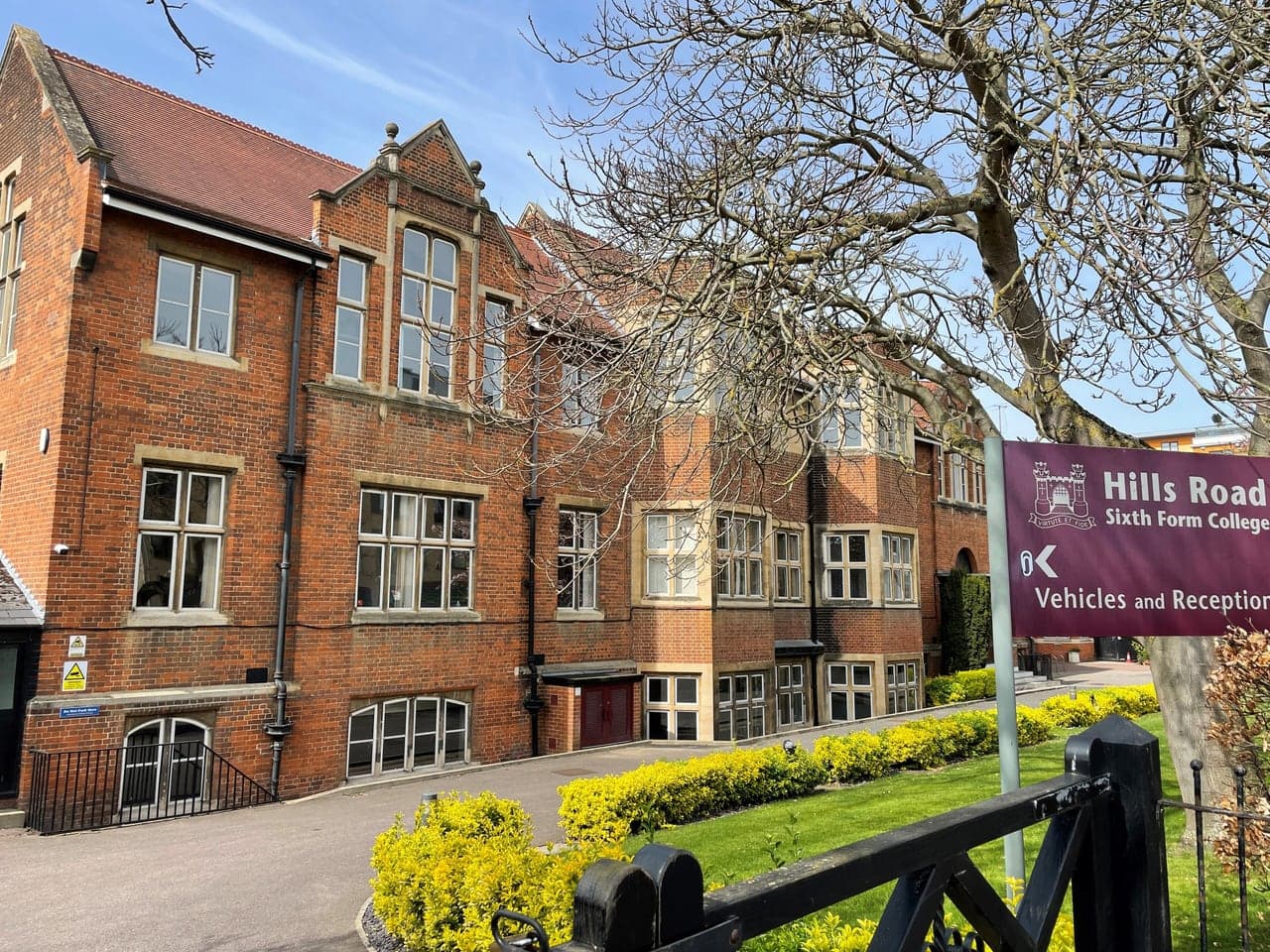
The red-brick front of Hills Road Sixth Form College in Cambridge, behind a yellow hedge
Hills Road Sixth Form College, Cambridge · Photo: Mr Ignavy / Wikimedia Commons, CC BY-SA 2.0. Resized and cropped.

Year by year

Three choices in these five years decide where you can apply.

Find your year to see what matters now.

  1. Year 9

    Ages 13 to 14 · U.S. grade 8Choose your GCSE options by your school's deadline. At Durham Johnston School, for example, it's February 26, 2027. English, math, and science are compulsory at state schools in England, and your school decides the rest.

    Courses
  2. Year 10

    Ages 14 to 15 · about U.S. grade 9Your GCSE courses usually begin this year. Applying to the U.S. too? This year counts: Stanford asks every applicant for grades from U.S. grade 9, which for you is about Year 10. Stick with two or three activities, and keep them going into Year 12.

    CoursesActivities
  3. Year 11

    Ages 15 to 16 · about U.S. grade 10Apply for sixth form. At the sixth forms we checked, deadlines run from September of Year 11 to February. Hills Road Sixth Form College judges your application on predicted GCSE grades, before you sit any. Then sit your GCSEs in May and June. Moving schools at 16? See our England at 16 guide →

    CoursesTests
  4. Year 12

    Ages 16 to 17 · about U.S. grade 11Your teachers set your predicted grades from your results, tests, and work so far. Medicine? Sit the UCAT in the summer after Year 12. This year's Year 13s had to book the October ESAT, TMUA, or TARA by September 28, 2026. Applying to the U.S. too? Take the SAT or ACT when you feel ready, usually this year.

    Tests
  5. Year 13

    Ages 17 to 18 · about U.S. grade 12Apply through UCAS, the UK's university application service. Your predicted grades go with it, and they can't be changed once it's sent. For 2027 entry:October 15, 2026: the UCAS deadline for Oxford, Cambridge, and most medicine, dentistry, and veterinary courses.November 1: early applications to Harvard, MIT, Yale, Princeton, and Penn.January 13, 2027: the UCAS deadline for most other courses.August 12, 2027: A-level results.

    Tests

The choices that matter

Make these three choices with your degree in mind.

Open each one for what's required, our advice, and who to ask.

GCSEs, in Year 9Keep a language if you might take it at A level, and aim high in every GCSE.

At Durham Johnston, Hills Road, and Westminster, you need a GCSE in the same subject to take A-level Mathematics, a science, or a language. The grade they ask for runs from 6 to 9, depending on the school and subject. You can start Economics, Psychology, or Politics without one.

Who to askYour head of year.

  • 8GCSEs or IGCSEs at grade 7 (A) or higher, including at least four at 8 or 9 (A*) in the subjects you'll study in the sixth form, for a place at Westminster School
  • 6GCSEs at grade 7 (A) or higher, including English, math, and the subjects you'll study in the sixth form: what Dubai College expects for a place

Our viewChoose each GCSE for the A levels it leads to, as well as for what you enjoy now.

The evidence, and what it doesn’t show

What it doesn’t show: every sixth form's rule. These are a few schools' own rules, so check the sixth forms you're considering.

A levels, in Year 11Pick the A levels your degree requires. Economics and Management at Oxford requires A-level Mathematics, not Economics.

In the UK, each application is for a named course, such as Medicine or Economics and Management, and a course can require particular A levels, as all three below do.

Who to askThe head of sixth form at your school, or at the sixth form you're applying to.

What Oxford asks for in A levels for 2027 entry, and the test you'll sit
  • Medicine

    A levelsA*AAIncluding Chemistry, and one of Biology, Physics, Mathematics, or Further Mathematics
    Admissions testUCATCambridge, Imperial, and many other UK universities use it too
  • Economics and Management

    A levelsA*AAIncluding Mathematics
    Admissions testTARAUsed only by Oxford and UCL
  • Engineering Science

    A levelsA*A*AIncluding Mathematics and Physics, with the A*s in Mathematics, Physics, or Further Mathematics
    Admissions testESATCambridge, Imperial, and UCL use it too

Our viewNot sure of your degree yet? Keep Mathematics if you can, then choose subjects you'd enjoy for two years and can earn top grades in.

The evidence, and what it doesn’t show

What it doesn’t show: courses with no required subject. Oxford's PPE requires none, though most successful applicants take Mathematics.

Where to apply, in Year 12Decide in Year 12 whether to apply in the UK, the U.S., or both.

UK offers usually depend on those results. So you may have to accept or turn down a U.S. place before you know whether you've met your UK offer.

Who to askYour school. Ask who will write your UCAS reference, and who will write the counselor letter many U.S. colleges ask for.

How applying differs in the UK and the U.S.
UK universities, through UCASU.S. colleges
How manyUp to five coursesUp to 20 on the Common App, which many colleges share
WritingOne personal statement for all your coursesEssays, which can differ by college
TestsAn admissions test for some coursesThe SAT or ACT, which Harvard, MIT, Yale, and Penn require for fall 2027
From your schoolOne reference, with your predicted gradesA school report, teacher letters, and often a counselor letter

Our viewApply to both only if you'd be glad to go to either. A U.S. application adds essays, letters, and often a test, so start it in Year 12, not Year 13.

The evidence, and what it doesn’t show

What it doesn’t show: later entry years. UCAS consulted in 2026 on changing its deadlines and number of choices, as early as the 2028 cycle. Princeton requires the SAT or ACT again from fall 2028, and none of the U.S. colleges named here has announced its testing rules for fall 2029.

Where it leads

UK, U.S., Europe, or Asia? Each looks at your A levels differently.

Here's how you apply in each place, with one fact to know and one to watch out for.

  • UK universitiesOxfordCambridgeUCAS, with online interviews in December 2026 for shortlisted Oxford applicants12% of applicants for Philosophy, Politics and Economics (PPE) at Oxford are successful (2023 to 2025 average)You can apply to Oxford or Cambridge, but not both in the same year
  • U.S. collegesHarvardMITHarvard takes the Common App, and MIT has its own applicationMIT admitted 4.6% of applicants for fall 2025: 1,334 of 29,281Harvard asks your school for predicted grades, then your final A-level results by mid-August
  • EuropeTrinity DublinBocconiIreland's central system (the CAO) if you live in the UK or EU, or usually Trinity directly if notOn the CAO route, places go by points, and A-level Mathematics adds 25 points to your totalBocconi ranks you on a test and your Year 11 and 12 grades, never predicted ones
  • SingaporeNUSNTUEach university's own application, with its own datesApplying to the National University of Singapore (NUS) before your results? Add the SAT, the ACT with Writing, or APs. Medicine, Law, and Dentistry are closed to youNUS and Nanyang Technological University (NTU) ask for four A levels. NTU makes no offer before results, so with August results you'd apply after Year 13

One of our students

Weighing UK and U.S. offers? G.S. let the course and the cost decide.

A physics applicant at a state sixth-form college in northern EnglandMeet G.S., who applied through UCAS and to U.S. collegesImperial combined focused physics with a sustainable family cost.A Letrado studentChoseImperial College LondonAlso admittedUniversity of CambridgeMassachusetts Institute of Technology

His practical investigation belonged beside strong examination results. G.S. had excellent physics results and enjoyed building things. He worried that a device with unstable readings could not belong in a strong application.

How we helped: We helped him recover the actual sequence of the project, explain his reasoning to different audiences, and compare UK and U.S. study with his family.

Read G.S.'s story →

In our view

What you can skip at a British school.

Three things families often overdo, and what to do instead.

  • 3A levels are enough. Oxford bases its offers on three. Skip a fourth unless it's Further Mathematics or you're applying in Singapore.
  • 80%of your personal statement goes on your subject, Oxford suggests. Skip long, U.S.-style activity lists.
  • 4kinds of courses expect work experience, says UCAS: medicine, other healthcare courses, teaching, and social work. Skip experience chosen only to impress.

Where we come in

How Letrado can help.

Most of this advice costs nothing to follow. If you'd like help with part of it, here's where we come in.

Start with a free 45-minute introduction.

We follow it with a personalized plan by email. Bring your GCSE results or predictions and the courses you're weighing, and we'll tell you which look realistic.

If the student is under 18, please ask a parent or guardian to send this first message.

Arrange your free introduction →