SMALL BY DESIGN Every student gets our full attention. Read our story →
Grade 12

UNIVERSITY PLANNING GUIDE · AFTER EARLY RESULTS

Admitted, deferred, or denied early? Here's what to do before January.

Early results arrive in mid-December. At the colleges below, regular applications are due from January 1 to January 5, 2027. Pick your result to see what to do.

Written for students who applied early in fall 2026, for 2027 entry.

These three weeks at a glance

Does a deferral mean no?

No. Deferred means the college hasn't decided yet. It reads your application again in the regular round, with your first-semester grades.

What matters most, in our view
Your January applications and your first-semester grades. They're the parts of these weeks you control. The January dates
One thing this week
Read your decision letter and the college's applicant portal, the site where you track your application. They say what the college wants, and by when. What each college asks
Can wait
Your own update to the college. It can wait until you have first-semester grades or other news to report.

Colleges can change their dates and rules. Your decision letter and each college's own page come first.

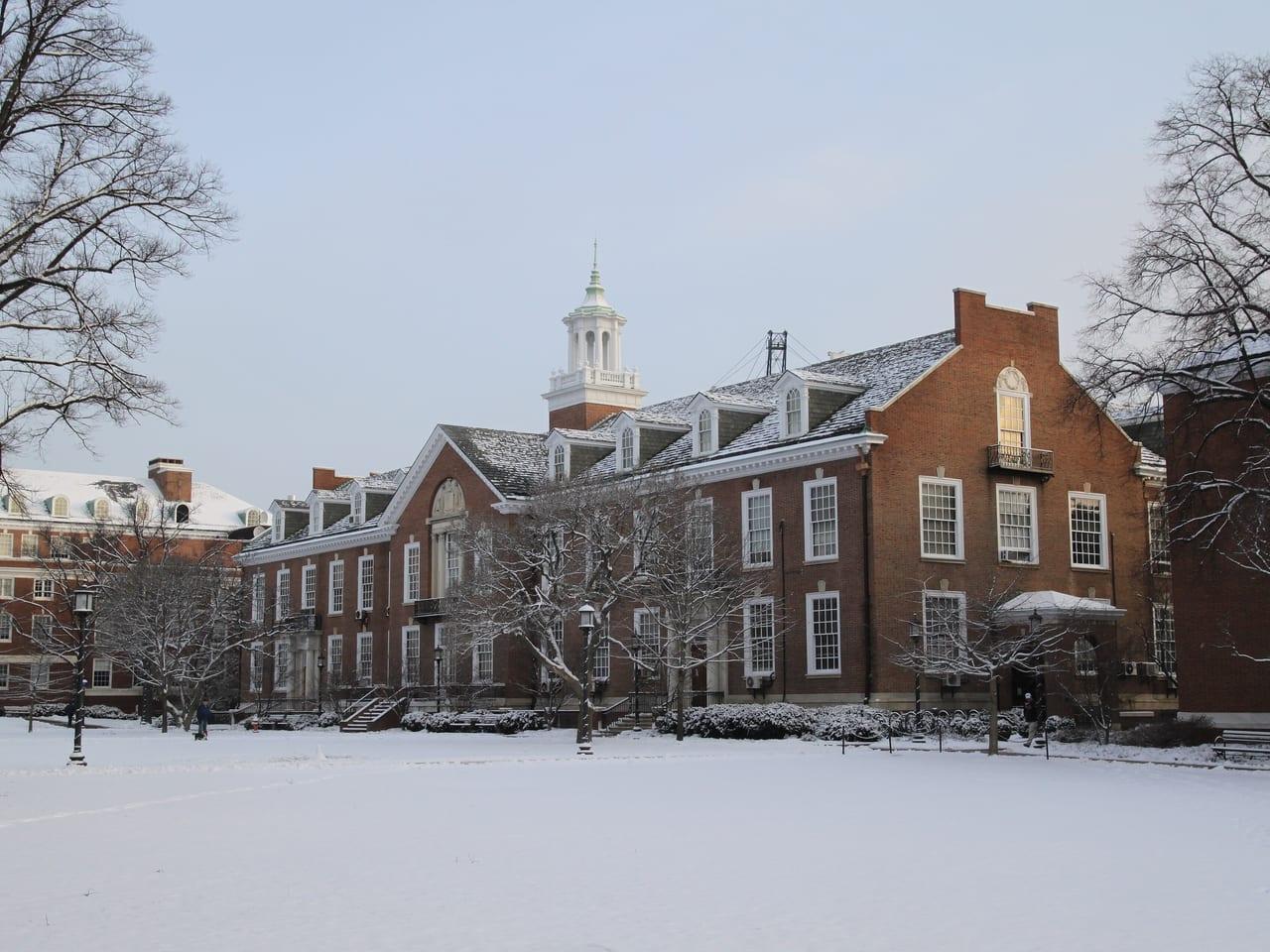
A red-brick building with a white cupola across a snow-covered lawn, framed by bare trees
Maryland Hall in snow, Johns Hopkins University · Photo: Cvenghaus / Wikimedia Commons, CC BY-SA 3.0. Resized and cropped.

If you're deferred

A deferral isn't a no. Send what your college asks for, then finish your January applications.

Every college here asks for your midyear report: your first-semester grades, sent by your school counselor.

  1. This weekRead your decision letter and the applicant portal. Note what the college asks for, and its dates.
  2. By your January deadlinesSend regular applications to other colleges. A deferral frees you to apply anywhere. The January dates
  3. In January and FebruaryAsk your counselor in January to send your midyear report. Most colleges here want it between February 1 and mid-February. Send your own update then, if the college invites one.
If your college isn't below, its decision letter says what it wants.

Fill in the college's own form

Both give deferred applicants a form. Wait for it, and send your news there.

  • Our guide →MITForm due mid-February

    MIT: The February Updates & Notes Form is required. It opens in mid-January, and you report your midyear grades on it.

  • Our guide →Midyear transcript: February 15

    Stanford: Stanford gives you a form for updates. Your school sends the transcript.

You may send an update or letter

Beyond the midyear report, you may add your own update.

  • Our guide →Midyear report: January or February

    Yale: Updates and new scores go through the update form in your status portal.

  • Our guide →Midyear transcript required

    Cornell: Cornell calls a deferral postponed. Most of its colleges take a letter of continued interest.

  • Our guide →Midyear report: February 15

    Penn: Your own updates go in the Penn Applicant Portal, under Upload Materials.

  • Our guide →Midyear report: mid-February

    Johns Hopkins: Everything else is optional, a statement of interest included.

Midyear grades come first

Each asks for your midyear report. Check its tile before sending more.

  • Our guide →Midyear report: February 1

    Harvard: Other updates go through the Applicant Portal, for significant developments only.

  • Our guide →Midyear report: when grades are ready

    Princeton: Princeton says it has what it needs. Send only a significant update.

  • Our guide →Midyear report: February 1

    UChicago: Deferred early action applicants can switch to Early Decision II, a commitment to attend, by January 15.

  • Our guide →Midyear report: February 1

    Columbia: You hear by April 1 and are no longer bound.

Logos open each college's own page, and “Our guide” opens our free guide to it. Dates without a year are as listed there. Facts checked against official pages on November 14, 2026 (Columbia's on September 28, 2026).

Five more colleges: Brown, Dartmouth, Duke, Northwestern, and Georgetown
  • Brown: a letter of continued interest is welcome, uploaded through the Brown Applicant Portal. Brown doesn't take updates by email. Brown's page
  • Dartmouth: asks for a brief update on recent accomplishments, uploaded in the portal, and takes new test scores. Dartmouth's page
  • Duke: midyear grades are due February 15, sent by your counselor. Updates go through the applicant portal. Duke's page
  • Northwestern: its December 2025 letter to counselors asks for a midyear transcript by mid-February, and says it doesn't expect anything more. Northwestern's letter
  • Georgetown: defers every early action applicant it doesn't admit. The midyear report is due February 10, and updates go through the status portal. Georgetown's page

In our viewSend one update, only where the college invites it, and only with something new: a grade, an award, a finished project. If the college is still your first choice, say so in one sentence.

The evidence, and what it doesn't show

More from the same colleges:MIT's answers for deferred applicants · Stanford's school forms · Yale's requirements · Penn's updates · Harvard's requirements · UChicago's required materials.

Colleges revise these pages each December, and some print no year.

If you're denied or deferred

Put these three weeks into your January applications.

If you were denied, that college's decision is final for this year. The regular round is still open at most other colleges.

In our viewAdd two or three colleges where your grades sit well inside the admitted range, and give their essays real time.

January 4, 2027

Regular decision applications are due.

Regular decision deadlines for 2027 entry, from each college's own page. Some print the day without a year.

A second early decision round

If another college is now your clear first choice, it may run Early Decision II: a second early round, binding like the first.

Johns Hopkins' Early Decision II deadline is January 2, 2027, and UChicago's is January 4, 2027. Check the price first. Johns Hopkins' dates · UChicago's plans

In our view

What these three weeks don't need.

SkipDo this instead
A long letter that repeats your applicationA few lines on what's new since November, where the college invites an update.
Calling or emailing the officer who read your fileUse the portal. Harvard calls contacting your reader about a deferral wholly unnecessary.
Extra recommendation letters nobody asked forAdd a letter only where the college says it's welcome.

Sources: Harvard's questions and answers; Northwestern's letter to counselors.

If you're admitted

Admitted early decision? You've agreed to go. Early action? You have until May 1.

Not sure which round you applied in? The three kinds of early round, on Grade 12 →

Admitted, early decision

Early decision is binding. Withdraw your other applications, start no new ones, and reply by the date in your letter.

More on admitted, early decision

If you applied for aid, the early decision agreement lets you keep your other applications until the aid offer arrives. Johns Hopkins' first-round replies are due January 15, 2027.

Keep your grades up: your school still sends your midyear and final reports. The early decision agreement · Johns Hopkins' dates

Admitted, early action

Early action isn't binding. You can still apply elsewhere in January and compare offers in spring.

More on admitted, early action

Harvard, Yale, and Princeton give you until May 1 to reply. Trim your January list to the colleges you'd choose over this one.

Yale's timeline · Princeton's dates

If the aid isn't enough

Talk to the aid office before you reply. Some colleges release you from early decision if the aid still falls short after their review.

More on if the aid isn't enough

Brown re-evaluates the offer first. Dartmouth releases you if your family and its aid office can't agree.

Brown's policy · Dartmouth's policy · Reading an aid offer, on Grade 12 →

Where we come in

How Letrado can help before January.

Everything on this page is free to follow. If you'd like someone beside you these weeks, here's how.

If the student is under 18, please ask a parent or guardian to send the first message.

Notebook and coffee prepared for a consultation
START WITH A CONVERSATION

Let’s work out your next step, together.

Bring your questions to a free 45-minute introduction with your proposed mentor.

We’ll listen, talk through your options, and send you a personalized plan by email.

No scare tactics and no pressure to sign up: we’ll tell you honestly what we think, even if that means pointing you somewhere else.

Arrange your free introductionRead our story →