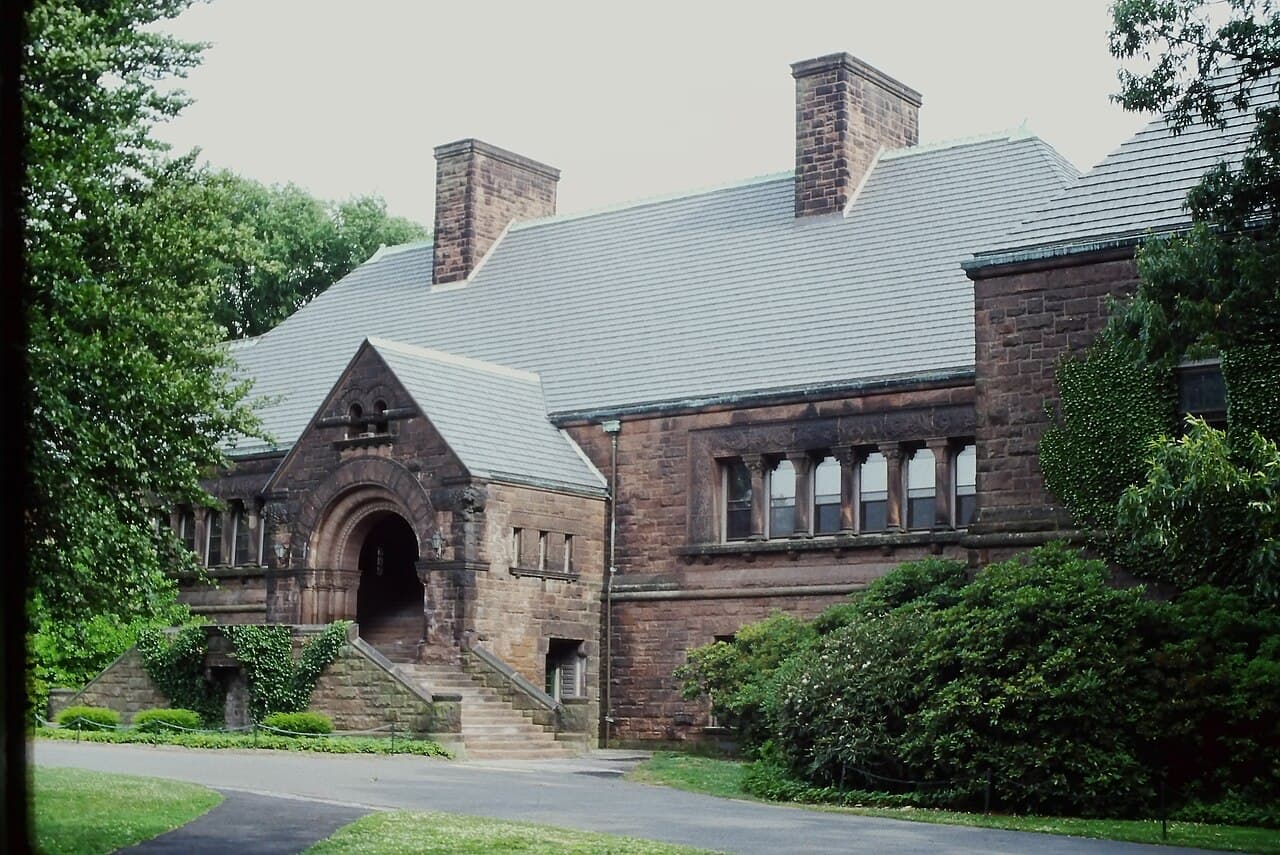
The Lawrenceville School
Lawrenceville, New Jersey · Boarding and day school
We separate what the school publishes from what it means for an applicant. When the school does not reveal a rule or weight, the guide says so.
Lawrenceville's Harkness classes and House system make daily contribution easy to see. Fit depends on how the student listens, shares responsibility, handles disagreement, and uses adults—not simply on being confident or outgoing.
Lawrenceville asks whether a student can learn around a table and live inside a House community.
The Harkness method and House system provide two related lenses. Around the table, students prepare, explain, listen, question, and revise. In the House, they share routines, traditions, conflict, support, and responsibility across the school year.
A strong file should therefore show more than academic promise or sociability in isolation. Teacher evidence, student writing, the interview, and family context should allow the committee to imagine the applicant contributing to both forms of shared life.
Families should test how the student's real habits fit Lawrenceville's structure. Prestige cannot answer whether the student wants sustained discussion, close residential affiliation, a busy weekly rhythm, and increasing independence.

Fit is relational: what the student brings changes what the group can do.
Discussion evidence should include listening and intellectual revision, not only confidence or verbal speed.
House fit should be grounded in everyday behavior—reliability, inclusion, humor, self-management, and willingness to participate when no title is available.
Readiness in context
- What the school says it does
- Academic records and recommendations establish preparation and learning behavior.
- What this means for the application
- Use specific classroom evidence to show how the student encounters difficult material and other minds.
Student voice
- What the school says it does
- Writing and interview add interests, personality, questions, and self-awareness.
- What this means for the application
- Let the committee meet a real young person rather than a miniature professional applicant.
Community forecast
- What the school says it does
- Whole-file review considers fit with Lawrenceville's academic and residential environment.
- What this means for the application
- Connect past group behavior to plausible contribution around both the Harkness table and the House.
Each part answers a different question. Together, they still need to describe one person.
The middle column stays close to what the school publishes. The last column explains what that means without pretending there is a secret formula.
Harkness learning
- What this part can prove
- Discussion-based classrooms rely on preparation and shared inquiry.
- What the reader is trying to learn
- The best predictor is not debate success but the student's ability to help a group reach better understanding.
House citizenship
- What this part can prove
- The House system structures residential identity, support, and participation.
- What the reader is trying to learn
- Evidence of ordinary reliability and inclusive behavior can matter more than formal leadership.
Academic development
- What this part can prove
- The record and teacher observations show current readiness and trajectory.
- What the reader is trying to learn
- Look for honest growth, habits, and appetite for challenge rather than a demand for perfection.
Family-school fit
- What this part can prove
- The application and enrollment decision require alignment on independence, support, and practical circumstances.
- What the reader is trying to learn
- A family should be able to explain why this model—not simply selective boarding school—is right for the child now.
Use the data to ask better questions.
Past-class ranges describe prior cohorts. They are not minimums, targets, or guarantees. We call a figure a minimum only when the institution publishes it as a requirement.
Classroom model
Shared-table learning makes listening, preparation, explanation, and intellectual generosity central to daily performance.
Lawrenceville Harkness learning ↗Residential structure
The House system creates a smaller community for belonging, responsibility, advising, and tradition within the larger school.
Lawrenceville House system ↗Financial aid
Families should use Lawrenceville's own aid process and cost information rather than assuming a shared policy across boarding schools.
Lawrenceville tuition and aid ↗Classic Harkness table
The model was designed around twelve students and one teacher, so participation includes questions, listening, and helping the group think.
Lawrenceville on Harkness ↗Families receiving need-based grants
A family should still use the school's aid process and calculate the full cost of attendance.
Lawrenceville tuition and aid ↗House-adviser meetings
The adviser relationship is part of the support system and a practical piece of boarding or day-school fit.
Lawrenceville student life ↗Follow the reasoning, not just the final sentence.
The detailed scenario below is illustrative. It shows the starting facts, the weak version, the stronger evidence, and the question a careful reader would ask next.
Harkness and House life were shown through ordinary behavior.
An illustrative applicant called herself outspoken and excited to live in a House. The claims were positive but said little about whether she could improve a shared discussion, manage conflict, or use an adviser.
I am a natural leader who will thrive around the Harkness table and contribute to House life.
In class, the student asks one precise question, connects two classmates' pieces of evidence, and revises her own claim when the discussion changes it. A teacher can describe that moment. Outside class, she gives a smaller story: after a roommate disagreement on a school trip, she proposed a rotating task plan, checked whether it worked, and asked an adult to step in before resentment grew. The application does not turn either story into a grand leadership claim. Together they show how she may behave in the classroom and the House.
- Discussion contribution includes listening and revision.
- Residential responsibility is shown through a real shared problem.
- The evidence remains age-appropriate and externally confirmable.
A second way the same kind of application can weaken.
Show responsibility in a shared setting
I am excited to live in a House.
I have settled a roommate conflict, organized a rotating chore system, and asked an adult for help before a small problem became larger.

The school is choosing a student, not a finished résumé.
Natural voice, learning habits, relationships, and readiness for daily school life matter more than adult-perfect language.
Every document has a different job.
Repeating the same story can sound polished without adding proof. A stronger file uses each part to answer a different question and lets other people back up the claims that matter.
School record and graded work
- What the reader needs from it
- Show readiness, classroom habits, development, and the educational context appropriate to the entry grade.
- What weakens it
- Adult-polished materials or testing treated as the child's entire academic identity.
- What stronger evidence looks like
- Authentic schoolwork, teacher context, age-appropriate strengths, and honest evidence of how the student learns.
Student writing
- What the reader needs from it
- Make interests, reflection, voice, relationships, and growing independence visible.
- What weakens it
- A miniature college essay written in adult language.
- What stronger evidence looks like
- Concrete, age-appropriate detail and a student whose humor, uncertainty, and thought remain recognizable.
Parent statement
- What the reader needs from it
- Add family history, growth, support needs, and context unavailable to the student or school.
- What weakens it
- Repeating the student's accomplishments or directing the committee toward a predetermined verdict.
- What stronger evidence looks like
- A candid complementary account of development, environment, practical needs, and the child's emerging independence.
Recommendations
- What the reader needs from it
- Show classroom contribution, learning behavior, relationships, response to feedback, and readiness for the environment.
- What weakens it
- Generic praise from teachers who cannot describe specific moments.
- What stronger evidence looks like
- Examples of curiosity, collaboration, setbacks, help-seeking, kindness, and change across the school year.
Interview
- What the reader needs from it
- Allow mutual assessment of personality, curiosity, communication, and residential or community fit.
- What weakens it
- A rehearsed adult performance optimized for prestige.
- What stronger evidence looks like
- Natural conversation, specific interests, honest questions, and age-appropriate self-awareness.
Make every important claim easy to check.
These questions turn the school's process into a practical checklist for this applicant.
Discussion behavior
Show listening, question-building, respectful disagreement, and willingness to revise—not only confidence speaking.
House contribution
Use ordinary examples of friendship, reliability, shared responsibility, and helping a group function.
Student and parent distinction
The student's materials should sound age-appropriate; parent statements should add history and context rather than duplicate or control the story.
Questions to settle before polishing the application.
The program-specific questions test this exact option. The second set tests whether the wider degree plan still makes sense.
Questions specific to The Lawrenceville School.
- Confirm inquiry, interview, testing, recommendation, and aid steps
- Prepare the student to discuss experiences rather than recite accomplishments
- Use parent context to explain the child without controlling the narrative
- Evaluate Houses, academics, support, travel, and cost as one decision
Questions that remain true across the category.
- Would the student flourish in the school's actual weekly rhythm?
- What academic, residential, and pastoral support would the transition require?
- Can the family explain why this environment fits this child?
- Is the total financial and travel commitment sustainable?
Common strategic misreads.
- Treating Harkness as debate performance
- Using the House system only as a picturesque feature
- Adult-written student materials
- Missing grade-specific testing or international-interview rules
Decisions the applicant should be able to defend.
- Does the student learn through prepared discussion?
- Would a House-based community support their growth?
- Which beyond-classroom opportunity extends real prior interest?
- What travel, testing, interview, and aid rules apply?
Read the rule where the institution publishes it.
These sources support the analysis above and remain the authority for application requirements, assessment, costs, aid, and deadlines.
Application process
Current Gateway, interview, testing, and international requirements.
Open official source ↗Academics and Harkness
Official learning-model and curriculum overview.
Open official source ↗House system and student life
Residential and day-student community structure.
Open official source ↗Tuition and aid
Current costs and need-based aid process.
Open official source ↗This is Letrado's educational analysis, not an admissions prediction or institutional endorsement. The institution's own instructions control the live application.
Build a The Lawrenceville School strategy around the person—not the name.
We will listen carefully and tell you whether we believe Letrado is the right fit. If another resource would serve you better, we will be honest about that too.
See If We Are a Fit
Representative image
Turn the published rules into a strong application.
Discussion is a form of community service
A student contributes when they make an idea clearer, invite another voice, identify an assumption, or revise their own claim. Talking often is not the same thing.
The House is not just housing
It shapes identity, friendships, routines, adult support, and responsibility. A family evaluating Lawrenceville should treat the House model as part of the education itself.
Specific fit protects against prestige drift
If the family cannot explain why Harkness and House life suit this child, the decision is still being made at the level of brand rather than educational design.