SMALL BY DESIGN Every student gets our full attention. Read our story →
All private-school guides
The Loomis Chaffee School

THE LOOMIS CHAFFEE SCHOOL · PRIVATE SCHOOL GUIDE

Show Loomis Chaffee your best self, and what you’ll bring to the common good.

Loomis Chaffee has 748 students on 300 acres in Windsor, Connecticut, north of Hartford, where two rivers meet. Start here to picture daily life and prepare each part of your application.

Fall 2027 entry

Brick buildings around the Grubbs Quadrangle at the Loomis Chaffee School, with benches and bare trees
Grubbs Quadrangle, Loomis Chaffee · Photo: Daderot / Wikimedia Commons, CC0. Resized and cropped.

GET TO KNOW THE SCHOOL

You’ll learn in small classes, with room for research and projects of your own.

Loomis Chaffee runs on trimesters, with no Saturday classes, though games and activities go on. Each term, students choose a team or another physically active afternoon activity.

IN CLASS

Take about five courses a term.

Sophomores usually take four, plus a yearlong Writing Workshop that carries no grade or credit.

GOING DEEPER

Add research and projects of your own.

Highly capable students can do guided research in the humanities, environmental science, or molecular biology. About a dozen seniors and PGs spend the spring on the Innovation Trimester, working with local businesses and nonprofits.

IN YOUR DORM

Live with 30 to 50 students and faculty families.

Most rooms are singles or doubles, there’s an all-gender housing option, and 42 faculty families live in the dorms.

An adviser and a dean for every student.

Teachers, coaches, and trained peer leaders are there for you too.

If you’re joining in grade 10, 11, or 12, or for a postgraduate year

Entry points: For fall 2027, you can join as a boarding or day student in grades 9 to 12 or for a postgraduate (PG) year. Thinking of day status? Ask whether Loomis Chaffee limits where day students can live.

English and history: New juniors, in grade 11, usually take English III, and a college-level English course needs permission. U.S. history taken in grade 10 needs approval to count.

Languages: If you join in grade 11 with two years of a language, you can finish it through level three, or start a new one for two years after talking with the department director. New seniors and PGs need permission for a level-one language.

Postgraduate year: Loomis Chaffee takes 20 to 25 PGs a year, with aid available. Most choose a certificate (English every term and four full-year credits) over the diploma. PGs join the senior class, with a PG dean, an adviser, and a college counselor.

What you need to graduate

Across your years: At least 16 full credits across grades 9 to 12, with English all four years, a language through level three, world and U.S. history, Algebra II and geometry, and a life science and a physical science.

Philosophy and the arts: Two courses in philosophy, psychology, or religion, including one in philosophy or religion and one in your junior or senior year. Three arts courses if you start in ninth grade, or two if you join later.

College-level courses: Courses marked CL are college-level, which Loomis Chaffee describes as “AP level or higher.” Its 2026–27 profile lists more than 50, plus 15 Advanced courses that move faster and go deeper.

Who looks after you: health care and learning support

Health care: The Health Center is staffed around the clock while school is in session.

Learning accommodations: Accommodations from your current school aren’t guaranteed to carry over. Loomis Chaffee reviews each case and needs a licensed psychoeducational or neuropsychological evaluation.

UNDERSTAND WHAT LOOMIS CHAFFEE LOOKS FOR

Loomis Chaffee reads your grades, writing, interview, and letters together.

You choose how to interview and whether to send test scores.

YOUR CURIOSITY

Show what you keep coming back to.

Loomis Chaffee names five values for its community: curiosity, inclusivity, integrity, kindness, and resilience.

Letrado’s advicePick one interest you return to without being asked, and show where it has led you.

THE COMMON GOOD

Show what you already do for others.

Its mission speaks of “the best self and the common good.”

Letrado’s adviceHelping at home, coaching younger players, and keeping a club going all count. Describe each one at its real size.

YOUR RECORD

Show the challenge you chose at your own school.

Loomis Chaffee asks for your current courses and grades plus last year’s record, or every high school year if you’re applying for grade 11 or above.

Letrado’s adviceTake the hardest courses your school offers that you can do well in.

How the interview works

WHAT LOOMIS CHAFFEE DESCRIBES

One interview, strongly encouraged, in the format that suits you.

On campus

A tour and an interview with admission staff or faculty, about 90 minutes in all

Online

30 minutes with you, then 15 with your parents. Loomis Chaffee strongly encourages at least one parent to join

Off campus

With admission staff when they travel, in the same format

A booking link arrives by email after you fill in the inquiry form. After December 1, your Candidate Profile and fee must be in first, and campus interviews run on weekdays through mid-January, so book early. If you can’t book one with Loomis Chaffee, it accepts an InitialView or Vericant interview.

International applicants: ask whether you need to file an English Proficiency Form before you book. Dates without a year are as Loomis Chaffee lists them.

How testing works, and what to do if you don’t send scores

WHAT LOOMIS CHAFFEE SAYS

Scores are optional. The Test Optional Form isn’t.

Choose

Send scores or not. Choosing not to send them won’t count against you.

File the form

Every applicant, with or without scores, submits the Test Optional Form in the Loomis Chaffee portal. Without it, the application stays incomplete.

No scores?

Add a third academic recommendation, which Loomis Chaffee strongly recommends.

If you send scores, Loomis Chaffee prefers the SSAT or ISEE for grades 9 and 10, and the PSAT, SAT, or ACT from grade 11. Applying for grade 11 with an SSAT or ISEE score? Confirm Loomis Chaffee will take it. Scores go straight from the testing agency (SSAT code 4672) and must arrive by February 1.

Since 2020, about a third of applicants, admitted students, and enrolled students have sent scores, which can also help with course placement.

What Loomis Chaffee says about AI and outside help

WHAT LOOMIS CHAFFEE AND GATEWAY SAY

No published AI rule for applicants; for students, teachers decide.

Loomis Chaffee hasn’t published a rule on AI or outside help with applications. Gateway’s Candidate Profile asks you to certify that everything you submit is “factually accurate and honestly presented.” False information can cost you your place.

For enrolled students, teachers decide: ChatGPT, Google Translate, and Grammarly are “not permitted without the explicit consent of the teacher and proper acknowledgment of its use.”

A school day at Loomis Chaffee

LOOMIS CHAFFEE’S SAMPLE MONDAY

Four classes, an afternoon program, and evening study hall.

8:30 a.m.English, the first class
9:55 a.m.Advisory and a meeting, then Spanish
12:05 p.m.Lunch, then orchestra and math
3:45 p.m.The afternoon program, then dinner at 6
7:45 p.m.Study hall, until 9:45
10:30 p.m.In your room, with goodnight at 10:45

Most days have four class periods of 70 to 75 minutes. On Wednesdays, classes end at 12:40 p.m.

Loomis Chaffee in numbers

LOOMIS CHAFFEE’S PUBLISHED FIGURES

A mostly boarding school, with four students for every teacher.

519boarding students, 70% of the school
229day students, 30% of the school
4:1students for every teacher
199faculty members
11.4years, the faculty’s average time at the school
59interscholastic teams, plus 75+ clubs

Loomis Chaffee doesn’t publish an applicant count or admission rate.

PLAN THE APPLICATION

Your application is due January 15, 2027, and your aid application January 31.

Loomis Chaffee accepts Gateway to Prep Schools or the Standard Application Online (SAO), two applications that many private schools share. It has no preference, but submit only one.

Application

Jan 15, 2027
Start
Fall only, not midyear

Financial aid

Jan 31, 2027
Where
Clarity, with your documents

Decisions

Mar 10, 2027
Reply by
Apr 10, 2027

Prepare these pieces together.

  • Gateway or SAO application, and the fee

    Start with the Candidate Profile. The fee is $75 if you live in the U.S., Canada, or Mexico, and $160 if you live outside North America, whatever your citizenship. SAO adds a $10 processing fee. To ask for a fee waiver, email admission@loomis.org. On SAO, a school waiver removes the $10 fee too.

  • The Test Optional Form, in your portal

    After your Candidate Profile, Loomis Chaffee emails you access to its portal, where you track your materials. Every applicant files the Test Optional Form there, and sending scores is your choice.

  • Recommendations and transcripts

    Letters from your current English teacher, math teacher, and principal or counselor. Add a personal or extra academic letter only if it says something new. If you don’t send scores, Loomis Chaffee strongly recommends a third academic letter. Your schools send transcripts directly.

  • Interview

    Strongly encouraged, not required: one interview, online, on campus, or off campus.

  • Essays and the parent statement

    A short answer and an essay from you, and a Parent/Guardian Statement, all required.

How Gateway and SAO work, and what if your plans change

Gateway, step by step: Part 1 is the Candidate Profile, which can fill in your other schools’ applications too. Part 2 holds Loomis Chaffee’s own writing, which you can submit only after Part 1. Part 3 sends your recommendation and transcript requests.

SAO: A parent or guardian opens the account for a student under 18, and submitted forms are final.

Changing your grade or status: Choose your grade and boarding or day status before you add Loomis Chaffee, and contact the admission office if you need to change either later.

Applying late: After March 10, 2027, Loomis Chaffee considers late applications on a rolling basis if places open up, and aid is extremely limited.

If you’re applying from outside the U.S.

Who counts as international: If your permanent home is outside the U.S., you apply as an international applicant, whatever your citizenship. There are no quotas for any country.

English tests: Ask the admission office whether you need one before you book. Take the TOEFL or IELTS if you can: the international page accepts the Duolingo English Test only where neither is available. There’s no ESL program.

Typical scores: A TOEFL of 5 or higher (100 or higher on its old 0–120 scale) and an IELTS of 7 or higher are typical scores, not minimums. The TOEFL code is 8137.

Student visa: Loomis Chaffee issues the I-20, the form you need to apply for an F-1 student visa, when new students request it on the school’s form.

Breaks: Dorms close for Thanksgiving, winter, and spring breaks, and for Head’s Holiday (early February in 2026–27). Students with early flights can stay one extra night, except at Head’s Holiday. Homestays may help, but aren’t guaranteed.

Financial aid: Loomis Chaffee’s aid pages don’t limit aid by citizenship. Ask the aid office early which documents it needs, and, if you live abroad, whether it will waive Clarity’s fee.

WRITE IN YOUR OWN VOICE

Write a short answer and an essay, and let your parents write their own statement.

Prompts appear in your applicationLook for Loomis Chaffee’s prompts inside your Gateway or SAO application.

Loomis Chaffee doesn’t require a graded paper or a video, and your activities go in your Candidate Profile. Your short answer and essay show what a list can’t: how you think and what you notice.

Letrado’s adviceChoose a small, true moment only you could describe, and tell it plainly. Skip the lesson at the end. Your details will show what you noticed.

Your short answer and essay

Answer each question with your own moments.

Read each prompt closely, then answer with something that happened to you, in the words you’d use with a teacher you like.

The Parent/Guardian Statement

Let your parents describe the child they know.

Parents can describe what they see at home and how you’ve grown. It should sound like them, not like a polished essay.

Arts or athletics links

Share your work on Vimeo, Hudl, or YouTube.

Loomis Chaffee prefers those three sites for talent links and doesn’t review Google Drive or social media links. Include work in progress, not only finished pieces.

Your recommenders

Help your teachers write specific letters.

Give each one a short list of the work you did in their class, such as a project or a question you chased. Never hand them a drafted letter.

MAKE ROOM FOR THE FINANCIAL QUESTION

A third of students receive grants, averaging 80% of tuition, but aid is limited.

Loomis Chaffee awarded $14.2 million in aid for 2026–27, in grants from $1,000 to full tuition. The school says some applicants are declined because aid isn’t available, and it keeps a small aid waitlist for admitted students.

2025 INCOME $0–$50,000

Under $5,000

a year was the most common family contribution at this income in 2026–27, for 21 aided families.

2025 INCOME $150,001–$200,000

$5,001–$10,000

a year was the most common contribution at this income, for 18 families. Another 12 had $10,001 to $20,000.

2025 INCOME $250,001–$300,000

$10,001–$20,000

a year was the most common contribution at this income, for 10 families. Another 7 had $20,001 to $30,000.

Families above $350,000 received aid too. These figures aren’t a promise: assets, debt, family size, other tuition, and parents’ ages also shape each award.

The full aid distribution chart (opens in a new tab)

PUBLISHED 2026–27 TUITION · BOARDING

$77,340

Day tuition is $59,460. Required fees, books, and health insurance are extra.

See the published costs
Boarding tuition
$77,340
Day tuition
$59,460
Technology fee, all students
$1,005
Health Center fee, boarding / day (not insurance)
$665 / $320
International fee, for students on an I-20
$1,140
Books, art, and academic supplies (estimated)
$1,200–$1,600
Tuition refund plan at full boarding tuition (optional, but strongly recommended for new students)
$1,314.78
Tuition refund plan at full day tuition (optional)
$1,010.82
2026–27 registration deposit, non-refundable (boarding / day)
$7,734 / $5,946
U.S.-based health insurance accepted in Connecticut (not a travel policy)
Required
A computer (required), trips, athletics, music lessons, and tutoring
Not included

For fall 2027 entry, use the 2027–28 costs when Loomis Chaffee publishes them.

Tuition and fees (opens in a new tab)

Apply for aid when you apply for admission.

  • Mark aid on your applicationLoomis Chaffee considers you for aid only if you say so on your admission application.
  • Clarity, due January 31, 2027Complete Clarity, the online aid application Loomis Chaffee uses, and upload two years of tax information there.
  • If your parents live apartEach parent applies, whatever the custody arrangement.
  • Decisions arrive with admissionAid decisions are mailed with admission letters, and families reapply every year.

Letrado’s adviceIf your family might need aid at any point, apply now. Loomis Chaffee says a family that enters without aid is unlikely to have its full need met later, though a change in circumstances will be considered.

Students on aid can borrow textbooks. Every ninth-grade applicant is considered for LC Scholars (about six a year), and Kravis Scholars is for aid applicants with significant need from underrepresented cultural, geographic, or ethnic backgrounds. Both add a summer program, a laptop, a mentor, and travel, but tuition grants still depend on need.

LC Scholars (opens in a new tab)

ADMITTED TO LOOMIS CHAFFEE · R.K.

R.K. let his unfinished sketches show how he thinks.

He was an Indian student at an international school in Dubai, with years of sketchbooks and a serious interest in architecture, but no awards. His school offered the IB Diploma, so moving for grade 11 meant a real decision about his courses. We helped him show his process honestly and weigh the move.

He showed the messy pages.

He included alternative floor plans, corrected proportions, and notes on why a public space felt hard to navigate, each with a factual caption.

His essay traced the drawings that didn’t work.

He kept trying to sketch a pedestrian bridge from a moving bus, and comparing the attempts showed him where memory had filled in what he hadn’t seen.

His family tested the reason for moving.

He cared more about studio access, smaller discussions, and living with peers than about a step toward U.S. universities.

Loomis Chaffee’s course-planning pages (opens in a new tab) explain how new juniors join English, language, and history courses. Compare them with your own before you apply.

The Loomis Chaffee School

HIS LOOMIS CHAFFEE OUTCOME

Offered a place at The Loomis Chaffee School
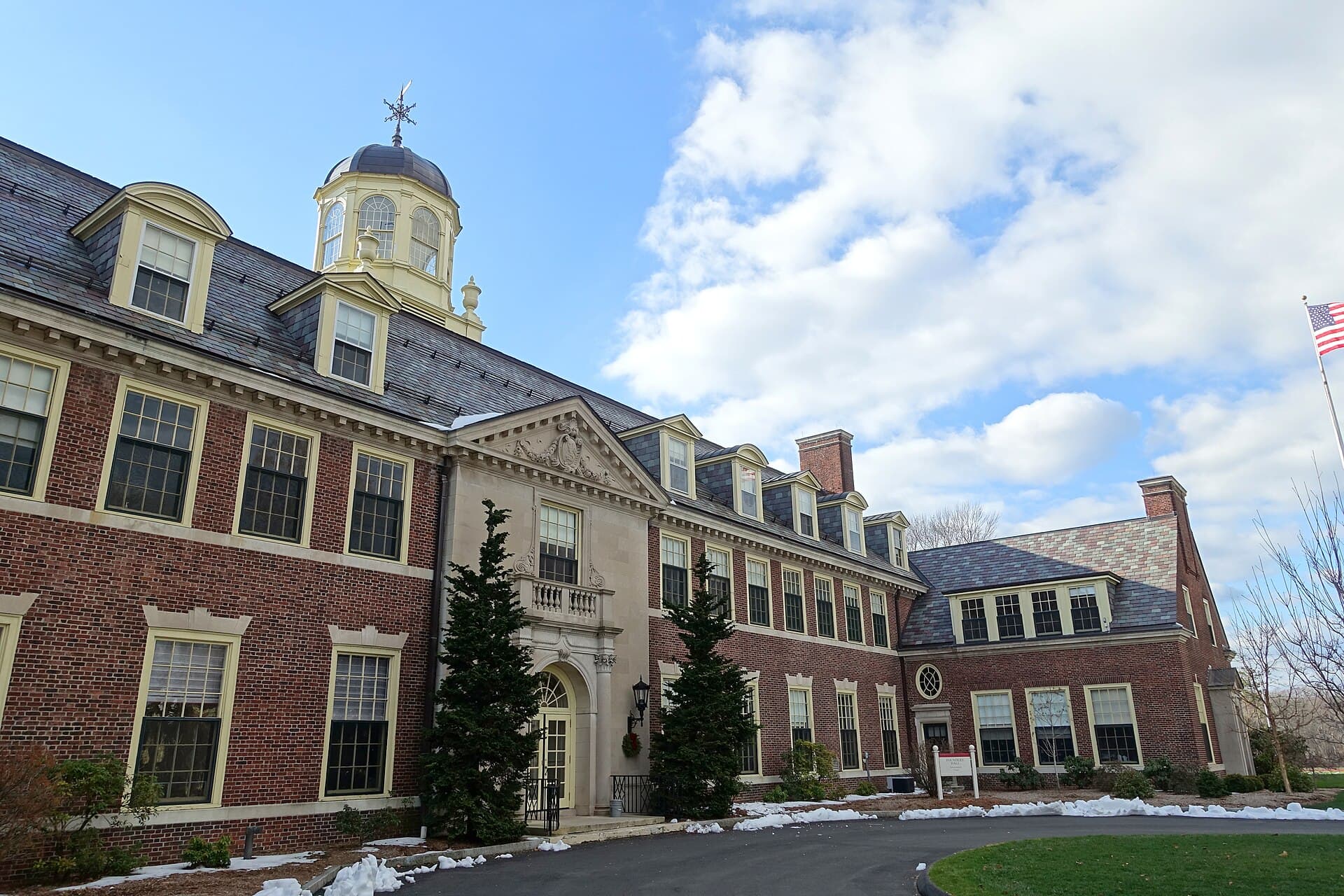
Founders Hall at the Loomis Chaffee School, a brick building with a white cupolaHIS CHOICE: LOOMIS CHAFFEE

Founders Hall, The Loomis Chaffee School · Photo: Daderot / Wikimedia Commons, CC0. Cropped.

He chose Loomis Chaffee, which offered the clearest path for joining in grade 11.

He compared visual-arts access, course continuity, community size, and support for students entering in grade 11. Choate remained attractive academically, but the Loomis Chaffee transition plan felt more concrete to R.K. and his family.

ALSO ADMITTED TO

  • Choate Rosemary Hall
  • The Peddie School

Anonymized client journeys, shared with initials to protect privacy. L.C., from a bilingual school in São Paulo, also applied for grade 11 and chose Loomis Chaffee. Portraits are AI illustrations, not photographs of our clients.

Read L.C.’s story Browse all client journeys

WHEN YOU’D LIKE A HAND

A conversation can help you find a useful place to start.

Bring your questions to a free 45-minute introduction with your proposed mentor. Afterward, we’ll email a personalized plan with recommended next steps.

Official Loomis Chaffee sources are linked beside the relevant guidance.

Loomis Chaffee’s application process (opens in a new tab)