.jpg)
YOUR CHARACTER
Show how you treat people.
St. Paul’s Honor Code asks everyone in its community to be “truthful, respectful, and kind.”
Letrado’s advicePick a time when the truthful or kind choice wasn’t the easy one, and tell it plainly.

ST. PAUL’S SCHOOL · PRIVATE SCHOOL GUIDE
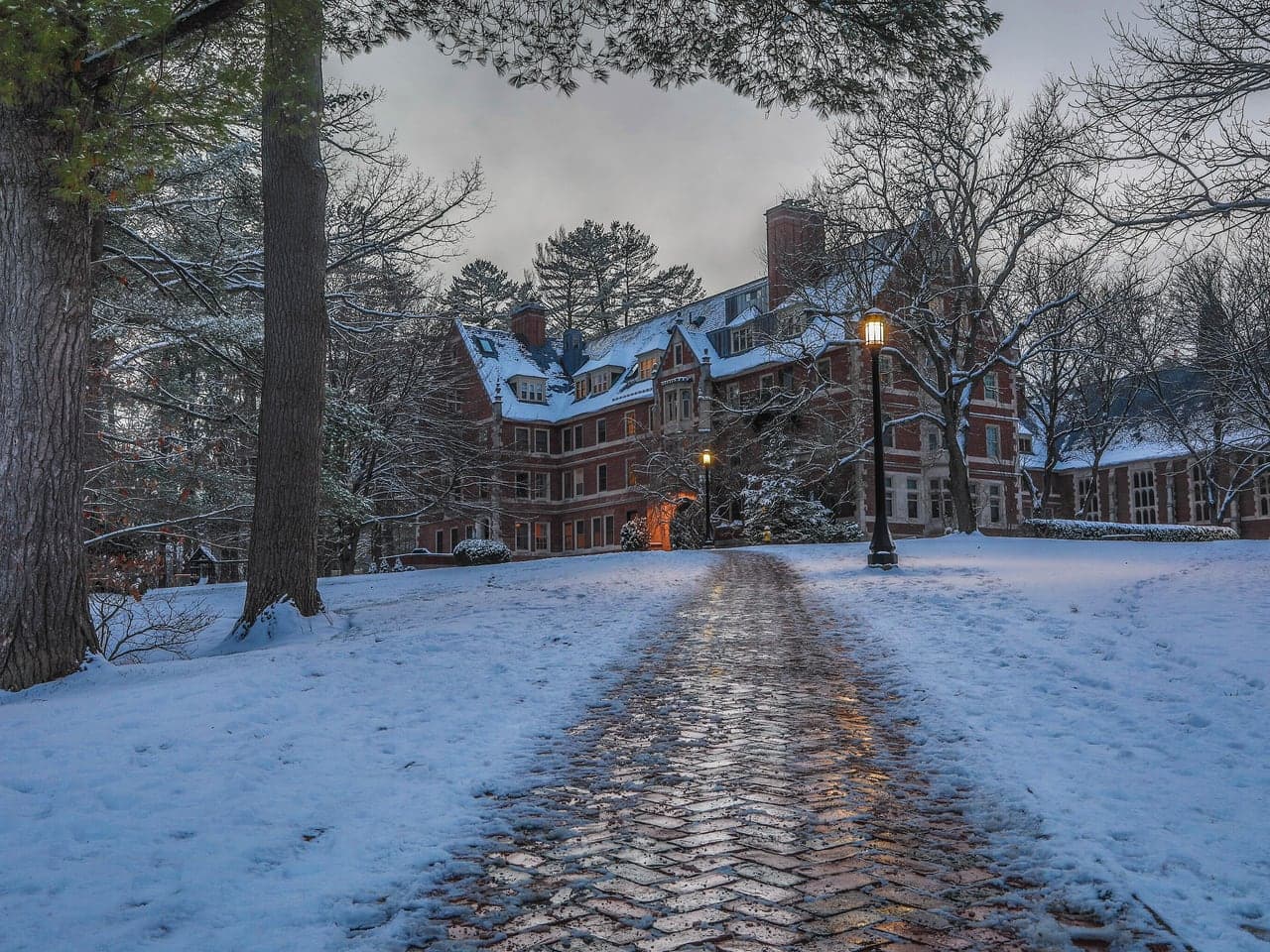
St. Paul’s has 538 students on a 2,000-acre campus in Concord, New Hampshire, within an hour’s drive of Boston. Start here to picture daily life and prepare each part of your application.
Fall 2027 entry
GET TO KNOW THE SCHOOL
For fall 2027, St. Paul’s admits new students to grades 9, 10, and 11, and the school year runs in three terms.
IN CLASS
St. Paul’s teaches them as one subject, Humanities. It has honors and advanced courses, but says “we do not offer an AP curriculum.”
IN YOUR HOUSE
Houses are for boys, for girls, or gender-inclusive, with students from different grades. Most students share a room with one or two others.
AFTER CLASS
Afternoon activities are required, and St. Paul’s fields 51 interscholastic teams in 17 sports, plus 10 intramural and fitness options.
Your adviser is linked to your house, which also has a head of house and senior prefects, and each new student gets a returning student as a Big Sibling. An adult is on duty in the house every evening.
Humanities: 19 credits if you join in grade 9, 13 if you join in grade 10, or 7 if you join in grade 11, including religion.
Languages, math, and science: 9, 6, or 3 credits in each, again depending on whether you join in grade 9, 10, or 11. If you join in grade 9 or 10, math through Precalculus also meets the math requirement, and everyone needs at least three math credits earned at St. Paul’s. Your language credits must all be in one language.
Arts: Three credits, whichever grade you join.
Afternoons: Ninth and tenth graders take part all three terms, and older students at least two, with set amounts of physical and team activity.
The swim test: To graduate, you must pass it within two years of arriving. Testing happens at new-student orientation, and lessons are available.
Applied Science and Engineering Program: Twelve Fifth Formers (eleventh graders) are chosen each year for a spring seminar, a summer research externship, and a capstone in senior year.
Classical Honors: Advanced Latin and Greek lead to a Classical Honors Diploma, with a senior capstone and an optional two-week trip to Italy or Greece every other March.
Health care: Registered nurses are on duty around the clock while school is in session, alongside a medical director, counseling, psychiatric referrals, and a part-time nutritionist.
Extra help: Teachers hold office hours, and academic coaching and peer tutors are available.
Learning accommodations: Accommodations from your current school don’t carry over automatically. St. Paul’s reviews a written request with documentation no more than three years old, and requests for the next school year are due April 1.
Private tutors: If you work with one, coordinate with your teachers. In-person sessions can’t take place on campus.
UNDERSTAND WHAT ST. PAUL’S LOOKS FOR
Its mission speaks of “excellence in character and scholarship,” and its admission pages give no scoring formula, so every part of your application counts.
YOUR CHARACTER
St. Paul’s Honor Code asks everyone in its community to be “truthful, respectful, and kind.”
Letrado’s advicePick a time when the truthful or kind choice wasn’t the easy one, and tell it plainly.
YOUR VALUES
St. Paul’s says its four application questions help it understand your values and qualities.
Letrado’s adviceWrite about what you actually care about, not what you think a famous school wants to hear.
YOUR INTERESTS
St. Paul’s describes supplements for artists, musicians, actors, ballet dancers, and athletes.
Letrado’s adviceSend one only for a long-term commitment.
WHAT ST. PAUL’S DESCRIBES
June to January
September to January
Once your inquiry form and Gateway Candidate Profile are in, book through St. Paul’s appointment portal. Admission officers can also arrange interviews when they travel to your area.
WHAT ST. PAUL’S SAYS
St. Paul’s accepts the SSAT, ISEE, PSAT, PreACT, ACT, or SAT. International applicants who can’t take the SSAT or ISEE can ask St. Paul’s to waive the requirement and send national or earlier test results, if they have them. Scores must come from within a year of the deadline. St. Paul’s prefers them before January 15 and accepts updated scores from a January retake.
SSAT and ISEE scores go straight from the testing organization (St. Paul’s codes: SSAT 6886, ISEE 300110). Email a copy of ACT, PSAT, or SAT scores to admissions@sps.edu.
WHAT ST. PAUL’S AND GATEWAY SAY
St. Paul’s says applicants’ writing must be done “without assistance, including the use of artificial intelligence tools.” It names no exception for proofreading.
Gateway’s Candidate Profile also asks you to certify that everything you submit is “factually accurate and honestly presented.” False information can cost you your place.
ST. PAUL’S SAMPLE MONDAY
On school nights, check-in runs from 8 p.m. for ninth graders to 9:45 for seniors. On weekends, a student group called St. Paul’s Night Life plans Saturday activities, and a shuttle runs to town most weekends.
ST. PAUL’S PUBLISHED FIGURES
These figures come from the 2026–27 school profile.
PLAN THE APPLICATION
You apply through Gateway to Prep Schools, the online application many boarding schools share. Decisions on admission and financial aid come together on March 10.
Application
Jan 15, 2027Financial aid
Jan 15Decisions
Mar 10If your school hasn’t released this year’s grades by January 15, send what you have and tell St. Paul’s when the rest will be ready. Dates without a year are as listed.
Fill in the inquiry form, then submit your Candidate Profile well before the deadline. The fee is $75 for domestic applicants and $125 for international applicants. Email the admission office to ask for a waiver.
From your current English and math teachers, your principal or counselor, and a personal recommender, plus an optional special-interest letter. Your school sends this year’s grades and official records from the two years before.
Required: one of six accepted tests, plus an English test for some applicants. Domestic families can ask for an SSAT fee waiver after completing Clarity.
Part of every complete application, on campus or live online.
Answers to four questions in Part 2 of Gateway, a Parent Statement, and a longer graded piece from this year with your teacher’s comments.
Part 1: The Candidate Profile, which can carry over to other Gateway schools.
Part 2: St. Paul’s four questions and the Parent Statement. You can submit Part 2 only after Part 1 and the application fee.
Part 3: You request recommendations and school records through Gateway, and your teachers and school complete them.
No English or math class this year? If your school’s block schedule means you aren’t taking English or math right now, a history or science teacher can write instead. Last year’s teachers can write a personal or special-interest letter.
English tests: If English isn’t spoken at home, send a TOEFL, IELTS, or Duolingo English Test score, unless you’ve had three or more years of school taught mainly in English. St. Paul’s TOEFL code is 2342, and it offers no fee waivers for the TOEFL or the Duolingo English Test.
Typical scores: St. Paul’s says most international students score above 100 on the TOEFL (about 5.0 on its newer 1–6 scale), 130 on the Duolingo English Test, or 7.5 on IELTS. These are typical scores, not cut-offs.
Breaks: Each break ends at 7 p.m., and St. Paul’s doesn’t excuse absences for flight schedules.
Flying in from far away: If home is five or more time zones away, you may return one day early after winter and spring breaks, with notice in advance, though meals may not be available that day.
An emergency contact: Families more than five hours’ drive away are asked to name a friend or relative who could pick up their child in an emergency.
WRITE IN YOUR OWN VOICE
Four questions, inside your applicationThe four questions appear in Part 2 of Gateway, with the Parent Statement.
Your four answers make up your Candidate Statement. With your graded paper and your parents’ statement, they show St. Paul’s how you think and what you care about.
Letrado’s adviceStart early, so you can put a draft away for a few days and come back to it fresh. Since no one else is allowed to help with this writing, read your answers aloud to hear whether they sound like you.
Read each question closely, and answer it with moments from your own life.
Your parents or guardians can share what they see at home, which no teacher or test can.
Any class works. Gateway asks for a piece in English, preferably from English class, and its cover form asks you to describe the assignment.
The SSAT sends its unscored 25-minute writing sample to the schools you choose, and St. Paul’s says it reads it.
MAKE ROOM FOR THE FINANCIAL QUESTION
St. Paul’s financial aid budget is $13.6 million a year, and its online estimator shows typical awards for families of your income and size.
U.S. HOUSEHOLD INCOME UP TO $150,000
is generally covered. St. Paul’s also considers assets and other children’s school tuition.
AID IN 2026–27
of students receive aid, with an average grant of $66,140.
INTERNATIONAL FAMILIES
St. Paul’s says it meets admitted international students’ full need for on-campus costs, though not always travel, and that international awards are limited in number and size.
U.S. citizens living abroad don’t automatically qualify for the full-tuition program. For aid, St. Paul’s counts a student as international if they need a Form I-20 to study in the U.S.
St. Paul’s tuition and financial aid (opens in a new tab)PUBLISHED 2026–27 TUITION, ROOM, AND BOARD
$75,400St. Paul’s estimates the full 2026–27 year at $80,365, adding mandatory fees and personal expenses.
For fall 2027 entry, use the 2027–28 costs when St. Paul’s publishes them.
Tuition and expenses (opens in a new tab)Letrado’s adviceRun the estimator together before you apply, and treat it as a guide, not a promise. Ask the aid office whether applying for aid plays any part in admission, and, if you live abroad, whether St. Paul’s would meet your full need.
Regional scholarships support students from particular parts of the U.S., from California to South Carolina, and the Hunt scholarship also lists Mexico. Some cover full tuition and fees. To be considered, apply for financial aid.
Regional scholarships (opens in a new tab)ADMITTED TO ST. PAUL’S · J.P.
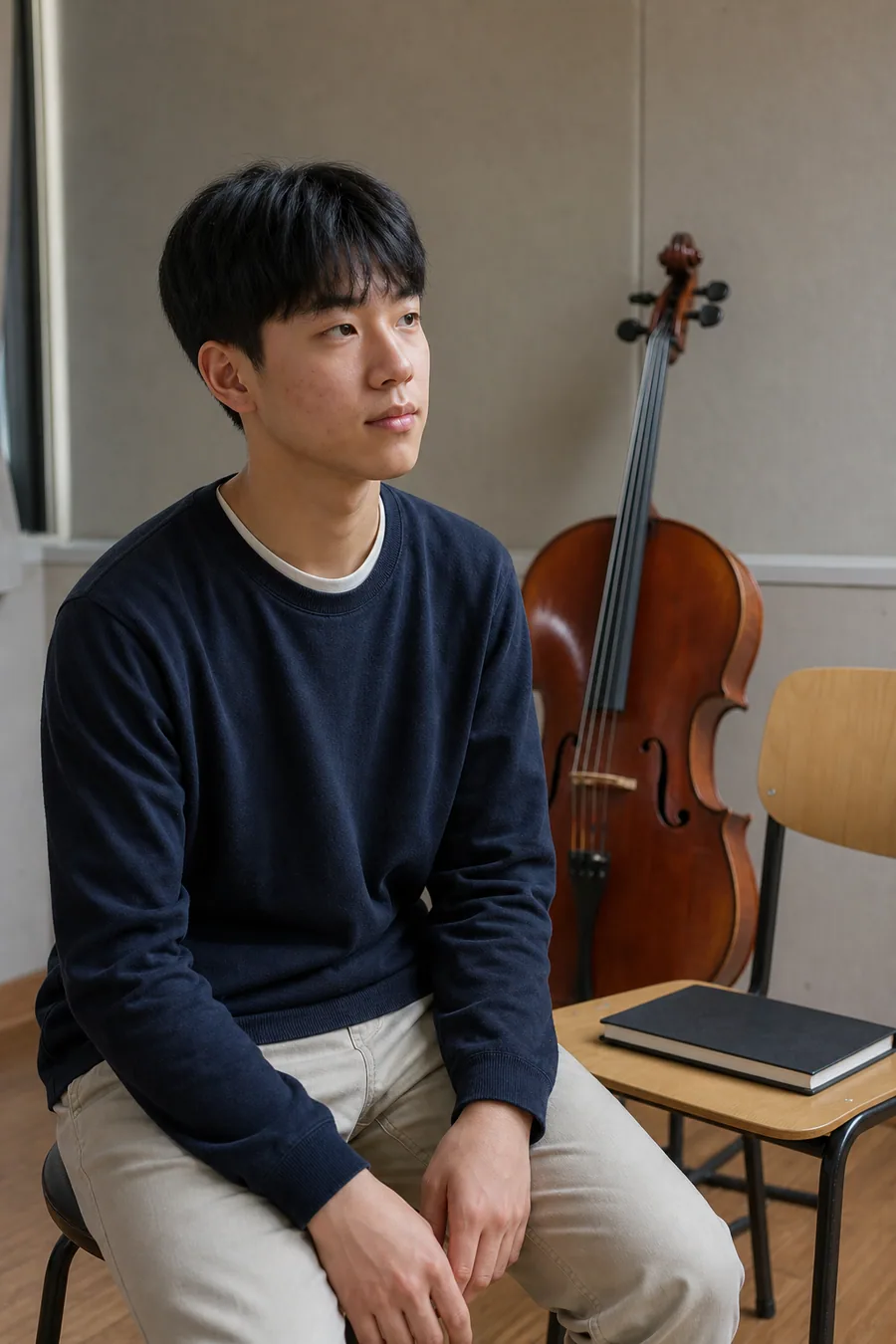
He was a South Korean day-school student applying for grade 10, with strong grades and a real interest in physics. He felt pressure to present his cello and physics as exceptional achievements, and his first interview answers sounded memorized. We helped him describe both honestly and answer naturally.
His cello went in as a long-term discipline, not a national credential, and we didn’t invent a project to join it to physics.
He practiced answering the same question from different starting points. Some sessions felt more awkward before they became more conversational.
His parents preferred East Coast schools, and he was curious about a smaller school in the West. He compared class size, music, science, residential life, and geography.
Every St. Paul’s applicant interviews, so practice speaking in your own words, not reciting prepared answers.
HIS ST. PAUL’S OUTCOME
Offered a place at St. Paul’s SchoolHIS CHOICE: CATE
Cate’s science program and access to nature matched his curiosity about outdoor education, and he could keep playing music without making it his whole identity. His parents supported the choice after reviewing travel and living arrangements.
ALSO ADMITTED TO

 Deerfield Academy
 AI illustration
WHEN YOU’D LIKE A HAND
Bring your questions to a free 45-minute introduction with your proposed mentor. Afterward, we’ll email a personalized plan with recommended next steps.
