SMALL BY DESIGN Every student gets our full attention. Read our story →
All graduate guides

YALE · INTERNATIONAL AND DEVELOPMENT ECONOMICS GUIDE

Planning a year of development economics? Prove your math is ready, and line up outside funding early.

Yale’s Master of Arts (MA) in International and Development Economics (IDE) is an intensive one-year program in Yale’s Graduate School of Arts and Sciences (GSAS), in New Haven. The deadline is January 2, 2027, at 11:59 p.m. Eastern Time.

Fall 2027 entry

A white Greek Revival house with tall columns and a pediment, behind a lamp post and trees, under a deep blue sky
Skinner House, completed in 1832, at 46 Hillhouse Avenue, Yale · Photo: Eumenes12 / Wikimedia Commons, CC BY 3.0. Resized and cropped.

GET TO KNOW THE PROGRAM

Take a five-course core in economics and econometrics, then add three electives from across Yale.

To graduate, you complete eight graduate courses, with Honors in at least one and an average of High Pass. Some admitted students must first take summer courses at Yale, usually in math and English, with their own application and tuition.

THE CORE

Take the five required courses.

Microeconomics, Growth and Macroeconomics, Econometrics, Development Econometrics, and one of two development courses, each one semester long.

ELECTIVES

Choose three graduate electives.

Any related graduate course can count, including courses at the School of Management or Yale Law School.

RESEARCH WORK

Add paid research work if you want it.

IDE pays students to work as faculty research assistants, roughly 10 hours a week. The pages we read don’t give the pay rate, so don’t count on it for living costs.

Stay longer if you want more than one year.

You can add a second year of electives as a special student, without a degree, or take a joint degree with the School of the Environment or the School of Public Health.

The core and paid research work

How applied it is: Unlike a first-year PhD course, IDE’s Microeconomics stresses applications, though it still asks a lot of you analytically.

The research paper: If you take Advanced Economic Development, one of the two development courses, you write a “thesis,” a research project.

Research and teaching work: Research assistants are paid for up to 120 hours each period, October to December and January to May. IDE suggests waiting until spring to work as a teaching assistant.

Before the fall: summer courses, housing, and insurance

Summer courses: IDE tells you in your offer if your place depends on the summer session. Its math course reviews calculus, introduces linear algebra, and moves on to optimization.

Waivers and arrival: Yale’s bulletin says the requirement may be waived if you show exceptional training in economic analysis and a good command of English. If it’s required, ask GSAS and OISS what start date your I-20 will show.

Orientation: GSAS’s new-student orientation week is mandatory. Check the fall 2027 dates when GSAS posts its 2027–28 calendar.

Housing: GSAS sends graduate housing information and forms once you accept.

Health insurance: You’re enrolled in and charged for Yale Health Hospitalization & Specialty Care unless you waive it with comparable coverage by 11:59 p.m. on September 15. International plans don’t qualify for a waiver.

If you’re coming from outside the U.S.

Your degree: A three-year bachelor’s degree meets the requirement, and you must complete it before you start at Yale.

Your I-20: Yale issues your I-20, the form you need for the visa, only after you accept and submit a Financial Certification form showing your funding. For 2026 entrants, OISS sends the I-20 by email, usually 7 to 10 business days after OISS’s New Student Survey and your financial documents.

Working on campus: During term, Yale’s policy caps all your jobs together at 19 hours a week, and averaging more than 10 hours a week needs permission from the director of graduate studies.

CPT at Yale: OISS’s list of master’s programs eligible for summer Curricular Practical Training (CPT), off-campus training that’s part of the degree, doesn’t include IDE, so don’t plan on an off-campus internship during the year.

A wide public green with autumn trees and downtown office towers beyond, under a pale sky
The New Haven Green in autumn, with downtown New Haven beyond · Photo: ajay_suresh / Wikimedia Commons, CC BY 2.0. Resized and cropped.

UNDERSTAND WHAT IDE LOOKS FOR

Bring an economics major’s training, or strong quantitative skills, and evidence of your interest in development.

IDE asks for “previous training in economics equivalent to an undergraduate major in economics, or an exceptionally strong background in quantitative methods.” You can apply from any major if your background is very analytical and you have the necessary math.

YOUR MATH AND ECONOMICS

Make sure your record shows multivariate calculus, probability, and statistics.

IDE also prefers applicants with computational linear (matrix) algebra, and in economics it strongly suggests Microeconomics, then Econometrics, then Macroeconomics.

Letrado’s adviceName any math a course title hides, such as matrix algebra taught inside econometrics, in your statement or CV.

YOUR INTEREST IN DEVELOPMENT

Give evidence of a strong interest in international and development economics.

IDE names economics courses, work in a developing country, and work or internships at an international agency such as the World Bank, but work experience isn’t required: about 80% of each class comes straight from an undergraduate degree.

Letrado’s adviceName each piece of evidence on your résumé, so your statement can say what it taught you.

YOUR LETTERS

Ask three professors, or two professors and a supervisor if you’ve been working.

GSAS suggests, but doesn’t require, that at least one letter come from a professor at the last school you attended full time.

Letrado’s adviceAsk your recommenders to submit by mid-December, since many are away over the holidays.

IDE’s class and graduates in numbers

FROM IDE’S BY THE NUMBERS PAGE

IDE’s 2026–27 cohort, the class that entered in fall 2026, had 32 students from 16 countries, and 91% were international.

3.8 / 4average GPA (grade point average)
167average GRE Quantitative score, out of 170
23.8average age, with a range of 21 to 39
0.5 yearsaverage work experience

Where graduates of the IDE ’24–’26 classes went first, as three-year averages from 77 who reported:

53%

a PhD or a predoc, a research job before a PhD

25%

the private sector

22%

the public or development sector

These figures describe past classes, not a minimum you need.

Joint degrees with two other Yale schools

IDE’S JOINT DEGREES

A joint degree takes 2.5 years, and each school admits you separately.

Dec 1, 2026

The Yale School of the Environment (YSE), at 11:59 p.m. Eastern

Dec 15

The Yale School of Public Health (YSPH), for the Master of Public Health (MPH)

Jan 2, 2027

IDE, at 11:59 p.m. Eastern

Dates without a year are as Yale lists them.

Joint IDE and YSE students pay tuition to GSAS for two semesters and to YSE for three, and take a three-week technical skills module in August before they start at YSE.

What GSAS checks, and how to use AI

WHAT YALE’S GRADUATE SCHOOL SAYS

GSAS verifies “all credentials” and reviews applicants’ written materials for plagiarism.

Any falsification or misrepresentation can lead GSAS to deny or cancel your admission.

A stone path across a green lawn under tall leafy trees, between brick residence halls
A path across Yale’s Old Campus · Photo: John Phelan / Wikimedia Commons, CC BY-SA 3.0. Resized and cropped.

PLAN THE APPLICATION

The IDE deadline is January 2, 2027, at 11:59 p.m. Eastern Time. IDE reviews your file only once it’s complete.

First, book the GRE and ask your three recommenders. You can apply to only one GSAS program per term, and there’s no interview; review can start right after the deadline and can take roughly 12 weeks.

Application opens each year

Mid-September

IDE application deadline

Jan 2, 2027
Due by
11:59 p.m. Eastern
Fee
US $105

Last day for fee-waiver requests

Jan 2, 2027
Allow
2 to 3 business days

IDE decisions

Mar 15–31

Reply to most offers by

Apr 15, 2027

Final official transcript, after you accept

Jul 15

Facts checked against official pages on November 7, 2026.

Dates without a year are as Yale lists them. Your offer letter gives your own reply date.

Gather these for the GSAS application.

  • Application and fee

    GSAS’s online application, with a non-refundable US $105 fee paid by card, unless you get a fee waiver.

  • Statement of academic purpose

    GSAS’s essay on why you’re applying to Yale.

  • Transcripts and a résumé

    Unofficial transcripts from every college you’ve attended, translated where needed, and a résumé or CV.

  • Three recommendations

    Usually all academic, submitted online by your recommenders, with up to five allowed.

  • GRE General Test scores

    Required for IDE, with no minimum, and sent to institution code 3987.

  • An English test, unless you’re exempt

    TOEFL iBT or IELTS Academic, for most applicants whose native language isn’t English.

Tests, English, and transcripts

The GRE: IDE doesn’t accept the GMAT, a business-school test, or a GRE Subject Test instead, and you must retake a GRE taken five or more years ago.

Sending scores: Send official GRE and TOEFL scores electronically to code 3987; for IELTS, follow GSAS’s testing page. Take the at-home GRE or TOEFL only if nothing else is available. Not tested yet? Enter a future test date and still submit.

English tests: IDE sets no minimum score, and GSAS doesn’t accept MyBest scores, IELTS Online, or TOEFL Essentials.

Who’s exempt: You’re exempt if your undergraduate degree is from a college or university that teaches mainly in English and you studied there in residence for at least three years. An English-taught master’s degree or PhD doesn’t count.

Transcripts: A credential evaluation, such as one from World Education Services (WES), can stand in for a transcript if it shows your courses and grades. Report your GPA as it is, without converting it.

Still finishing your degree? Upload the transcript you have before the deadline, since you can’t submit without one, and add final documents by January 31 or early February, as IDE advises.

Fee waivers, deferral, and applying again

Fee waivers: On a separate form, GSAS considers requests from people who served in AmeriCorps or the Peace Corps, U.S. Pell Grant recipients, U.S. veterans, and applicants with documented financial hardship. Non-U.S. citizens can ask too. Since requests take 2 to 3 business days and January 2, 2027, is a Saturday, the practical deadline is mid-December.

Deferring: With permission from IDE and GSAS, you can defer for one year, but only after you accept the offer.

Applying again: Send a new application with new letters and a new fee. After three denials from GSAS, you can’t apply again.

A brownstone building at dusk behind large trees, with a lit doorway
15 Hillhouse Avenue at dusk, on the same street as the Economic Growth Center, IDE’s home at No. 27 · Photo: Nick Allen / Wikimedia Commons, CC BY-SA 4.0. Resized and cropped.

WRITE IN YOUR OWN VOICE

Use your statement to show how you’d benefit from IDE, how you’d excel, and what perspective you’d bring.

500 to 1,000 wordsGSAS’s length for the statement of academic purpose.

Your statement of academic purpose is the only essay every IDE applicant writes, and there’s no writing sample. After you submit, you can still upload a revised one through your Status Portal.

Letrado’s adviceGive the perspective you’d bring its own paragraph, drawn from something you know firsthand, such as an economy you grew up in.

Statement of academic purpose · 500 to 1,000 words

Explain why you’re applying to Yale for graduate study.

Describe your research interests and your preparation for the field, including earlier research and other relevant experience, then how Yale’s faculty, research, and resources would help your future goals.

Sub-Saharan African Student Scholarship · up to 500 words

If you qualify, explain how the scholarship would help you reach your goals.

You add this statement inside your IDE application.

A pale stone hall with a columned rotunda and a dark dome, on a street corner in autumn
Woolsey Hall at Yale · Photo: ajay_suresh / Wikimedia Commons, CC BY 2.0. Resized and cropped.

MAKE ROOM FOR THE FINANCIAL QUESTION

Plan outside funding early. Yale’s bulletin says its fellowship funds aren’t available for IDE.

Outside the named scholarships below, IDE says students generally come with sponsorship from an employer or government, or with bank or family loans. You also have to show proof of your funding before you enroll.

SUB-SAHARAN AFRICAN STUDENT SCHOLARSHIP

Partial or full

With primary citizenship in a Sub-Saharan African country, or a degree from a university there, apply within the IDE application. Partial covers tuition; full adds living costs. Winners hear in mid to late March.

BRAZILIAN STUDENT SCHOLARSHIP

Apply in two steps

Yale offers it with Instituto Trajetórias. Step one is the IDE application, due January 2, 2027; step two is the Trajetórias application, with an opening date around February 2027.

JOINT DEGREE WITH YSE

Three Cairns

IDE says the Three Cairns scholarship meets 100% of demonstrated tuition need for the YSE master’s degree. YSE offers it to admitted joint-degree students with primary citizenship in a Global South country, for YSE terms only; the supplement is due with the YSE application on December 1, 2026.

IDE doesn’t publish how many of these it awards or how large they are, so email ide@yale.edu to ask what you could be considered for.

IDE funding and scholarships (opens in a new tab)

2026–27 · THE WHOLE ONE-YEAR DEGREE, TUITION PLUS LIVING COSTS (OUR SUM)

$87,429

Tuition is $53,400, and GSAS’s fall and spring table puts a single student’s living costs at $34,029. GSAS charges no technology, library, gym, or student activities fees.

See tuition and GSAS’s 2026–27 living-cost lines
Tuition
$53,400
Housing and food
$23,317
Books, course materials, supplies, and equipment
$1,800
Personal expenses
$2,844
Graduate Medical Plan (Yale Health’s hospitalization and specialty care coverage)
$3,764
Transportation
$2,304

All figures are for one student in 2026–27, and IDE says tuition rises about 4% a year. For fall 2027 entry, use the 2027–28 figures when GSAS publishes them, plus any required summer courses’ tuition and living costs.

GSAS tuition and living costs, 2026–27 (opens in a new tab)

Build your plan from sponsors, outside awards, and loans.

  • Sponsors and outside awardsIDE names government sponsors of current and past students, such as Bank Indonesia, and outside funders, such as the Fulbright Scholars Program.
  • U.S. federal loansOnly U.S. citizens and permanent residents can borrow federal Direct Loans, through the FAFSA and the GSAS loan application. From July 1, 2026, new borrowers get no Grad PLUS loans. GSAS’s loan page gives $20,500 a year, the graduate cap; Yale’s pages don’t say whether IDE counts as professional, which allows $50,000 a year.
  • Private loans for international studentsGSAS says private loans are open to U.S. and non-U.S. citizens, so ask Yale’s graduate financial aid office (gradfinaid@yale.edu) which loans are open to you.

Letrado’s adviceApply to sponsors and outside funders at the same time as your IDE application, as IDE advises.

The Yale Payment Plan can let you split each term’s bill into up to five monthly payments, for a $50 fee per term; international students can join a similar plan.

The Yale Payment Plan (opens in a new tab)

ADMITTED TO YALE · D.A.

D.A. filled his math gap with graded courses, and was open about what they couldn’t fix.

He had three years of applied economic work in Ghana, a strong record in economics and statistics, and thinner proof-based math than some programs wanted. We helped him strengthen his math and compare programs by how technical they were.

He took graded linear algebra.

He also worked through calculus again, in problem sets a former lecturer supervised.

He didn’t claim one course closed the gap.

A single course showed he was ready to work, not that he had caught up with math majors, so he aimed for programs suited to his background.

He weighed how much math each program would ask of him.

He compared math intensity, the economics core, and policy application, and Yale stood out as a focused one-year route.

IDE’s Summer Program page (opens in a new tab) says some admitted students must first take an intensive math course at Yale that reviews calculus and introduces linear algebra, the subjects D.A. had already studied.

AI illustration

D.A. · DEVELOPMENT ECONOMICS

He wrote as the analyst he was, ready for harder training, not as a finished development economist.

Read D.A.’s full story
Yale University

HIS YALE OUTCOME

Offered a place in Yale’s MA in International and Development Economics
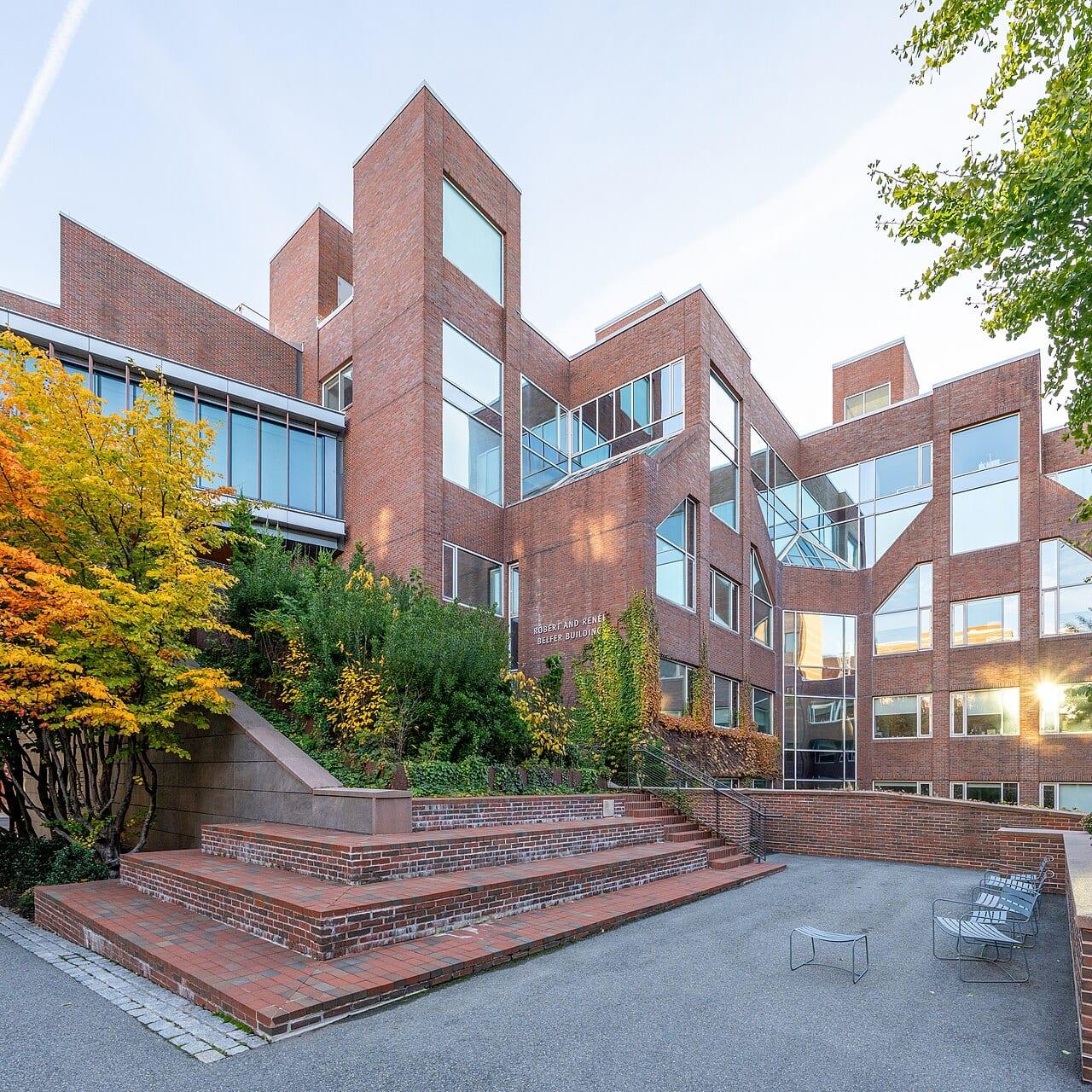
The brick Belfer Building at Harvard Kennedy School, with autumn trees and outdoor stepsHIS CHOICE: HARVARD KENNEDY SCHOOL

Belfer Building, Harvard Kennedy School · Photo: ajay_suresh / Wikimedia Commons, CC BY 4.0. Cropped.

Yale’s shorter program appealed on cost, but he chose Harvard Kennedy School’s MPA in International Development.

He wanted economics he could use in policy work, and he kept doctoral study as a possibility for later, not a promise.

ALSO ADMITTED TO

  • University of Oxford
  • Harvard Kennedy School

Anonymized client journeys, shared with initials to protect privacy. Portraits are AI illustrations, not photographs of our clients.

Browse all client journeys

WHEN YOU’D LIKE A HAND

A conversation can help you find a useful place to start.

Bring your questions to a free 45-minute introduction with your proposed mentor. Afterward, we’ll email a personalized plan with recommended next steps.

Official Yale and U.S. government sources are linked beside the relevant guidance.

IDE’s Apply page (opens in a new tab)