SMALL BY DESIGN Every student gets our full attention. Read our story →
All graduate guides

COLUMBIA SIPA · ENVIRONMENTAL SCIENCE AND POLICY GUIDE

Ready to start in late May? If you need funding or a visa, the deadline is December 20, 2026.

Columbia’s Master of Public Administration in Environmental Science and Policy (MPA-ESP) is a one-year, full-time degree at its School of International and Public Affairs (SIPA) in New York. Everyone starts in the summer, because the courses follow a set order.

Summer 2027 entry

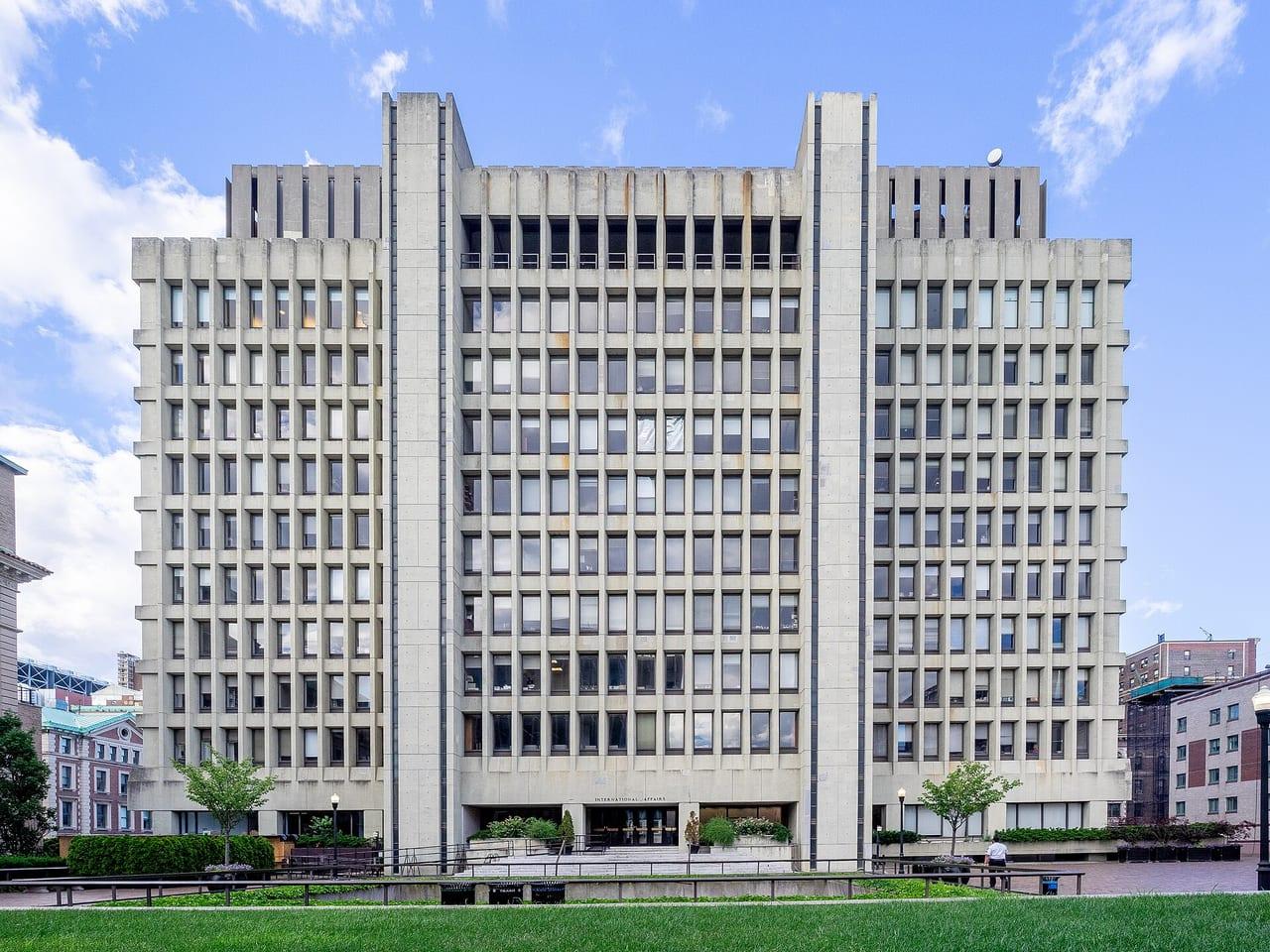
A tall concrete building with a grid of deep-set windows, behind a lawn and young trees under a blue sky
The International Affairs Building, home of Columbia SIPA · Photo: Ajay Suresh / Wikimedia Commons, CC BY 2.0. Resized and cropped.

GET TO KNOW THE PROGRAM

Learn the science first, then the economics and management, and finish by working for a real client.

You complete 54 points, Columbia’s word for credits, in three full-time terms, from late May to the following May. You pay tuition for three terms, while a two-year policy degree takes four.

SUMMER

Start with environmental science.

Courses from ecology to environmental toxicology teach you to understand and manage scientists’ work. They don’t train you to be a scientist.

FALL

Add economics, statistics, and management.

Microeconomics and policy analysis, quantitative methods, and sustainability management come next, with your first electives.

SPRING

Work as a consultant for a real client.

In the spring workshop, which replaces a thesis, your team works for a government or nonprofit client. Past clients include the U.S. Environmental Protection Agency.

Every term includes a team workshop.

In the summer and fall, your faculty-advised team plans how to put a proposed environmental law, or a United Nations resolution, into practice.

Electives and your own focus

Electives: You take 6 points in the fall and 6 in the spring, at SIPA or any other Columbia school.

Your own focus: There’s no concentration or language requirement. You shape the year through your electives, your workshop topic, and, if you want one, a spring internship.

Housing and immunizations

Housing: Columbia’s University Apartment Housing office has places for about 40% of incoming MPA-ESP students, and every incoming student gets Off-Campus Housing Assistance.

Immunizations: You can’t register for classes until Columbia has processed all your immunization records. Gathering them from abroad can take several weeks, so start early.

If you’re coming to Columbia from outside the U.S.

Your visa: After admission, Columbia issues your I-20, the form you need for an F-1 student visa. You can enter the U.S. up to 30 days before the program starts.

Working on campus: You can work on Columbia’s campus up to 20 hours a week.

Internships and CPT: Curricular Practical Training (CPT) lets F-1 students work as part of their degree. Since federal guidance in August 2026, optional internships no longer qualify. Columbia has paused CPT for programs that don’t require it of every student, and the MPA-ESP doesn’t.

Other routes: Columbia’s International Students and Scholars Office (ISSO) says OPT before graduation is an option only in limited circumstances, so ask ISSO before you accept an internship.

After you graduate: OPT needs Columbia’s recommendation and federal approval before you start work.

The STEM extension: Your employer must use E-Verify, the federal system for checking work eligibility, train you under a signed plan, and employ you at least 20 hours a week. ISSO charges its own $650 fee.

A long lawn with a round bronze sculpture, between red-brick and limestone campus buildings under a clear sky
Philosophy Hall, Fayerweather Hall, the International Affairs Building, and Casa Italiana, from the campus · Photo: Ilan Costica / Wikimedia Commons, CC BY 3.0. Resized and cropped.

UNDERSTAND WHAT SIPA LOOKS FOR

Science background or not, make your quantitative skills easy to see.

The program weighs your grades, math and science preparation, test scores, work experience, familiarity with environmental issues, clear goals, and letters. No single factor decides, and you don’t need a science or policy background.

YOUR PREPARATION

Learn any calculus, chemistry, or biology you lack before you start.

That’s SIPA’s advice. It adds that some math and science preparation helps but isn’t required to succeed.

Letrado’s adviceA short graded course is the clearest proof that you’ve filled the gap. List it with your quantitative courses in the application.

YOUR QUANTITATIVE SKILLS

Spell out your quantitative skills, from school and from work.

SIPA asks for a separate outline of your quantitative courses and recommends a “Quantitative Skills” section on your résumé.

Letrado’s adviceList each course with its grade. On your résumé, name the method you used, such as a regression or a budget model, and the decision it informed.

YOUR LETTERS

Ask three people who know your intellectual strengths and professional promise.

SIPA wants recommenders who are well placed to comment on both.

Letrado’s adviceThe workshop puts you on a team in every term, so let one letter show how you work with others under a deadline.

One intensive year, or a longer program?

THE ONE-YEAR FORMAT

The year is full time, and an internship is optional.

Full time

No part-time or online option. SIPA’s part-time Executive MPA is a separate program.

Internship optional

The program says the spring client project gives you similar professional experience.

SIPA recommends not working during the summer term, when the course schedule is especially demanding.

The MPA-ESP in numbers

SIPA’S PUBLISHED FIGURES

SIPA reports where the class of 2025 stood six months after graduating.

53MPA-ESP graduates in 2025, of whom 44 reported
88.6%of those reporting were employed or in further study
11.4%of those reporting were seeking employment
Over 800sustainability professionals in the international alumni network

Employers SIPA names include Apple, the City of New York, The Sierra Club, and The World Bank Group.

Using AI and outside help on your application

WHAT SIPA SAYS

The SIPA admissions pages we read say nothing about AI.

On November 7, 2026, we read SIPA’s How to Apply page and its admissions FAQ (frequently asked questions). Neither mentions AI tools.

A stately limestone building with arched windows and flags over the entrance, on a city street corner
Casa Italiana, next to SIPA on Amsterdam Avenue · Photo: ajay_suresh / Wikimedia Commons, CC BY 2.0. Resized and cropped.

PLAN THE APPLICATION

SIPA’s final fellowship deadline is December 20, 2026, and its deadline for all applicants is January 15, 2027.

SIPA reviews applications for admission and funding as they’re completed. It encourages you to apply early, especially if you’re seeking a fellowship or need extra time for a visa.

Priority fellowship deadline

Nov 1, 2026
Due by
11:59 p.m. Eastern

Final fellowship deadline

Dec 20, 2026
Due by
11:59 p.m. Eastern
Recommended for
International applicants

Final deadline for all applicants

Jan 15, 2027
Due by
11:59 p.m. Eastern
Fee
$95

Decisions, typically

2 to 3 weeks
Counted from
Your complete application

Facts checked against official pages on November 7, 2026.

International students have no separate deadline. When you apply, choose the “Summer” term and the “MPA-ESP” program.

Prepare these pieces together.

  • Application and fee

    SIPA’s online application and the $95 fee.

  • Statement of purpose

    Up to 600 words on your goals. SIPA’s checklist calls it the personal essay.

  • Quantitative coursework

    A separate outline of the quantitative skills your studies gave you. The checklist calls it the quantitative résumé.

  • Professional résumé

    Your work history, with an optional “Quantitative Skills” section.

  • Three recommendations

    From teachers or professional colleagues.

  • Transcripts and test scores

    Official transcripts from every undergraduate and graduate institution you’ve attended, English test scores if you need them, and optional GRE (Graduate Record Examinations) or GMAT (Graduate Management Admission Test) scores.

  • A video answer

    A recorded response to a random question from SIPA admissions.

Tests, English, and transcripts

The GRE or GMAT: Optional. Scores must be from within five years of your application.

Who needs an English test: International applicants need one unless their undergraduate degree is from an institution where all teaching was in English. SIPA accepts the TOEFL (Test of English as a Foreign Language) and the IELTS (International English Language Testing System).

Minimum scores: TOEFL 100, with 110 preferred, or IELTS 7.0. Scores must be no more than two years old. Use SIPA’s TOEFL code, 2161.

At-home tests: SIPA doesn’t accept the at-home versions of any of these tests.

The new TOEFL scale: From January 21, 2026, TOEFL reports show scores on a 1 to 6 scale, with a comparable 0 to 120 total during a two-year transition. SIPA gives its minimum on the 0 to 120 scale only.

Transcripts in another language: Have them translated by World Education Services (WES), a third-party verification agency.

Interviews and deferring

Interviews: The MPA-ESP’s FAQ says a video interview is required for admission, but the program page’s checklist doesn’t list one. Ask admissions whether to expect one, and when.

Deferring: You can’t defer admission to a later year, so apply for the summer you can start.

A long city avenue lined with brick and stone buildings, with taxis and cars, seen from a bridge above the street
Amsterdam Avenue, looking north from the bridge across Columbia’s campus · Photo: Petri Krohn / Wikimedia Commons, CC BY-SA 3.0. Resized.

WRITE IN YOUR OWN VOICE

In up to 600 words, show how this one year moves you toward your goals.

Up to 600 wordsSIPA’s limit for the MPA-ESP statement of purpose.

The statement of purpose is the only essay on SIPA’s MPA-ESP checklist. Applicants for SIPA’s Public Service Scholarship also write a supplemental essay.

Letrado’s adviceChoose one environmental problem you’ve seen up close, and say what you couldn’t do about it with the skills you had. Then name the part of this year that would close that gap, and the job you want afterward.

Statement of purpose · up to 600 words

Explain your goals as they relate to the program.

SIPA asks for “a clear, focused and well-written statement of your goals as they relate to the program.”

Quantitative coursework · required

Outline the quantitative skills your studies gave you.

Your outline can include courses in mathematics, statistics, economics, engineering, or the natural or computer sciences.

Video question · recorded in the application

Answer a random question on camera.

Your answer helps SIPA assess your English. It isn’t meant to measure your expertise in environmental science or policy.

A wide river under a cloudy sky, with old wooden pilings in the water and a rocky shore with grasses in front
The Hudson River from Riverside Park, Manhattan · Photo: Kidfly182 / Wikimedia Commons, CC BY-SA 4.0. Resized.

MAKE ROOM FOR THE FINANCIAL QUESTION

Answer “Yes” to SIPA’s funding question, and budget for all three terms.

You’re considered for SIPA’s fellowships and scholarships only if you select “Yes” when the application asks about funding and you submit everything by a fellowship deadline.

SIPA SCHOLARSHIPS

About one-third

of admitted students receive one, applied to tuition and split evenly across the three terms.

PUBLIC SERVICE SCHOLARSHIP

Up to 65% of tuition

for applicants from the U.S. or abroad with at least three years of full-time public service and a cumulative grade point average of 3.4 or higher. The deadline for Summer 2027 entry was November 1, 2026.

WORK DURING THE PROGRAM

$5,000 to $6,000

a semester if you’re hired for a course grading assistantship. Earth Institute internships pay by the hour, for up to 20 hours a week.

SIPA sends scholarship decisions each January, and it encourages everyone to apply for funding.

SIPA scholarships (opens in a new tab)

PUBLISHED 2026–27 BUDGET · MPA-ESP, THREE TERMS

$157,282

Columbia charges $114,850 for tuition, fees, and insurance. SIPA estimates $42,432 more for living costs and books. International students also pay a $175 International Students Fee each semester and a $121 I-20 fee in their first semester.

See the full budget
Tuition, 12 to 19 points a term
$102,672
Medical insurance (some students can waive it)
$7,179
Health and related services fee
$2,038
University services and support fee
$1,886
SIPA computer lab fee
$750
Student activity fee
$220
Document fee, summer term only
$105
Rent and food
$33,837
Personal expenses
$4,848
Books and supplies
$1,935
Transportation
$1,812

International students pay the medical insurance. These provisional figures, dated February 13, 2026, exclude moving costs. Use the 2027–28 figures once they’re published.

SIPA’s tuition and fees (opens in a new tab)

Plan the rest before you accept: loans and other awards.

  • U.S. federal loansU.S. citizens and permanent residents can borrow up to $20,500 a year, with a lifetime maximum of $100,000. Graduate PLUS loans are no longer available to new borrowers after July 1, 2026.
  • Applying for U.S. aidFile the Free Application for Federal Student Aid (FAFSA) with SIPA’s federal school code, 002707. For a summer start, ask SIPA’s financial aid office which FAFSA years you need.
  • Private loans for international studentsMany need a co-signer who’s a U.S. citizen or permanent resident with good credit, SIPA says, but there are sometimes options without one.
  • U.S. veteransThe MPA-ESP takes part in the Yellow Ribbon Program, which adds matching scholarship funding.
  • Students committed to IndiaThe Shardashish Interschool Fellowship gives up to $50,000 for one year to students in financial need, through a competitive process after admission.

ADMITTED TO COLUMBIA SIPA · N.K.

N.K. was upfront about what her job had and hadn’t taught her.

She applied after five years in sustainability at a Tokyo consumer-goods company. We helped her strengthen her policy preparation and think through what one year of study, or two, would give her.

She didn’t let her job title speak for her.

Her application stuck to her own work, from emissions figures to a packaging test.

She showed she was ready to learn policy, not that she knew it already.

She said her grounding in regulation was thin, then showed her courses and a memo she wrote.

She weighed one year of study against two.

One year meant a shorter break from her job and lower costs. A second year left room for an internship.

The MPA-ESP’s curriculum (opens in a new tab) teaches microeconomics and policy analysis. If, like N.K., you’ve studied little policy, say so, and show how you’ve started learning it.

AI illustration

N.K. · CLIMATE POLICY

Her statement set a near-term goal of putting climate plans into practice, and left the kind of employer open.

Read N.K.’s full story
Columbia University

HER COLUMBIA OUTCOME

Offered a place in Columbia’s MPA in Environmental Science and Policy
Yale’s Harkness Tower framed by treesHER CHOICE: YALE

Harkness Tower, Yale University · Photo: Carol M. Highsmith / Wikimedia Commons, Public domain. Cropped.

Columbia offered her a direct focus on policy. She chose Yale.

Yale’s Master of Environmental Management best matched the skills she still needed to build.

ALSO ADMITTED TO

  • University of Oxford
  • Yale University

Anonymized client journeys, shared with initials to protect privacy. Portraits are AI illustrations, not photographs of our clients.

Browse all client journeys

WHEN YOU’D LIKE A HAND

A conversation can help you find a useful place to start.

Bring your questions to a free 45-minute introduction with your proposed mentor. Afterward, we’ll email a personalized plan with recommended next steps.

Official SIPA, Columbia University, and U.S. government sources are linked beside the relevant guidance.

MPA-ESP: how to apply (opens in a new tab)