

YOUR WORK SINCE COLLEGE
Show your work since college, role by role.
YSE calls two or more years of experience after a bachelor’s degree a plus.
Letrado’s adviceMark each role on your résumé as full- or part-time, as YSE asks.

YALE · MASTER OF ENVIRONMENTAL MANAGEMENT GUIDE
Yale’s Master of Environmental Management (MEM) is a two-year degree at the Yale School of the Environment (YSE), focused on environmental policy and management. The deadline for fall 2027 entry is December 1, 2026, and there’s no application fee.
Fall 2027 entry
GET TO KNOW THE PROGRAM
The MEM normally takes two years of full-time study in residence, starting in August with two weeks of required Summer Training Modules (MODs).
FIRST YEAR
You take Foundational Knowledge courses and statistics unless you pass waiver exams, and declare one of nine specializations.
THE SUMMER
It’s required, for at least 30 hours a week, and you find it yourself with help from YSE’s career office.
SECOND YEAR
You take a designated capstone course or do an independent project with a faculty advisor.
Beyond YSE’s more than 100 courses, many students take law, business, or public health courses at other Yale schools.
Specializations: Each of the nine takes 18 of your 48 credits, in two core courses and four electives, and you can add a second.
The summer experience: It carries no credits, but you can’t graduate without it, and research with a YSE advisor is possible only in rare cases.
The capstone: It carries at least three credits, can’t also count toward your specialization, and is often a clinic with outside clients.
Other formats: With 10 or more years of environmental leadership or related experience, consider the Executive MEM instead: a separate ten-month degree, due January 8, 2027.
Housing: On-campus housing is limited, so look at off-campus options too.
Health insurance: Yale automatically enrolls and bills eligible students for Yale Health Hospitalization & Specialty Care Coverage. To waive it, Yale Health must have proof of other adequate full-year coverage by September 15 each year; international plans don’t qualify.
CPT for your summer: Since August 24, 2026, OISS has authorized Curricular Practical Training (CPT), an F-1 student’s internship permission, only for training every student in a program must complete for the degree. Before you accept a U.S. offer, confirm with OISS and YSE’s career office that the MEM’s summer qualifies.
Your degree: You need a four-year bachelor’s degree or its equivalent, and a three-year degree from an accredited institution abroad is assessed for equivalence.
Your visa: OISS advises making your social media profiles public before your visa interview.
UNDERSTAND WHAT YSE LOOKS FOR
YSE gives “special weight” to relevant experience after college and looks for signs you’ll build a career as an environmental leader. Apart from English scores, it sets no grade or test cutoffs.
YOUR WORK SINCE COLLEGE
YSE calls two or more years of experience after a bachelor’s degree a plus.
Letrado’s adviceMark each role on your résumé as full- or part-time, as YSE asks.
YOUR PREPARATION
None is a prerequisite, but YSE highly recommends at least two courses in each.
Letrado’s adviceCheck your courses against the recommended list in YSE’s bulletin, its official catalog.
YOUR LETTERS
YSE wants exactly three letters, preferably from supervisors, strongly recommends at least one academic letter, and accepts none from family, friends, or colleagues who didn’t supervise you.
Letrado’s adviceAsk a coworker only if they supervised your work.
YSE’S PUBLISHED FIGURES · ALL MASTER’S DEGREES
The profile pools master’s students who entered from 2021 to 2025. YSE publishes no MEM-only profile, admit rate, or average grades or scores.
These figures describe past students, not minimums or predictions of MEM results.
YSE’S JOINT DEGREES
YSE’s MEM application
SOM’s MBA Round 2, with decisions on March 18, 2027
SOM’s Round 3, with decisions on May 13, 2027
SOM requires a GMAT or GRE score from everyone, or the LSAT if you’re considering law school, plus a brief statement on why you want the joint degree.
You can start at either school and pay three semesters of tuition at each. Aid is separate at each school, so apply for it in the year you apply for admission.
WHAT YSE SAYS
SOM’s application includes a statement on AI use and asks you not to use AI in its video questions.

PLAN THE APPLICATION
First, open YSE’s online application, ask your three recommenders, and take the TOEFL or IELTS by the end of November if you need it. YSE lists no MEM interview, though Bekenstein and Three Cairns scholarship applicants may be asked for a virtual one.
MEM application deadline
Dec 1, 2026Optional scholarship supplements: Bekenstein and Three Cairns
Dec 1, 2026Need-based aid forms
Feb 1Decisions
Beginning to mid-MarchReply and deposit
Apr 15International students: funding forms for your I-20
May 1Final transcripts
Jul 15Facts checked against official pages on November 7, 2026.
Dates without a year are as YSE lists them. YSE doesn’t extend the deposit deadline.
YSE’s form, with its essays and statements.
Each role marked full- or part-time, plus an optional note of up to five sentences on any gap longer than three months.
Exactly three, each a form plus a one- to two-page letter, due by the deadline.
Unofficial copies from every undergraduate and graduate institution, with notarized English translations of any not in English.
The TOEFL or IELTS, unless your whole bachelor’s program was taught in English. YSE doesn’t accept Duolingo.
The GRE or GMAT, or the LSAT instead if you’re applying for a law joint degree.
The GRE, GMAT, or LSAT: Scores must be from the last five years, and a test taken by the deadline counts as received on time. YSE’s codes are 3996 for the GRE and 3TJ-WT-45 for the GMAT.
Who needs an English test: If your bachelor’s was a joint, dual, or 2+1+1 degree with substantial study in another language, you still need scores, unless the committee waives them.
Minimum scores: TOEFL iBT: 5.0 overall on the new 1–6 scale, or 100 for a still-valid score on the old 0–120 scale. IELTS: 7.0 overall, with at least 6.5 in each section.
Sending English scores: Have official scores sent directly (YSE’s TOEFL code is 3996). YSE prints no validity period; the TOEFL’s bulletin gives two years.
English after admission: YSE may make six weeks of written and spoken English instruction at Yale Summer Session a condition of your admission.
Transcripts: Your offer depends on YSE verifying official or final records before you enroll. For a degree from outside the U.S. or Canada, YSE encourages, but doesn’t require, a course-by-course evaluation, due by the deadline if you send one.
Deferring: After you accept and pay the deposit, you can ask to defer one year, case by case, and you keep the same YSE scholarship, not raised for higher costs.
Applying again: Each try needs a new application, and after three denials you can’t apply again.
WRITE IN YOUR OWN VOICE
Questions inside the applicationYSE shows its essay prompts only once you start an application.
In the bulletin’s words, YSE’s short and longer essays and statements “illustrate fit, skills, and overall experience.”
Letrado’s adviceOpen the application before you draft anything.
In YSE’s words, “Clarity regarding professional career goals is a critically important part of the applicant’s personal statement.”
The 2026–27 bulletin asks test takers for an essay on their English-language education, research, and work, so look for it in the application.
Answering “YES” to the Bekenstein question opens one essay: the challenge, your role in it, your leadership, and how the program would help your climate-mitigation goals.
The essays cover your YSE goals for Global South climate solutions and the parts you most want to work on; one reference answers the scholarship’s own prompt.
MAKE ROOM FOR THE FINANCIAL QUESTION
At YSE’s 2026–27 rates, a single student’s two years cost $166,426 before aid, with full tuition both years, however many courses you take. About 80% of YSE students receive scholarships, but need-based and most merit awards cover tuition only.
NEED-BASED AID
Wherever you’re from, send the YSE Financial Aid Application and the CSS Profile aid form (code 3821); U.S. citizens and eligible noncitizens also file the federal FAFSA (code 001426).
BEKENSTEIN AND THREE CAIRNS
Bekenstein Climate Leaders adds a $10,000 merit scholarship for up to 30 master’s students per class. Need-based Three Cairns meets 100% of demonstrated tuition need for admitted students with primary citizenship in a Global South country; ask YSE which countries count.
THE SUMMER BETWEEN YOUR YEARS
You find your own funding. YSE’s goal is that each student receives at least $6,000, or the host’s competitive rate, for a 10-week internship, and its Supplementary Fund gives capped, competitive partial awards if you fall short.
For summer 2027, 25 Bekenstein internships across Yale’s professional schools pay $15,000 each, and two Cameron Speth Fellowships, for students from developing countries or Japan, about $10,000. Your summer would be 2028, with amounts not yet published.
Funding your master’s degree (opens in a new tab)PUBLISHED 2026–27 BUDGET · ONE YEAR (NINE MONTHS), ONE FULL-TIME STUDENT
$83,213Tuition is the same for every student, including international students.
YSE’s aid goes only up to this single-student budget, second-year awards generally match first-year ones, and YSE suggests planning for 3 to 5% yearly increases.
YSE cost of attendance, 2026–27 (opens in a new tab)Letrado’s adviceFile your aid forms by February 1, before decisions in March, since admission is need-blind and a late file rules out need-based aid.
If your scholarships exceed tuition, Yale may withhold up to 14% of the excess for U.S. tax, depending on your tax status and any tax treaty.
International students and U.S. taxes (opens in a new tab)ADMITTED TO YALE · N.K.
She worked five years on corporate sustainability for a consumer-goods company in Tokyo, collecting emissions data and coordinating supplier questionnaires under a title broader than her role. We helped her claim only her own work and build up her policy preparation.
Two supplier teams counted recycled content in incompatible ways, and sorting it out took technical learning, patient work with suppliers, and accepting that cleaner data might delay a public report.
For each major project, she wrote down her own part and cut any company result that wasn’t hers to claim.
Courses in environmental economics and policy analysis came first, then a short, unpublished memo comparing two ways of holding producers responsible for their products’ waste.
YSE’s summer experience (opens in a new tab) requires 10 to 12 weeks of internship or research between the two years, the time N.K. wanted for testing a path in public-private climate work.
 AI illustration
HER YALE OUTCOME
Offered a place in Yale’s Master of Environmental Management HER CHOICE: YALE
Harkness Tower, Yale University · Photo: Carol M. Highsmith / Wikimedia Commons, Public domain. Cropped.
Oxford’s shorter program meant less time away from work and Columbia’s centered on policy, but she judged Yale’s longer, costlier one better for a careful change of direction.
ALSO ADMITTED TO


MORE FREE GUIDES
Each covers the school, how to apply, and what it costs, checked against the school’s own pages.
 University of OxfordOxford, EnglandCompare graduate courses, the work you would need to prepare, and the questions to ask about funding.Read our guide
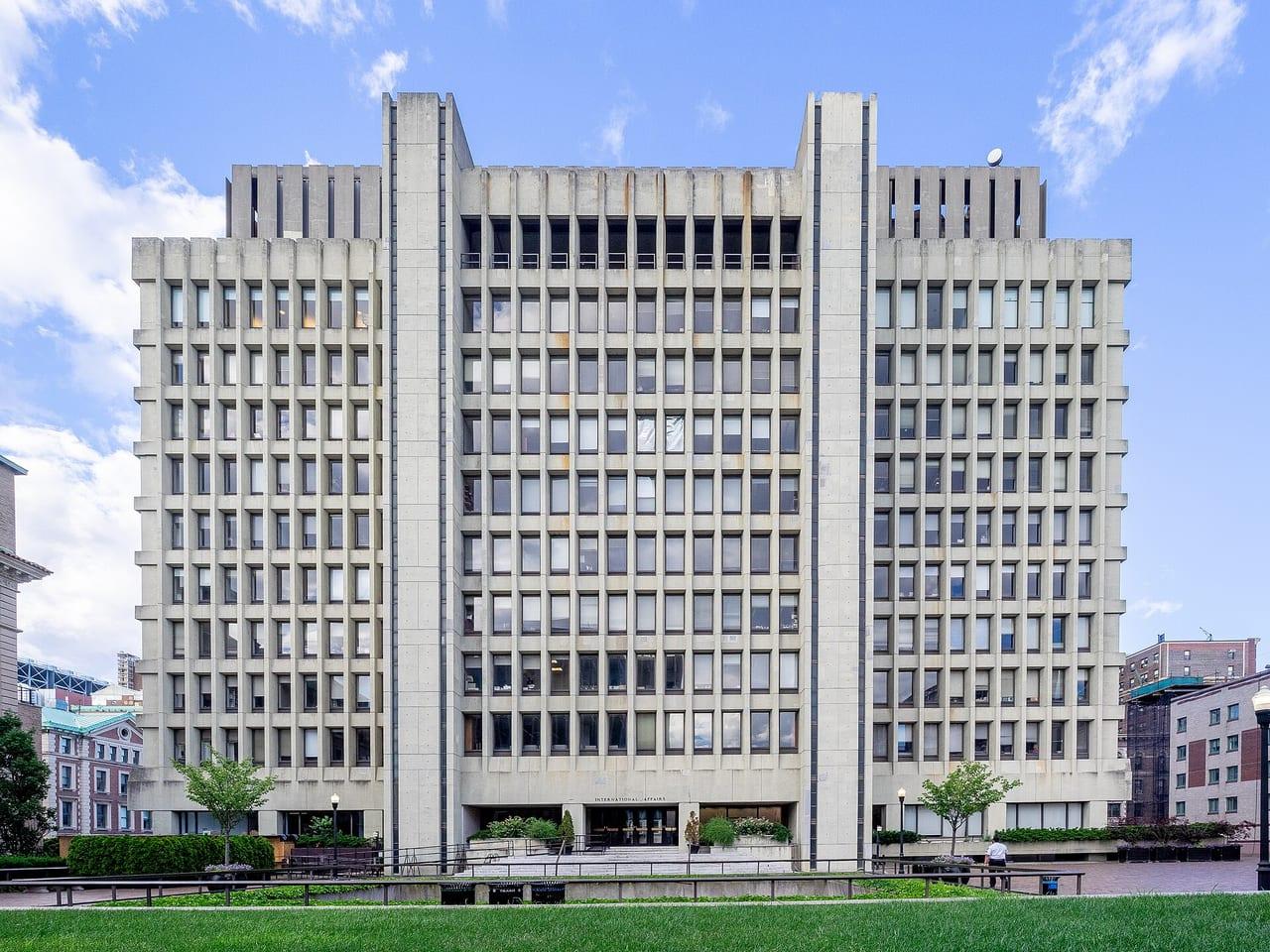 Columbia SIPANew York, New YorkA one-year MPA that begins in late May with science courses, then moves on to economics, management, and a client project.Read our guide
 Yale Development EconomicsNew Haven, ConnecticutCheck the math IDE expects, prepare for a possible summer course at Yale, and line up outside funding early for this one-year MA.Read our guide
Photos, in the order shown: Hassocks5489 (CC0), Ajay Suresh (CC BY 2.0), and Eumenes12 (CC BY 3.0). All cropped or resized.
See all our graduate guidesWHEN YOU’D LIKE A HAND
Bring your questions to a free 45-minute introduction with your proposed mentor. Afterward, we’ll email a personalized plan with recommended next steps.


