SMALL BY DESIGN Every student gets our full attention. Read our story →
All East Asia guides

EAST ASIA · JAPAN

Applying from Japan starts with the qualification you’ll finish school with.

Students in Japan finish school in different ways: with a Japanese high school diploma, the IB Diploma, an American diploma with AP courses, or A Levels. Yours shapes where you can apply and what each university will ask of you.

For 2027 entry

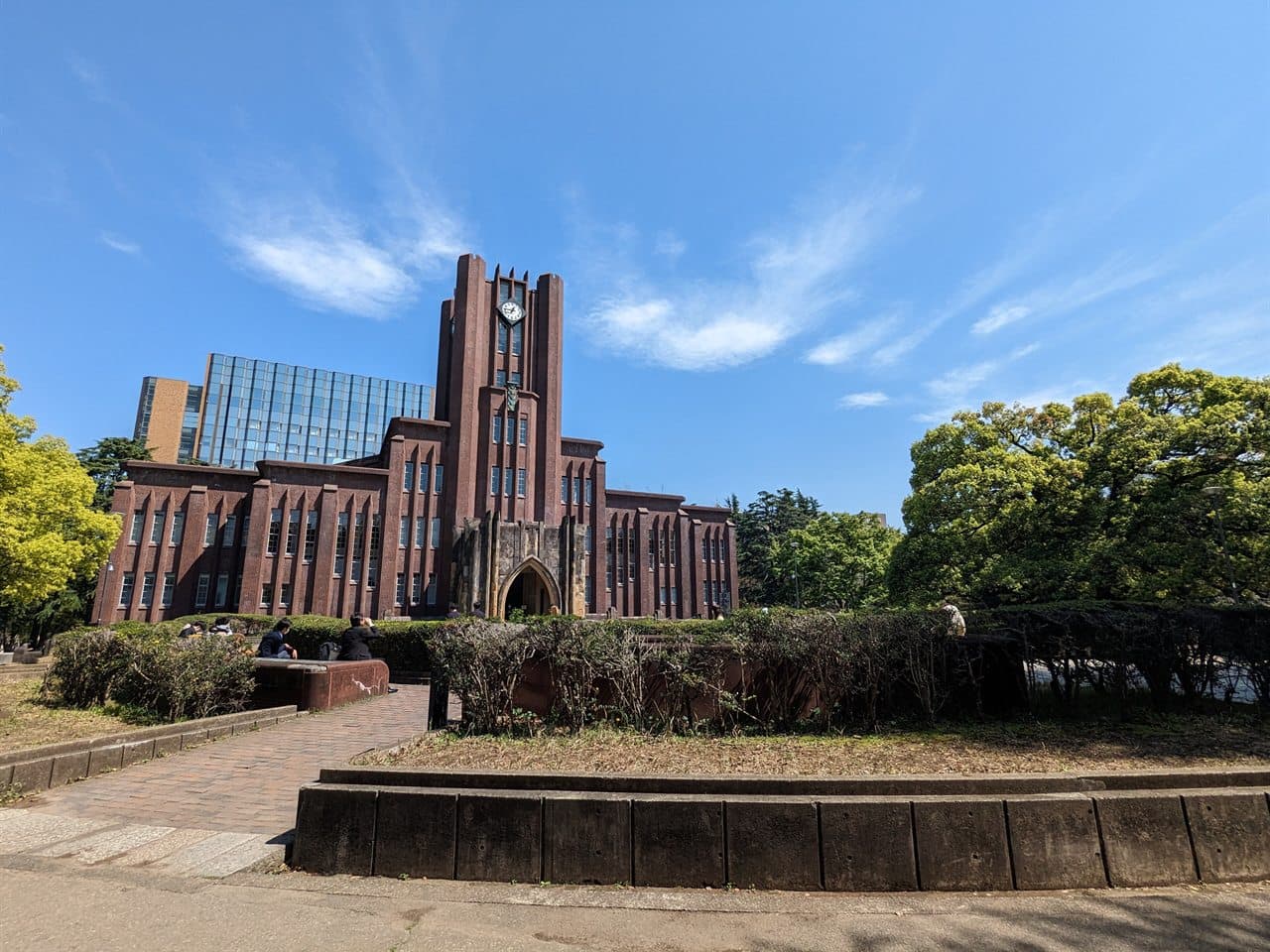
The University of Tokyo’s Yasuda Auditorium, a red-brick building with a clock tower, under a blue sky
Yasuda Auditorium, University of Tokyo · Photo: Tokyo538 / Wikimedia Commons, CC0. Resized.

START WITH YOUR QUALIFICATION

Japanese universities set their own exams, and UK universities may ask for more than a Japanese diploma.

At a Japanese high school, you apply to Japanese universities through their own exams and routes, some with the national Common Test. With the IB, an American diploma, or A Levels, universities in Japan and abroad each read your results in their own way.

  • JAPANESE CURRICULUM

    A Japanese high school diploma

    You graduate with your school’s diploma and a record of your grades. For Japanese universities, you may also sit the Common Test (大学入学共通テスト) in January.

    U.S. colleges
    Read your school record in context, plus SAT or ACT scores and an English test where they ask for them.
    UK universities
    Oxford doesn’t accept the Japanese high school certificate. Cambridge strongly recommends further study first, such as A Levels, the IB, or at least five AP exams at grade 5.
  • INTERNATIONAL BACCALAUREATE

    The IB Diploma

    You take six subjects, three or four at Higher Level, plus the core, in Japan or abroad. Japan’s education ministry (MEXT) asks Japanese universities to treat an IB Diploma earned in Japan the same as one earned abroad.

    U.S. colleges
    Look at your courses, grades, and predicted results in the context of your school.
    UK universities
    Usually set offers in total points and grades in named Higher Level subjects.
  • AMERICAN CURRICULUM

    A high-school diploma with AP courses

    Your school’s diploma and GPA, usually with Advanced Placement (AP) courses and exams.

    U.S. colleges
    Read it much as they would a U.S. school’s record, alongside your school profile.
    UK universities
    Look at your AP exam results. What each asks for varies by course, so check its international qualifications page.
  • BRITISH CURRICULUM

    A Levels

    You usually take three or four A Levels in your last two years, for example at an international school.

    U.S. colleges
    Read your A Level subjects and predicted grades alongside your school profile.
    UK universities
    Set offers in A Level grades, including grades in the subjects your course requires.

Letrado’s adviceAsk your counselor for your school profile early. It explains your curriculum and grading, and U.S. colleges read it alongside your transcript. If you’re at a Japanese high school, ask how your school will send your grades in English.

If you’re taking the Common Test

The test: The 2027 Common Test is on January 16 and 17, with make-up exams on January 23 and 24. You apply online to the National Center for University Entrance Examinations by October 2, 2026.

Your scores: The Center publishes the answers after each day’s exams and sends your scores straight to the universities that use them. You see your own scores only in April, if you asked for this when you applied (a ¥300 fee).

Universities’ own exams: They fall between February 1 and March 25, 2027, with results by March 31. The University of Tokyo (UTokyo), for example, holds its exams from February 25 and posts results on March 10.

The autumn routes: Comprehensive selection (総合型選抜) opens from September 1, 2026, with results from November 1. School recommendation (学校推薦型選抜) needs your principal’s recommendation and opens from November 1, with results from December 1. From 2027 entry, both include an interview, apart from some school recommendations where you promise to enroll.

If you’re at an international school

UTokyo’s planned College of Design: UTokyo plans to open a five-year bachelor’s and master’s program in September 2027, subject to MEXT approval. One route accepts the SAT, the ACT, the IB, or A Levels, including predicted grades, and asks for an English test unless you’ve studied in English for three of your last four school years. Applications run from October 15 to November 5, 2026, with final results on February 20, 2027.

ICU’s English-language admissions: International Christian University (ICU) admits students through a process run in English. For April 2027 entry, you apply from October 1 to 8, 2026, and hear on December 1. You can apply for September 2027 entry instead, but only for one entry term, and offers can’t be deferred.

COMPARE THE SYSTEMS

The U.S., the UK, and Japan read your application in different ways.

You can apply to all three in the same year, and we help with all three. Each has its own application, deadlines, and idea of a strong applicant, so give each one its own plan.

UNITED STATES

Colleges read your whole record in context.

Selective colleges look at your grades in the context of your school, alongside your essays, activities, teacher and counselor letters, and test scores where they ask for them. You apply to each college separately, often through the Common App.

Letrado’s adviceMake sure your school profile and counselor letter explain your curriculum. Then use your essays for what only you can say.

UNITED KINGDOM

UK universities admit you to one course.

You apply through UCAS to up to five courses, with one personal statement for all of them. Universities look closely at your subjects and predicted grades, and some courses add an admissions test or interview.

Letrado’s adviceChoose a subject you’d enjoy studying for three years, then check each course’s subject requirements before anything else.

JAPAN

Japanese universities admit you through their own exams and routes.

In the general route (一般選抜), you sit the Common Test in January if your universities ask for it, then their own exams in February or March. Two other routes, comprehensive selection and school recommendation, start in the autumn. Some universities, such as International Christian University (ICU), also admit students in English.

Letrado’s adviceThe University of Tokyo (UTokyo) posts first-round results on March 10, and its rules refer to enrolling by March 15, before U.S. regular decisions arrive. Decide early what you’d do then.

Official help is available, too.

EducationUSA, the U.S. government’s network of study advisers, is run in Japan by the U.S. Embassy and consulates with the Japan-U.S. Educational Commission (Fulbright Japan). It answers questions by email and offers online advising, information sessions, and seminars.

PLAN YOUR YEAR

Put every system on one calendar, because the dates overlap.

U.S., UK, and Japanese deadlines, results, and offers fall at different times. Seeing them together shows where you may need to decide before every answer is in.

  • U.S.
  • UK
  • Japan
  • Exam results
  1. September 2026

    • Japan From Sep 1

      Comprehensive selection (総合型選抜) applications can open

    • Japan Sep 15–Oct 2

      Apply online for the January Common Test

  2. October 2026

    • UK Oct 15

      UCAS deadline for Oxford, Cambridge, and most medicine, dentistry, and veterinary courses

      18:00 UK time.

  3. November 2026

    • U.S. Nov 1

      Early deadlines at Harvard and Yale

      Other U.S. colleges set their own early dates.

    • Japan From Nov 1

      School recommendation (学校推薦型選抜) applications can open

  4. January 2027

    • U.S. Jan 1 and 2

      Regular deadlines at Harvard and Yale

      Harvard’s is January 1, and Yale’s is January 2.

    • UK Jan 13

      UCAS deadline for most other courses

      18:00 UK time.

    • Japan Jan 16–17

      The Common Test

  5. February 2027

    • Japan From Feb 25

      UTokyo’s first-round exams

      Other universities hold theirs between February 1 and March 25.

  6. March 2027

    • Japan Mar 10

      UTokyo’s results

      Its rules refer to enrolling by March 15.

    • U.S. Late March

      U.S. regular decisions arrive

      Harvard’s come by the end of March, and Yale’s in late March.

    • Japan Mar 31

      Last day to withdraw from a Japanese university for a tuition refund

      In principle, under MEXT’s guidelines. Not for school-recommendation or single-choice (専願) places.

  7. April 2027

    • Japan April

      The Japanese university year begins

  8. May 2027

    • U.S. May 1

      Reply to U.S. offers

      The usual U.S. reply date, including at Harvard and Yale.

  9. July 2027

    • Exam results Early July

      IB results

      In 2026 they came out on July 6.

U.S. dates vary by college, so check each college’s own page. Japanese universities set their own dates within MEXT’s rules.

TRY THIS WITH EACH UNIVERSITY ON YOUR LIST

A good list shows why each choice belongs on it.

Open each university’s own pages and note an answer for every row. Bring the gaps and questions to our conversation, or work through them with your counselor.

A worksheet for checking each university on your list
What to checkWhat to note for each university
Your qualificationDoes it accept the diploma or certificate you’ll finish with, for direct entry?
Subjects and testsWhich subjects, grades, English tests, or admissions tests does the course need?
DatesWhen is the deadline, when will you hear back, and when must you reply or enroll?
Full cost in yenTuition, housing, flights, insurance, and visas for the whole degree, and again with a weaker yen.
Would you go?If this were your only offer, would you be glad to go?

PLAN THE COST

Budget for the whole degree in yen, then test it with a weaker yen.

A U.S. bachelor’s degree usually takes four years, and many UK degrees take three. Exchange rates can change over that time, so plan for the full degree, not just the first year.

YOUR YEARLY BUDGET

Count everything you’ll pay each year.

  • Tuition and feesThe international fee for your UK course, or a U.S. college’s full published cost of attendance.
  • Housing and foodAt many U.S. colleges, first-year students live on campus.
  • Health coverA UK Student visa includes the Immigration Health Surcharge of £776 a year. U.S. colleges set their own health insurance rules, and many offer a student plan.
  • VisasA UK Student visa costs £558. A U.S. student visa costs $185, plus the $350 SEVIS fee.
  • Flights and depositsFlights home each year, and any deposit a university asks for to hold your place.

Letrado’s adviceRun your budget twice: once at today’s exchange rate and once with the yen 10% weaker. Keep at least one option that still works.

Aid depends on your citizenship, not only where you live.

  • If you’re a Japanese or other non-U.S. citizenAid for international students differs a lot between colleges. Yale doesn’t consider your family’s ability to pay, wherever you’re from, and Harvard says its admissions and aid processes are the same for every applicant, whatever your citizenship. Many colleges use the CSS Profile, where you can enter your family’s figures in yen.
  • If you’re a U.S. citizen living in JapanU.S. federal student aid depends on citizenship, so you can file the FAFSA with an address in Japan. Colleges’ own aid may also treat you as a U.S. applicant, so check each college.
  • In the UKYou’ll usually pay the international fee. Fee status depends on your immigration status and where you’ve lived, not where you went to school, so check UKCISA if you’re unsure.
  • From JASSO, Japan’s student support organizationIts grant for a full bachelor’s degree abroad (海外留学支援制度(学部学位取得型)) doesn’t need to be repaid. In 2026 it paid ¥352,000 a month for study in the U.S., the UK, Canada, or Singapore, normally for four years. The 2027 amount depends on Japan’s budget.
  • From a private foundationThe Yanai Tadashi Foundation funds Japanese citizens at universities on its list, up to US$115,000 a year in the U.S. or £70,000 a year in the UK. For 2027 entry, its school-recommended route closed on August 10, 2026. A second route, for students already admitted, is due to open around December 2026 and also covers universities in Canada.
JASSO’s scholarship: who can apply and when

Who can apply: Japanese citizens and permanent residents living in Japan who haven’t yet studied at a university, including IB and A Level students and graduates of accredited international schools.

What it asks for: A high school average of at least 3.7 out of 5, TOEFL iBT 80 (4.0 on the new scale) or IELTS 6.0, your school’s recommendation, and a family income of ¥20 million or less.

Dates: Entries for study starting between April 2027 and March 2028 closed on September 24, 2026, with results in early March 2027. That call was published on July 16, 2026.

Visas: when to apply

UK Student visa: You can apply up to six months before your course starts. You pay the health surcharge for every year of your visa when you apply.

U.S. student (F-1) visa: You apply once your college has sent your I-20 form. If you’re a U.S. citizen, you don’t need one.

RELATED JOURNEYS

A student from Tokyo, and students facing the same choices.

Real journeys from our records. Each card shows how it connects to applying from Japan.

AI illustration

From Tokyo · Master’s

N.K. · Environmental management & policy

N.K. separated her own work from her company’s sustainability results.

N.K. had five years in corporate sustainability in Tokyo and needed to show her own part in the work. Admitted to Oxford, Yale, and Columbia, she chose Yale’s environmental management master’s for interdisciplinary depth and time to test a public-private climate path.

Read N.K.’s full story
AI illustration

A similar question, from Seoul

H.J. · Literature & statistics

H.J. found room for both literature and statistics.

H.J. went to an international school in Seoul and applied to Oxford for English and to U.S. colleges in the same year. Admitted to Harvard, Oxford, Yale, and Columbia, she chose Yale for depth with room to test both interests.

Read H.J.’s full story
AI illustration

A U.S. citizen abroad, from Hong Kong

D.K. · Economics & philosophy

D.K.’s essay showed how she learned to question her assumptions.

D.K. is a U.S. citizen who studied the IB in Hong Kong. Admitted to Harvard, Yale, Penn, and UChicago, she chose Penn after comparing aid and the flexibility to combine economics and philosophy.

Read D.K.’s full story

Real journeys, shared with initials to protect privacy. Portraits are AI illustrations, not photographs of our clients.

Browse all client journeys

WHEN YOU’D LIKE A HAND

A conversation can help you find a useful place to start.

Bring your questions to a free 45-minute introduction with your proposed mentor. Afterward, we’ll email a personalized plan with recommended next steps.

Official sources are linked beside the relevant guidance.

The 2027 Common Test (Japanese) (opens in a new tab)