SMALL BY DESIGN Every student gets our full attention. Read our story →
All graduate guides

PENN FELS INSTITUTE OF GOVERNMENT · MPA GUIDE

Looking for a public administration degree you can finish in a year? Show Fels your commitment to public service, and send a complete application early.

At Penn’s Fels Institute of Government, the Master of Public Administration (MPA) takes one year full time or two years part time. If you studied outside the U.S., order your credential evaluation first: it can take 8 to 12 weeks.

Fall 2027 entry

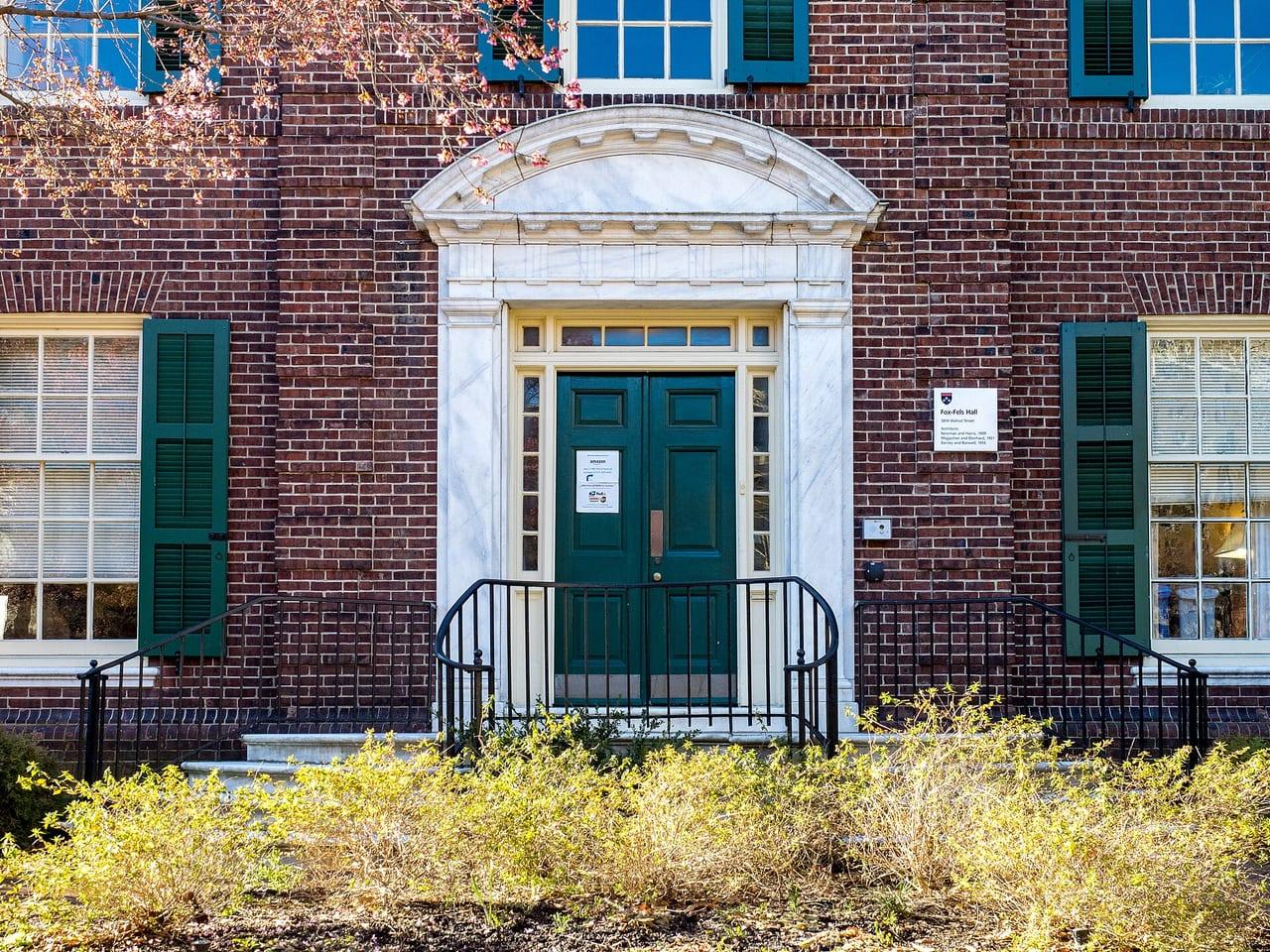
The white-framed front door of a red-brick mansion with green shutters, behind a bed of yellow flowers
Fox-Fels Hall, home of Penn’s Fels Institute of Government · Photo: ajay_suresh / Wikimedia Commons, CC BY 2.0. Resized.

GET TO KNOW THE PROGRAM

Take the core in fall and spring, then finish with a capstone and an internship.

Full time, the in-person MPA in Philadelphia takes one year of three semesters: fall, spring, and summer. Both the capstone and the internship are required.

FALL

Start with statistics and economics.

You learn statistics with R, a statistical computing language, plus public economics and policymaking, and choose an elective with your advisor.

SPRING

Add evaluation, finance, and management.

You also take a career seminar, a second elective, and the first part of your capstone.

SUMMER

Finish your capstone and your internship.

You finish the capstone with a community partner organization. The required internship runs 125 to 375 hours, and most students do it in the summer.

You can also study part time, over two years.

Core classes generally meet on weekdays, 10 a.m. to 5 p.m. On an F-1 student visa or a J-1 exchange visa, Penn says you must stay enrolled full time, so plan on one year.

Concentrations, majors, the internship, and dual degrees

Concentrations: Optional: Political Advocacy, International Affairs, Nonprofit Management, Domestic Policy, or an Individualized Concentration, each with two electives and a capstone project in its area.

The two STEM-designated majors: The MPA in Quantitative Policy Analytics and the MPA in International Impact Evaluation. Fels’s pages don’t say how or when students join them, so ask.

The internship: The Early Internship Track lets you start it in the fall or spring. Fels waives it only in exceptional cases, for students working full time in a job related to the degree.

Dual degrees: Fels lists nine, including one in city planning. On an F-1 or J-1 visa, you must be admitted to both before you start.

If you’re coming to Penn from outside the U.S.

Your I-20: Once you’re admitted, Penn’s International Student and Scholar Services (ISSS) emails instructions for your I-20, the form you need for an F-1 visa. Request it at once: processing can take up to three weeks, and possibly longer in peak season.

Internships and CPT: An F-1 student needs Curricular Practical Training (CPT) for an internship that’s part of the degree. Since U.S. guidance of August 24, 2026, Penn processes CPT requests only when the training is an integral and required part of the curriculum.

The MPA’s internship: Fels requires one, but neither Fels nor Penn says whether it meets the new test, so ask both before you accept a U.S. internship that depends on CPT.

A tall white clock tower topped with a statue rising above an ornate stone building and downtown towers
Philadelphia City Hall · Photo: ajay_suresh / Wikimedia Commons, CC BY 2.0. Resized and cropped.

UNDERSTAND WHAT FELS LOOKS FOR

Show Fels your academic record, your commitment to public service, and why its practical curriculum fits your plans.

Fels’s admissions committee reads each application as a whole, considering “academic achievement, commitment to public service, and alignment with the personal, practical Fels curriculum.”

YOUR COMMITMENT

Show your commitment to public service through what you’ve done.

Work experience isn’t required, and the median for MPA students is two years. With less, or from the private sector, Fels looks for commitment shown through internships, volunteering, or campaign work.

Letrado’s adviceGive volunteer and campaign roles their own lines on your résumé, with what you did and whom it served.

YOUR ACADEMIC RECORD

Be ready for statistics, taught with R, in your first term.

Fels’s admissions pages name no prerequisite courses and no minimum grade. The spring finance course is designed for students with little or no finance background.

Letrado’s adviceIf your statistics grades are weak or years old, complete a graded statistics course before you apply, and list it on your résumé with the grade.

YOUR LETTERS

Make at least one of your two letters come from a classroom instructor.

Both recommenders should be able to evaluate your professional or academic work.

Letrado’s adviceOut of school for years? Ask Fels whether the instructor of a recent course would count.

Fels’s students and graduates in numbers

FELS’S PUBLISHED FIGURES

Within six months of graduating, 90% of Fels’s MPA Class of 2025 were employed, working on political campaigns, or continuing their education.

2 yearsmedian professional experience of MPA students
6:1Fels’s student-to-faculty ratio
40countries represented by international students, MPA and Executive MPA together
34%of Fels alumni work in government, 32% in the private sector, 23% in nonprofits and NGOs (non-governmental organizations), and 11% in consulting

These figures describe past students, and only the 90% carries a class year.

The Executive MPA, and Penn’s other public administration degrees

TELL THEM APART

Fels also offers an Executive MPA, and Penn’s College of Liberal and Professional Studies (LPS) offers two more degrees.

Executive MPA

Fels’s two-year, part-time, hybrid degree for professionals with at least five years of experience. Its students can’t get an F-1 visa.

I-MPA

LPS’s International Master of Public Administration: one year, full time only. LPS calls it “STEM-based.” It isn’t a Fels program.

G-MPA

LPS’s Global Master of Public Administration, taught 100% online. It isn’t a Fels program either.

Using AI and outside help on your application

WHAT PENN ARTS & SCIENCES SAYS

The Graduate Division of Penn’s School of Arts & Sciences lets its applicants use AI tools “as a limited aid.”

That rule doesn’t say whether it covers the Fels MPA, whose applications LPS processes.

Allowed

Brainstorming or organizing ideas; grammar, spelling, or style review of your own writing; citation or formatting help; and limited language help to express your own ideas accurately

Not allowed

Having AI generate all or a substantial portion of any application material you submit as your own, misrepresenting your work or abilities, submitting material you can’t explain or defend, or using AI in an interview or assessment

Under that rule, everything you submit must “authentically represent” your own ideas, experiences, and work. Fels’s MPA admissions page, checked on November 7, 2026, adds no guidance of its own.

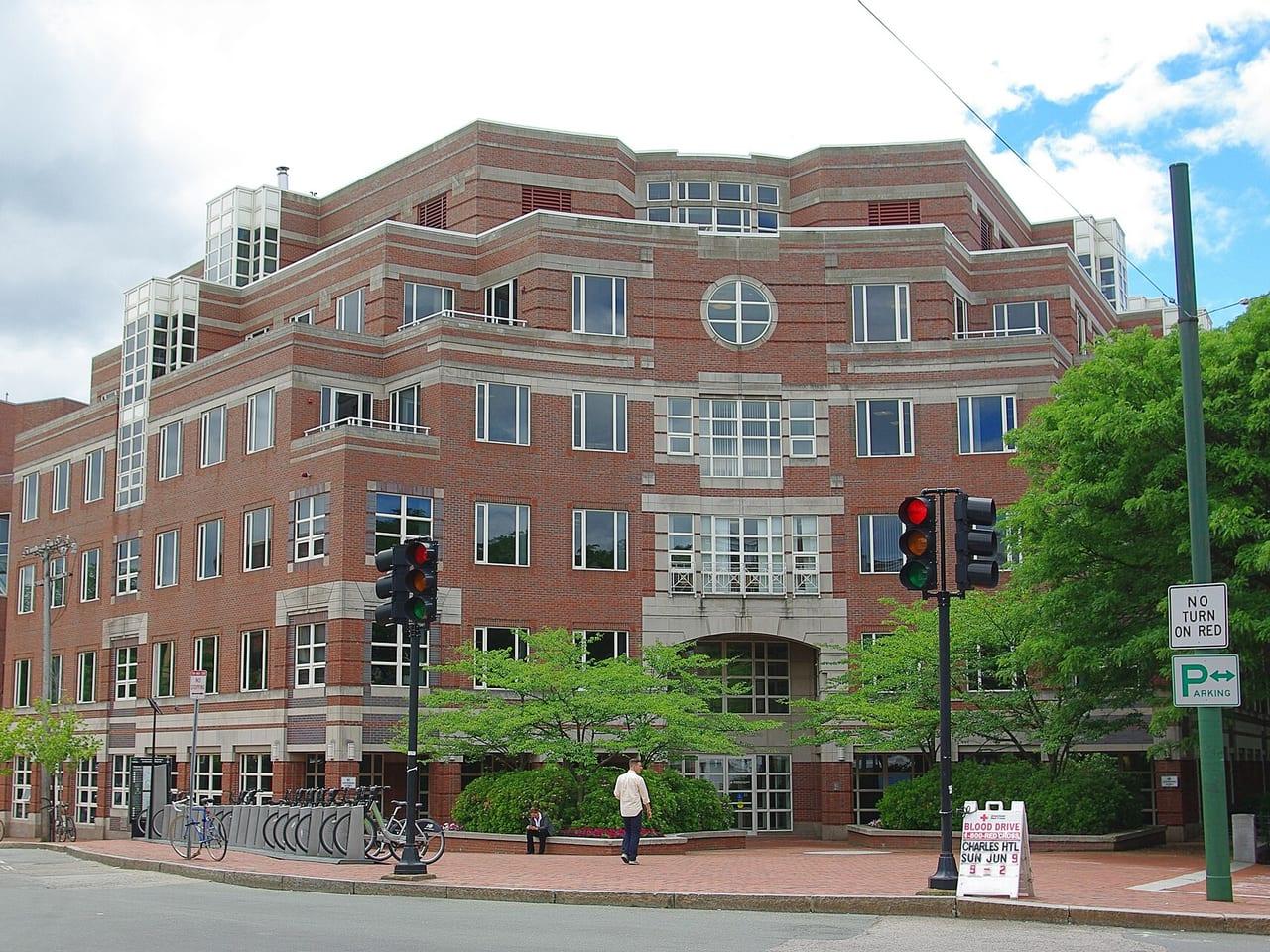
A tall limestone office building on a city corner, with a Walnut Street sign and bare trees in front
Penn’s Perelman Center for Political Science and Economics · Photo: ajay_suresh / Wikimedia Commons, CC BY 2.0. Resized and cropped.

PLAN THE APPLICATION

The priority deadline is December 1, 2026, with the $95 fee waived. The regular deadline is January 15, 2027.

Fels reviews your application only once every piece arrives, including the credential evaluation if you studied outside the U.S. It suggests ordering that evaluation at least three months before your deadline.

Priority deadline

Dec 1, 2026
Application fee
Waived

Regular deadline

Jan 15, 2027
Application fee
$95

Facts checked against official pages on November 7, 2026.

Fels prints no closing time for either deadline, so submit a few days early. Admitted students can’t postpone their start, so apply for the fall you plan to begin.

Gather all six pieces.

  • Application and fee

    The online application, run by Penn’s College of Liberal and Professional Studies, and the $95 non-refundable fee, paid by card.

  • Two essays

    A personal statement and a second essay, about 500 words each, in one document.

  • Current résumé

    It should highlight your work, studies, and service.

  • Transcripts

    Unofficial U.S. transcripts are enough to apply, with official ones due once you’re admitted. For study outside the U.S., add an official course-by-course evaluation from World Education Services (WES).

  • Two recommendations

    At least one from a classroom instructor.

  • English scores

    TOEFL (Test of English as a Foreign Language) or IELTS (International English Language Testing System) scores, if English isn’t your native language. Graduate, business, and law school tests (the GRE, GMAT, and LSAT) are optional.

Admissions tests and English tests

The GRE, GMAT, or LSAT: Optional, but Fels’s page still ties that to “the fall 2026 application cycle,” so confirm the rule for 2027 entry.

Who needs an English test: Anyone whose native language isn’t English, with no waivers “for the current admissions cycle.” Fels lists no English-speaking countries or other accepted tests, and doesn’t say how old scores can be, so ask before you book.

TOEFL minimums: 100 for tests taken on or before January 20, 2026, with no section below 24, and 5 on the 1 to 6 scale for tests taken on or after January 21, 2026, with no section below 5.

IELTS minimum: 7.0 overall, with listening and speaking at 7.0 or higher.

Sending scores: GRE and TOEFL scores, at-home tests included, go to code 2986. Upload IELTS results, official or unofficial, and LSAT score reports to the application.

Credential evaluations, interviews, and fee waivers

Your credential evaluation: WES reports your grade point average and course levels, and LPS decides whether your degree is equivalent to a U.S. degree.

Interviews: The committee may invite some applicants to interview, case by case.

Other fee waivers: Fels also waives the fee for active-duty U.S. military members and veterans, and for members and alumni of its admissions partner organizations.

Questions to ask: Before you apply, ask how Fels handles a late evaluation and whether a three-year bachelor’s degree counts. Its pages don’t give a decision date, reply deadline, or deposit, so ask about those too.

A tall red-brick Gothic hall with a slender spire, at a street corner under a deep blue sky
Irvine Auditorium at Penn · Photo: ajay_suresh / Wikimedia Commons, CC BY 2.0. Resized and cropped.

WRITE IN YOUR OWN VOICE

Write two essays: one on your goals, and one on a challenge you learned from.

About 500 words eachThat’s Fels’s guideline for both essays. Keep them separate, in one uploaded document.

Fels asks for no writing sample or policy memo, so your two essays and your résumé show admissions how you think and what you’ve done.

Letrado’s adviceGive each essay its own job. Let the personal statement look ahead to the work you want and the parts of Fels that would prepare you, and let the challenge essay show one setback and what you did next.

Personal statement · about 500 words

Explain your professional goals, and how Fels can help you reach them.

Fels asks you to address “your professional goals and how a Fels education can help you attain them.”

Second essay · about 500 words

Describe a significant challenge, or something important that didn’t go to plan.

It can be personal or professional. Fels asks: “How did you respond to the challenge and what did you learn from the experience?”

Résumé · current

Show your professional, academic, and service experience.

Fels encourages you to include every position you’ve held, recent internships too, degree and non-degree coursework, such as certificates and MOOCs (massive open online courses), and volunteer or community activities.

Dual degree · only if you’re applying for one

Describe your goals for the dual degree.

Say in your Fels application that you plan a dual degree, and apply to the other program separately.

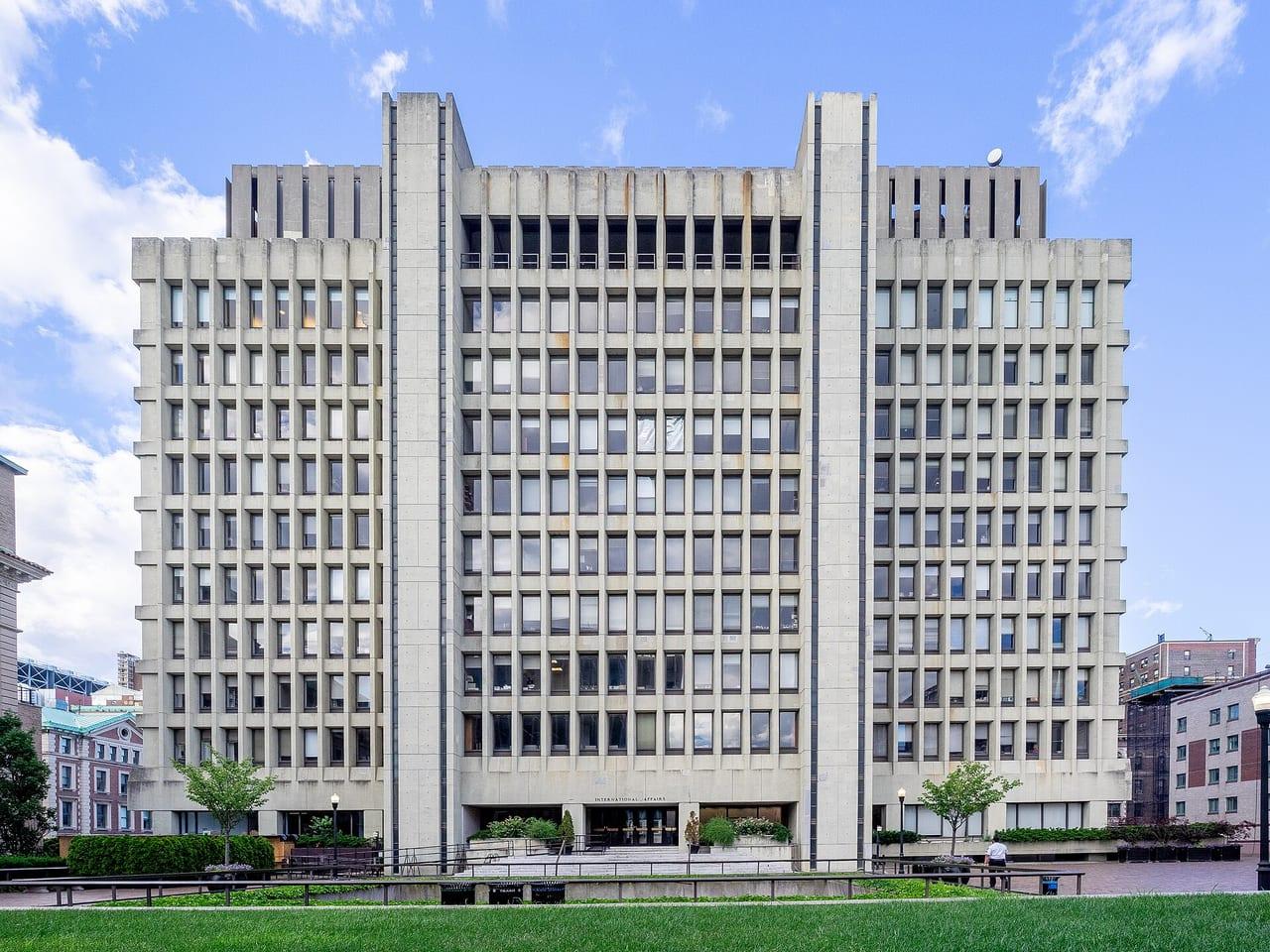
A glass entrance under a concrete overhang with the words Stuart Weitzman School of Design and Penn’s shield
Penn’s Stuart Weitzman School of Design · Photo: ajay_suresh / Wikimedia Commons, CC BY 2.0. Resized.

MAKE ROOM FOR THE FINANCIAL QUESTION

Plan for three terms of charges at 2026–27 rates: $32,407 for fall, $31,807 for spring, and an estimated $7,852 for summer.

Fels charges tuition by course unit and prints each term’s charges, summer included, but no total for the year. Living costs come on top.

FELS PUBLIC SERVICE SCHOLARSHIP

$1,000 to $15,000

is the typical range. Apply by the deadline and you’re considered automatically, unless your home country funds you in full.

PARTNER AND SERVICE AWARDS

$15,000

for members and alumni of admissions partners such as AmeriCorps and Teach For All. The 15 for 5 Scholarship pays the same for at least five years of full-time government or military work, pending a résumé review and available funds.

INTERNSHIP STIPEND

Up to $5,000

from the Public Leadership and Service Stipend, for an otherwise unpaid internship of 250 completed hours with a government agency or nonprofit anywhere in the world.

If you qualify for several Fels awards, you receive only the highest. Fels’s pages mention no need-based aid or assistantships. Ask which deadline counts for scholarships, and whether government service outside the U.S. counts toward the $15,000.

Fels scholarships and tuition (opens in a new tab)

PUBLISHED 2026–27 CHARGES · FALL TERM

$32,407

Tuition is $29,288 of that. Summer figures are estimates, because tuition and fees are adjusted that term for the following academic year.

See each term’s charges
Tuition, fall and spring, each
$29,288
Tuition, summer (estimated)
$7,322
General fee, fall and spring, each
$2,134
General fee, summer (estimated)
$530
Clinical fee, fall and spring, each
$385
Program fee, fall only
$600
Total, fall
$32,407
Total, spring
$31,807
Total, summer (estimated)
$7,852

Fels bases these on 4.5 course units in fall, 5 in spring, and 2 in summer. Three half-unit courses carry no tuition, and the 1.5-unit Capstone II is charged as one unit. Use the 2027–28 rates once Fels publishes them.

Fels tuition and fees, 2026–27 (opens in a new tab)

Add living costs, then line up loans and the funds you must show for your I-20.

  • Living costsPenn’s 2026–27 budget for Arts & Sciences graduate programs, the MPA among them, allows $28,484 for fall and spring, with $12,978 for housing and $5,018 for Penn’s health plan, waivable with your own coverage. Its summer 2026 figure is $7,821.
  • U.S. federal loansCitizens and permanent residents complete the FAFSA (Free Application for Federal Student Aid) after applying. For a 2027 start, Grad PLUS isn’t available, and Direct Unsubsidized Loans cap at $20,500 a year and $100,000 in all, not counting undergraduate loans.
  • Private loansFels says international students may qualify for private U.S. loans with an American co-signer, and Penn’s 2026–27 preferred lenders include options for them.
  • Your I-20 fundsTo get your I-20, show funds for fall and spring tuition, fees, and living costs, not summer. Documents must be under a year old, and the money must be available to spend; a job or salary doesn’t count.

Letrado’s adviceBudget for summer yourself: the I-20 rule leaves it out. If you’re counting on the stipend, plan a 250-hour internship; the required one can be as short as 125 hours.

ADMITTED TO PENN FELS · A.O.

A.O. started with the skills she still needed for her public-service work, not with a degree’s name.

Her public-service work in Kenya was municipal, and she wasn’t sure how public policy and public administration degrees differed. We helped her test both against the training she needed.

Her experience was in delivering local services.

She tracked permit delays, coordinated workshops with citizens, and helped a small nonprofit keep better complaint records.

She set policy and administration degrees side by side.

Instead of going by the names, she compared the methods each one required and its courses on implementation, meaning how policies are carried out.

She audited her own skills before she chose programs.

She named four areas to strengthen: economics, statistics, implementation analysis, and management.

Check Fels’s required MPA courses (opens in a new tab) against the skills you’re missing.

AI illustration

A.O. · PUBLIC ADMINISTRATION

She worried her work on complaint records sounded administrative. It showed how policy works, or fails, inside ordinary systems.

Read A.O.’s full story
University of Pennsylvania

HER PENN OUTCOME

Offered a place in the Master of Public Administration at Penn’s Fels Institute of Government
Cannon Green and Nassau Hall at Princeton UniversityHER CHOICE: PRINCETON

Nassau Hall, Princeton University · Photo: Ken Lund / Wikimedia Commons, CC BY-SA 2.0. Cropped.

She weighed three offers, including this one, then chose Princeton’s Master in Public Affairs.

She compared what each program would teach her and what it would cost after funding.

ALSO ADMITTED TO

  • Princeton University
  • Harvard Kennedy School

Anonymized client journeys, shared with initials to protect privacy. Portraits are AI illustrations, not photographs of our clients.

Browse all client journeys

WHEN YOU’D LIKE A HAND

A conversation can help you find a useful place to start.

Bring your questions to a free 45-minute introduction with your proposed mentor. Afterward, we’ll email a personalized plan with recommended next steps.

Official Fels Institute of Government, University of Pennsylvania, and U.S. government sources are linked beside the relevant guidance.

Fels MPA admissions (opens in a new tab)