SMALL BY DESIGN Every student gets our full attention. Read our story →
All graduate guides

PRINCETON SPIA · MASTER IN PUBLIC AFFAIRS GUIDE

Serious about public service? Let your work show it, and prove you can handle Princeton’s economics and quantitative courses.

If you’re admitted to the Master in Public Affairs (MPA), the Princeton School of Public and International Affairs (SPIA) covers your tuition and required fees for both years and offers a need-based stipend for living costs.

Fall 2027 entry

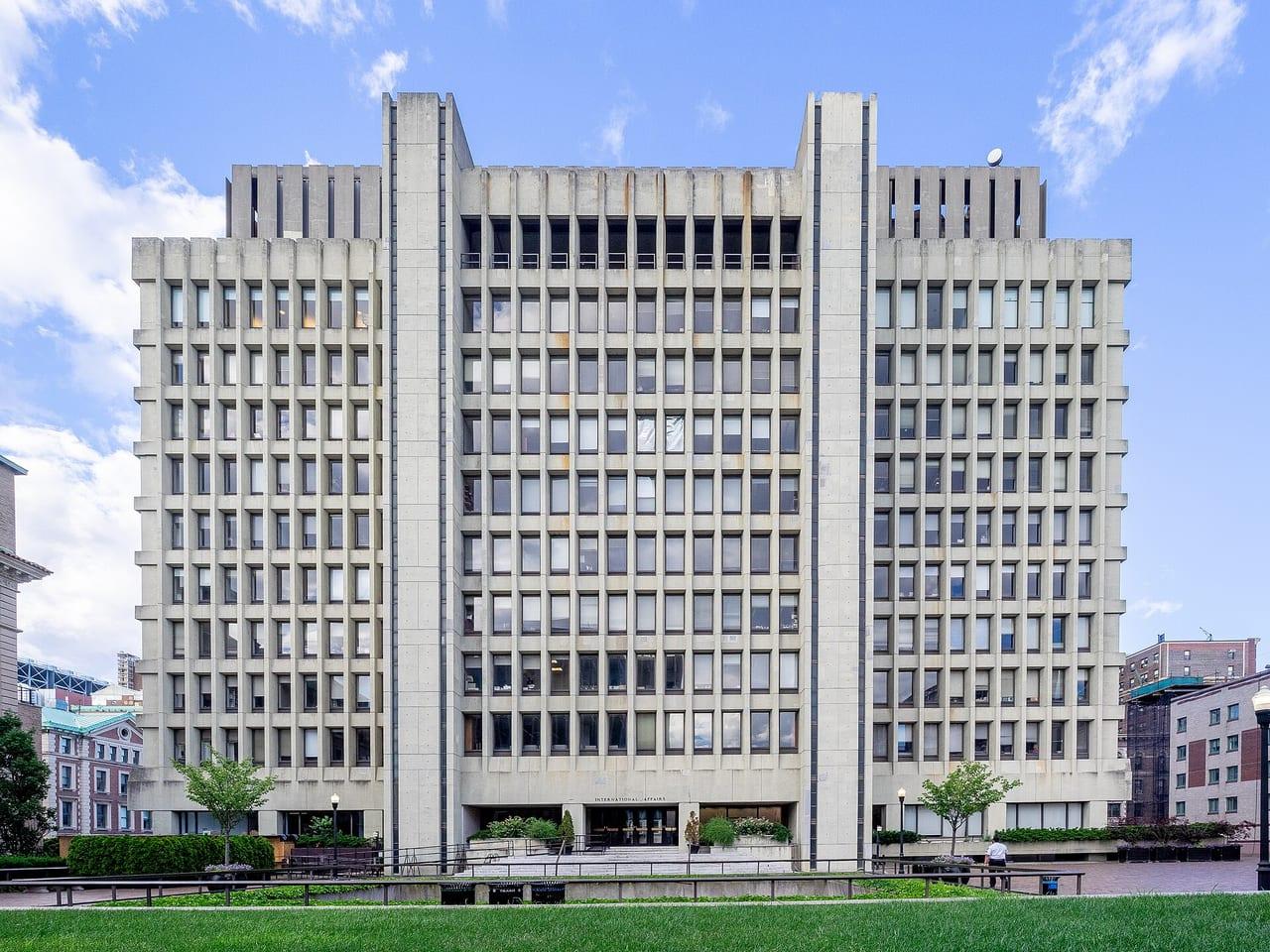
A long white building raised on slender, tapering columns, above a lawn under a clear blue sky
Robertson Hall, home of Princeton’s School of Public and International Affairs · Photo: ajay_suresh / Wikimedia Commons, CC BY 4.0. Resized and cropped.

GET TO KNOW THE PROGRAM

Build your skills, test them in a summer internship, and take on a real policy problem.

The MPA is a two-year, full-time, residential degree in Princeton, New Jersey. Princeton’s one-year Master in Public Policy (MPP) is a different degree, for mid-career professionals with at least seven years of full-time public or nonprofit work.

FIRST YEAR

Take the core in four kinds of analysis.

The required core covers political, economic, quantitative, and behavioral analysis.

THE SUMMER

Intern for at least 10 weeks.

Every MPA candidate completes an approved internship. SPIA subsidizes unpaid ones in the public and nonprofit sectors.

SECOND YEAR

Join a policy workshop of eight to 10 students.

Students evaluate a policy challenge, usually for a real-world client. Most do field research over the fall break.

Choose one of four fields as you start.

International Relations, International Development, Domestic Policy, or Economics and Public Policy, each with its own required courses. You can add an optional certificate, such as Urban Policy.

Course levels, fields, workshops, and joint degrees

Two levels: Econometrics comes as an applied, half-term course or an advanced, full-term one, and quantitative analysis, microeconomics, and macroeconomics each come in versions labeled “b” and “c.”

The fields: Economics and Public Policy adds at least five economics courses beyond the core. Each other field adds two gateway courses, one each in political and economic analysis.

Policy workshops: SPIA’s fall 2025 workshops included two on Kenya and one on Francophone West Africa.

Joint degrees: A four-year MPA/JD adds a Juris Doctor (JD), a U.S. law degree, from a partner law school. A three-year MPA/MBA adds a Master of Business Administration from the Stanford Graduate School of Business. Apply to both schools at once.

Ask SPIA: How does it place students between the two levels, and which law schools are its current MPA/JD partners?

If you’re coming to Princeton from outside the U.S.

Your I-20 and visa: After admission, Princeton’s Davis International Center issues your I-20, the form you need for an F-1 student visa. You can enter the U.S. no more than 30 days before the program starts, so ask SPIA for the MPA’s first day.

Working on campus: Princeton considers any job but an assistantship incompatible with full-time graduate study. If you and SPIA judge part-time work manageable and necessary, you can work on campus up to 20 hours a week in term.

Your summer internship: Since U.S. guidance of August 2026, optional internships no longer qualify for Curricular Practical Training (CPT), the permission F-1 students need for work within their degree. The MPA’s internship is required of every candidate, so it can qualify.

Before you start work: Your employer needs a cooperative agreement with Princeton, and you need academic approval in its External Opportunity system and a fully signed Student CPT Placement Cooperative Agreement. Don’t start until the Davis Center issues an I-20 showing the CPT.

A Gothic stone library tower across a lawn in autumn, with the carved stone front of a chapel at the right
Firestone Library, with the University Chapel at the right · Photo: John Phelan / Wikimedia Commons, CC BY-SA 3.0. Resized.

UNDERSTAND WHAT SPIA LOOKS FOR

Lead with your public service, and back it with proof you’re ready for the quantitative core.

SPIA calls a sincere commitment to public service “the single-most important attribute in the application.” The vast majority of enrolled students have worked full time before, and SPIA requires no particular undergraduate major.

PUBLIC SERVICE

Let your record show the commitment.

Volunteering, internships, and full-time work for the public good can all demonstrate it. SPIA says there’s no one way or place to show it, but it should “shine forth” through your application.

Letrado’s adviceShow what you did, for whom, and for how long. Use your résumé’s brief notes on responsibilities and leadership to make your service concrete.

QUANTITATIVE READINESS

Prove you’re ready for economics and quantitative analysis.

Math, statistics, and economics courses are highly recommended, not required. SPIA evaluates your aptitude for economic and quantitative analysis, and every MPA applicant must take the GRE (Graduate Record Examinations).

Letrado’s adviceAnswer older or uneven statistics grades with newer evidence: a strong GRE quantitative score, a recent graded course, or both.

YOUR LETTERS

Ask three recommenders, each for a different side of you.

As a general rule, SPIA wants one professional letter, one academic, and one on your commitment to public service.

Letrado’s adviceChoose an academic recommender who knows your quantitative work, and a public-service one who saw your service up close, whatever their title.

How to show you’re ready for the quantitative core

WHAT SPIA SAYS

SPIA looks for quantitative readiness across your whole file.

Your courses

Math, economics, and politics courses, completed or in progress, with textbook and author where possible

The GRE

SPIA wrote in 2020 that it uses scores more often to pull candidates in than to rule them out

Your work

Some applicants show their quantitative preparation through their jobs

A credential

MIT’s online MicroMasters in Data, Economics, and Design of Policy (DEDP), which SPIA recognizes as one possible signal. Upload it under “Additional Information”

SPIA’s pages list no math course before the MPA starts. Its six-week summer program is for the MPP.

Where MPA graduates start their careers

SPIA’S PUBLISHED FIGURES

Government was the most common first destination for MPA graduates from 2020 to 2025.

34%started in government
27%started in nonprofit or advocacy work
15%started in the private sector
10%started at multilateral organizations or NGOs (non-governmental organizations)

Another 12% took other paths, including further study, and 2% went into think tanks or research.

SPIA’s averages, rounded to the nearest percent.

Using AI and outside help on your application

WHAT PRINCETON SAYS

The Princeton admissions pages we read give no rule on AI, but SPIA asks for an original memo.

SPIA’s application tips, dated November 2025, ask for a memo that’s “logical, free of spelling and grammatical errors, and original,” and suggest avoiding recycled papers or copying others’ work.

We read SPIA’s admissions pages and three of the Graduate School’s on November 7, 2026.

The battlemented brown stone tower of a Gothic hall, lit by late sun against a deep blue sky
The tower of East Pyne Hall · Photo: Daderot / Wikimedia Commons, CC0. Resized and cropped.

PLAN THE APPLICATION

The deadline is December 1, 2026, at 11:59 p.m. Eastern Time. Late applications aren’t accepted.

SPIA has one deadline a year, so plan backward from it: take the GRE in advance, and send any English scores at least three weeks before December 1.

MPA application deadline

Dec 1, 2026
Due by
11:59 p.m. Eastern
Fee
$90

Admissions decisions

Mar 15, 2027

Your reply is due

Apr 15, 2027

Facts checked against official pages on November 7, 2026.

Princeton’s Graduate School marks SPIA’s December 1 deadline as a change from last year, so don’t rely on older dates you find online.

Gather every piece SPIA asks for.

  • Application and fee

    The Princeton University Graduate Application, with a $90 fee unless you qualify for a waiver.

  • Four pieces of writing

    A statement of purpose, supplemental essay, personal statement, and policy memo, plus a certificate or joint-degree statement if you plan one.

  • Résumé or curriculum vitae

    Your jobs, community service, education, and honors, with brief notes on your responsibilities, leadership, and awards.

  • Transcripts and grades

    Unofficial transcripts from every college or university you attended, even without a degree; your grade point average (GPA), on a 4.0 scale where possible; and your math, economics, and politics courses.

  • Three recommendations

    As a general rule, one professional, one academic, and one on your public service.

  • GRE and English scores

    Official GRE General Test scores, with no waivers, plus the TOEFL (Test of English as a Foreign Language), IELTS (International English Language Testing System), or Duolingo English Test unless you’re exempt.

  • Statement of Financial Resources

    Required of every MPA applicant, and not used in the admission decision.

The GRE, English tests, and transcripts

The GRE: Send official scores to Princeton’s GRE code, 2672, with no department code. SPIA accepts no other test, and for help with the fee it points to the GRE’s own fee-reduction program.

Who needs an English test: You do if your primary language isn’t English, unless your institution certifies one of these was taught entirely in English: an undergraduate degree awarded before you enroll, or at least two academic years of full-time graduate study finished by September 15.

Showing an exemption: Send a transcript note or a letter from your institution, combined with your transcript in one file. You don’t request a waiver.

Your scores: Neither the Graduate School nor SPIA lists a minimum. You can submit before your scores arrive, but they must still be valid on September 15, when the application opens.

Speaking scores: Below 5.5 on the TOEFL (27 on the older test, scored 0 to 120 overall), below 8.0 on the IELTS, or below 125 in Duolingo’s conversation score means an English assessment after admission, then English classes if you don’t pass.

Your GPA: SPIA’s GPA page says you don’t have to convert it if your institution gives no grades or conversion scale.

Ask SPIA: How old can GRE scores be, and what does it need if your transcripts aren’t in English or your bachelor’s degree took three years?


Fee waivers, meetings, and your reply

Fee waivers: Princeton’s Graduate School considers them for financial hardship or for taking part in a program, now or in the past.

Meeting the team: SPIA doesn’t prescreen applicants, but offers optional 15-minute, one-on-one virtual meetings with its admissions team, and information sessions in September, October, and November.

Ask SPIA: How does a fee waiver request work, does accepting an offer require a deposit, and does SPIA ever defer admission?

The long stone nave of a Gothic chapel, with hanging lanterns, red and blue banners, and a stained-glass window at the far end
Inside Princeton University Chapel · Photo: Daderot / Wikimedia Commons, CC0. Resized and cropped.

WRITE IN YOUR OWN VOICE

Plan all four pieces together, so each one shows SPIA something new.

Two to three pagesFor the statement of purpose, double spaced, in 11-point type or larger.

Each piece has its own question and length.

Letrado’s adviceGive each piece its own job: your goals and reasons for Princeton in the statement of purpose, your story in the supplemental essay, one turning point in the personal statement, and a problem you know firsthand in the memo.

Statement of purpose · two to three pages

Make your case for public service, and for Princeton now.

Cover your commitment to a public-service career, your strengths, background, and goals, and how a SPIA degree will help. SPIA wants to understand “Why Princeton. Why now. And what’s next.”

Supplemental essay · one page

Tell SPIA what shaped you.

The prompt opens, “We all come from somewhere and it shapes us,” and asks you to “Tell us your story and what has shaped you.” Double spaced.

Personal statement · up to 250 words

Describe one experience that led you to graduate study.

Show how a personal experience influenced your decision, and how its lessons would enrich Princeton’s residential scholarly community.

Policy memo · four pages

Identify a problem and recommend a policy.

Choose a problem in domestic or international affairs and discuss its complexity. Double space it; any format or citation style works if it’s structured and clear.

Addendum · optional

Address a weakness briefly, with facts.

To explain a weakness in your application, SPIA asks for a separate, succinct, fact-based addendum.

Certificate or joint-degree statement · if you plan one

Explain your reasons in a separate statement.

Write one double-spaced page for a certificate, or two for a joint degree, separate from your personal statement. Declare a joint degree when you apply.

A low stone bridge with three arches crossing a calm lake, with a wooden dock in the foreground and autumn trees beyond
Lake Carnegie and the Harrison Street Bridge in Princeton · Photo: Gary Miotla / Wikimedia Commons, CC BY 3.0. Resized.

MAKE ROOM FOR THE FINANCIAL QUESTION

SPIA covers every admitted student’s tuition and required fees for both years, and offers a need-based stipend for living costs.

In 2026–27, Princeton’s tuition and health plan fee total $69,430, all covered for admitted MPA students. SPIA calls the stipend need-based, so complete the Statement of Financial Resources with care.

WITH YOUR ADMISSION

100% of tuition

and required fees, health insurance included, for both years. It isn’t a loan or tied to a campus job, needs no separate application, and covers international students too.

FOR LIVING COSTS

A need-based stipend

for living expenses in both years of the MPA.

OUTSIDE FUNDING

SPIA covers the difference

If you bring an outside fellowship or sponsorship, SPIA tops it up to its own rates.

The Graduate School reads your Statement of Financial Resources only if SPIA recommends you for admission. You don’t need the FAFSA (Free Application for Federal Student Aid) for Princeton’s fellowships.

MPA financial aid (opens in a new tab)

PUBLISHED 2026–27 LIVING BUDGET · PRINCETON GRADUATE STUDENTS, 10 MONTHS

$33,141

Your living costs for 10 months, by Princeton’s estimate. A need-based stipend from SPIA goes toward them; tuition ($65,210) and the Student Health Plan fee ($4,220) are covered.

See the living budget
Housing, on or off campus
$14,200
Food
$9,104
Personal expenses
$7,804
Books and supplies
$2,033

Princeton’s budget for a full 12 months is $39,770. For fall 2027 entry, use the 2027–28 figures when they’re published.

Princeton’s 2026–27 rates and costs (opens in a new tab)

Before you compare offers, find out what your stipend covers.

  • Your stipendPrinceton awards support on academic merit, academic promise, and the financial need your Statement of Financial Resources shows. Ask SPIA the amount and how many months it covers.
  • Health insuranceCoverage starts August 1 and runs through the 12-month academic year while you stay enrolled.
  • Your summer internshipAsk what SPIA’s subsidy pays for an unpaid one, and whether your stipend continues that summer.
  • LoansIf you’re a U.S. citizen or permanent resident borrowing for living costs: from July 1, 2026, new borrowers can’t take Graduate PLUS loans, and federal Direct Unsubsidized Loans for graduate students are capped at $20,500 a year.

Letrado’s adviceKeep tax returns or similar records ready, since the Graduate School may ask for them to verify your statement.

ADMITTED TO PRINCETON SPIA · A.O.

A.O. addressed her statistics record directly, and backed it with recent graded work.

She applied from Kenya with an older weakness in statistics and no internationally known employer. We helped her narrow her claims, show recent quantitative work, and compare programs by training and funding.

She built her statement around one permit backlog.

It covered the limits of the records, the incentives involved, and one procedural change she helped test.

She took a graded refresher, and described it honestly.

A short appendix showed her recent spreadsheet and administrative-data work, without implying advanced econometrics.

She checked every program against the same five points.

For each one, she weighed the quantitative training, implementation courses, cohort, internships, and funding.

AI illustration

A.O. · PUBLIC POLICY

Her recommenders had overseen her work themselves, so each could describe it in specific detail.

Read A.O.’s full story
Princeton University

HER PRINCETON OUTCOME

Offered a place in Princeton’s Master in Public Affairs
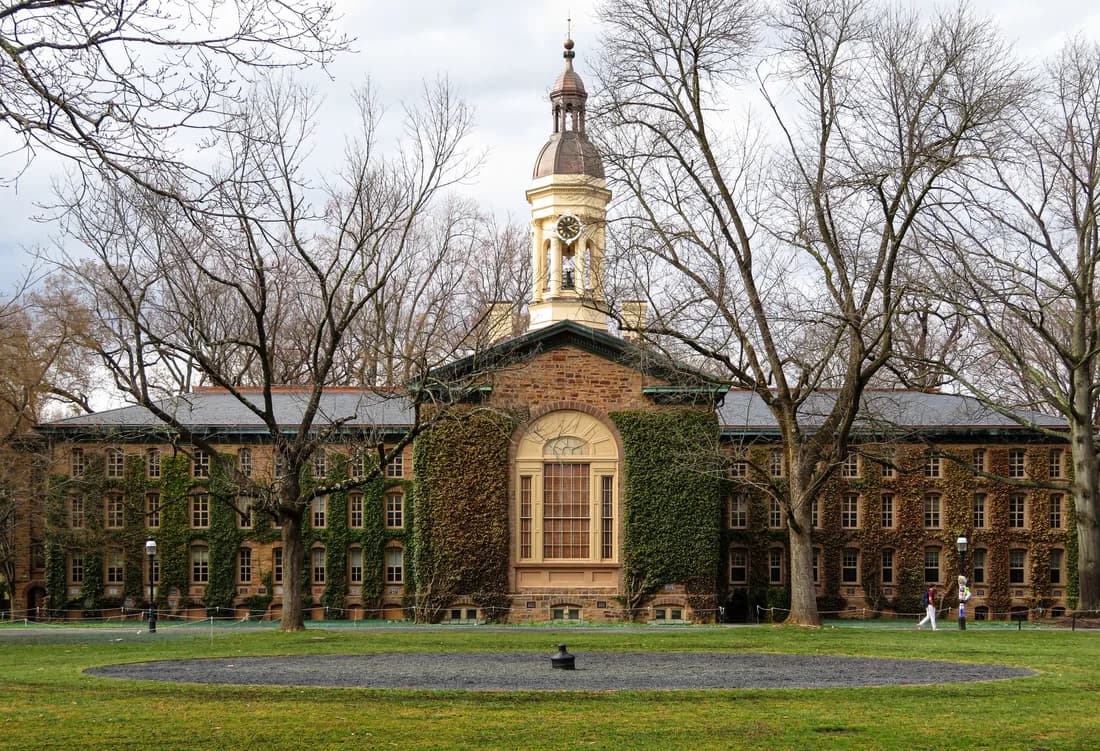
Cannon Green and Nassau Hall at Princeton UniversityHER CHOICE: PRINCETON

Nassau Hall, Princeton University · Photo: Ken Lund / Wikimedia Commons, CC BY-SA 2.0. Cropped.

She chose Princeton, whose quantitative core addressed the gap her application had named.

She also weighed its funding offer and public-service focus.

ALSO ADMITTED TO

  • Harvard Kennedy School
  • University of Pennsylvania

Anonymized client journeys, shared with initials to protect privacy. Portraits are AI illustrations, not photographs of our clients.

Browse all client journeys

WHEN YOU’D LIKE A HAND

A conversation can help you find a useful place to start.

Bring your questions to a free 45-minute introduction with your proposed mentor. Afterward, we’ll email a personalized plan with recommended next steps.

Official Princeton SPIA, Princeton University, and U.S. government sources are linked beside the relevant guidance.

SPIA’s MPA admissions (opens in a new tab)