SMALL BY DESIGN Every student gets our full attention. Read our story →
All undergraduate guides
UCLA

UNDERGRADUATE ADMISSIONS GUIDE

Show UCLA what you’ve done with the opportunities you’ve had.

At the University of California, Los Angeles (UCLA), trained readers go through every application twice, in full, and read your record in the context of your school and your life. Start here to understand the education, the University of California (UC) application, and what UCLA costs.

Fall 2027 entry

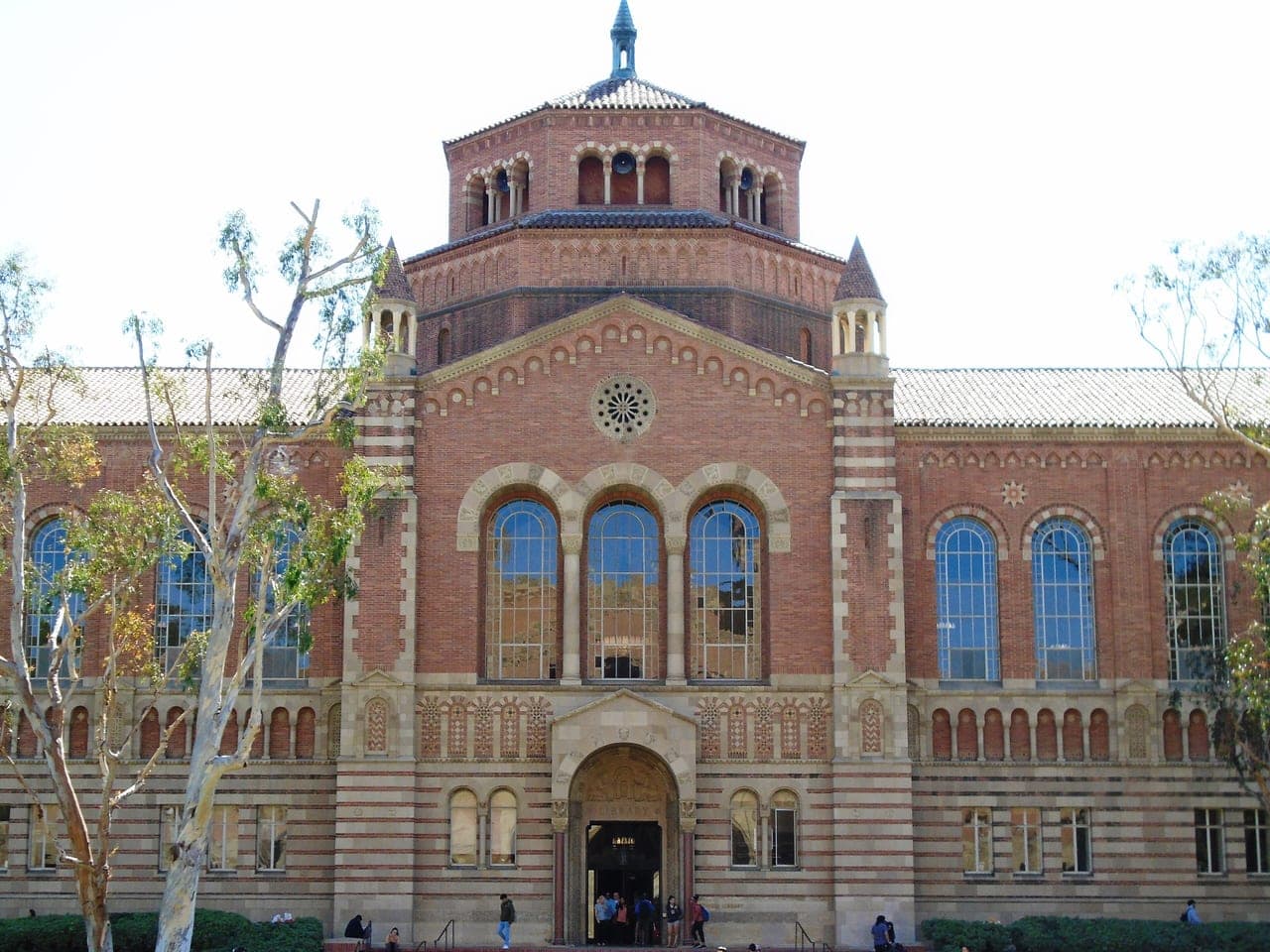
The brick front and domed tower of Powell Library at UCLA
Powell Library, UCLA · Photo: Beyond My Ken / Wikimedia Commons, CC BY-SA 4.0. Resized and cropped.

GET TO KNOW THE EDUCATION

Choose your major for what you want to learn, not to improve your chances.

UCLA’s majors sit in the College of Letters and Science and eight other schools. When you apply, you name a major or apply undeclared. In the College, UCLA doesn’t consider your major when it reviews your application.

WHEN YOU APPLY

Name a major, or apply undeclared.

Only first-year applicants can apply undeclared, and UCLA says many do. Engineering has its own undeclared option.

ACROSS YOUR DEGREE

Build breadth through general education.

In the College, that means ten courses across the arts and humanities, society and culture, and the sciences.

BY YOUR SECOND YEAR

Settle on your major.

UCLA says first-years generally decide by the end of their second year, and many change majors along the way.

UCLA runs on ten-week quarters.

Classes run in fall, winter, and spring. UCLA says the quarter system lets you sample many subjects. Fall 2027 classes begin on September 23.

General education and pre-majors

General education in the College: Three courses in the arts and humanities, three in society and culture, and four in science (two life and two physical), one of them with a lab. Other schools set their own, from five courses in Engineering to ten in Nursing.

Clusters and seminars: First-years can take a Cluster, a yearlong, team-taught course on one topic that covers 40% of general education in the College. About 200 Fiat Lux seminars a year have 10 to 20 students each.

Pre-majors: Majors such as Economics and Psychology admit you as a pre-major until you finish set courses. Public Affairs and Public Health admit first-years as pre-majors, and you apply to the major in your second year.

UNDERSTAND WHAT UCLA CONSIDERS

UCLA reads your record against the opportunities you had.

Every application is read in full, twice, by trained readers working independently. They consider your coursework, personal qualities, and likely contributions, with no set weight for any one. They also judge how fully you used the opportunities you had.

YOUR COURSES AND GRADES

Show how far you went with what your school offered.

Readers look at your A–G courses and grades and at your senior-year course load. They also consider honors, AP, or IB courses where your school offers them. UCLA says you’re at no disadvantage if it doesn’t.

Letrado’s advicePlan your senior year as carefully as 11th grade. Readers weigh its strength, and your application lists every course you’re taking.

OUTSIDE THE CLASSROOM

Show your role, not just the activity.

You can list up to 20 activities and awards, including paid work and caring for family members. UC says it doesn’t value any activity over another.

Letrado’s adviceUse each 350-character description for what you did and what changed because of you. A weekend job can say as much as a club title.

YOUR CIRCUMSTANCES

Explain your context plainly.

Readers consider any hardship and how you responded, along with factors such as your first language, your parents’ education, and the support you have at home.

Letrado’s adviceKeep the additional comments box for facts: what happened, when, and how it affected your classes. UC says it shouldn’t be an essay.

If your major needs a portfolio or audition

WHAT UCLA DESCRIBES

For arts majors, your portfolio or audition matters most.

Nov 30

Submit the UC application, with the major as your first choice.

Dec 4 to Jan 20

Send the department its supplemental application, such as a portfolio or an audition, by its own deadline.

Faculty in the School of the Arts and Architecture, the Herb Alpert School of Music, and the School of Theater, Film and Television review these materials. UCLA calls them the most significant admission factors there. Nursing also asks for a supplemental application, due January 15, 2027.

List these majors as your first choice. If you choose one as your alternate major, UCLA reviews you for your first choice only.

UCLA’s first-year numbers

FALL 2025 FIRST-YEAR PROFILE

A very large pool, with every file read in full.

145,085first-year applicants
9%admitted, or 13,659 students
6,553first-years enrolled
4.00median unweighted GPA of admits, from 10th and 11th grade
9%of the entering class were international students
59countries represented

UC’s snapshot for fall 2026 shows 146,692 applicants and 15,903 admits, a rate of 10.8%.

UCLA says no factor it considers has a specific cutoff.

PLAN THE APPLICATION

One UC application, due November 30, 2026.

You apply to UCLA through the UC application, which covers all nine UC campuses, and you submit it between October 1 and November 30, 2026. UCLA has no early action or early decision, and it admits first-years for fall only.

UC application Next deadline

Nov 30, 2026
Submissions open
Oct 1, 2026
Supplemental applications
Dec 4, 2026 to Jan 20, 2027

Financial aid

Mar 2, 2027
File
FAFSA or California Dream Act Application
For Cal Grant
A verified GPA by the same date

Decisions

Late March 2027
Reply and deposit
By May 1, 2027
Final transcripts
By July 1, 2027

Once you submit, you can change very little, so review every section first.

Prepare these pieces together.

  • The UC application and fee

    One application for all nine campuses, at $80 per campus ($95 for international applicants). Fee waivers cover up to four campuses for eligible U.S. citizens, permanent residents, and AB 540 students.

  • Your courses and grades

    You enter every A–G course and grade from your transcript yourself, including senior-year courses. Official transcripts come later, if you’re admitted.

  • Activities and awards

    Up to 20 entries in six categories, including work experience and volunteering.

  • Four personal insight answers

    Choose 4 of UC’s 8 questions and write up to 350 words for each.

  • No SAT or ACT

    UC says it “will not consider SAT or ACT test scores when making admissions decisions or awarding scholarships.”

Minimum requirements, in California and beyond

A–G courses: 15 yearlong college-prep courses with a C or better, at least 11 of them before your last year. They cover history, English, math, science, a language other than English, the arts, and an elective.

Minimum GPA: 3.0 in A–G courses for California residents and 3.4 for nonresidents, using grades from the summer after 9th grade through the summer after 11th.

If you study outside the U.S.: You need 15 yearlong academic courses equivalent to A–G, with a 3.4 GPA. Enter your marks exactly as your school reports them; UCLA reads every applicant in the context of their own curriculum.

English: With fewer than three years of instruction in English, you need TOEFL, IELTS, or Duolingo. UCLA looks for a TOEFL iBT of 5 or higher on the new scale, IELTS 7.5, or Duolingo 135. Self-report your scores by January.

What you agree to when you submit

Your own work: Every applicant agrees to UC’s Statement of Application Integrity: your answers should reflect your own ideas and be written by you.

Help and AI: Advice on content and editing is allowed, including generative AI for readability, but the content and final wording must be yours.

Checks: UC screens for false or misleading information and may ask you to show your writing is yours. In its message about agents and consultants, UCLA says it “expects an application to be the work of the student.”

WRITE IN YOUR OWN VOICE

Pick the four questions your experiences answer best.

350 words eachFor four of UC’s eight personal insight questions. UC gives all eight equal consideration.

UC asks you to picture it as a person you’re meeting face to face: what would you want it to know about you? It says there’s no right or wrong way to answer, and your answers can only add value.

Letrado’s adviceDraft a few sentences for all eight questions, then keep the four with your most specific examples. UC allows AI help with readability, but our advice is stricter: use AI only to brainstorm, check spelling and grammar, or understand a topic. Write every sentence yourself.

Read UC’s eight questions and tips (opens in a new tab)
An academic subject that inspires you

Show what your curiosity led you to do.

UC asks how you’ve furthered the interest, in or out of class. Name the book, problem, or project, then say what you did next.

Leadership, or your school and community

Leadership doesn’t need a title.

UC says it can mean mentoring, taking charge of a task, or helping your family. Define your community yourself, and describe your role in it.

Your creative side, or a talent or skill

You don’t need an award to write about it.

Creativity includes solving problems, not only art. For a talent, show how you developed it over time; UC says recognition isn’t required.

An opportunity, a barrier, or a challenge

Spend most of your words on what you did.

UC asks how you made use of an opportunity or worked to overcome an obstacle, and how a challenge affected your schoolwork. Describe your steps more than the difficulty.

What makes you a strong candidate

Use it for something new.

UC’s eighth question invites anything your application hasn’t shown. Add a new side of you, not a summary.

MAKE ROOM FOR THE FINANCIAL QUESTION

Where you’re from shapes both the price and the aid.

UCLA budgeted a year on campus in 2026–27 at $45,500 for California residents and $84,770 for nonresidents. What aid can cover depends on where you’re from.

CALIFORNIA FAMILIES EARNING UP TO $100,000

Tuition usually covered

Under its Blue and Gold Opportunity Plan, UC says most California families at this income receive enough grants and scholarships to cover UC tuition.

OUT-OF-STATE U.S. STUDENTS

University Grant capped at $20,000

For nonresidents admitted from fall 2024, UCLA caps its University Grant at $20,000 a year, minus other aid. UCLA says aid toward nonresident costs will mainly be federal parent or private loans.

INTERNATIONAL STUDENTS

No UCLA aid

UCLA doesn’t award scholarships or financial aid to undergraduates who aren’t U.S. citizens or permanent residents. Students admitted for fall 2026 had to show a minimum of about $80,739.

If you aren’t a U.S. citizen or permanent resident but graduated from a California high school and are AB 540 eligible, you can apply for state and UCLA aid with the California Dream Act Application.

UCLA financial aid and scholarships (opens in a new tab)

PUBLISHED 2026–27 BUDGET · CALIFORNIA RESIDENT ON CAMPUS

$45,500

Nonresidents add $39,270 in nonresident supplemental tuition, for $84,770. For California residents, the estimate is $47,786 off campus and $36,707 living at home.

See the full budget
Tuition and campus fees
$16,430
Housing
$12,299
Food
$7,568
Health insurance (waivable with your own coverage)
$3,885
Personal expenses
$2,761
Books and supplies
$1,588
Transportation
$969
Nonresident supplemental tuition
$39,270

For fall 2027 entry, use UCLA’s 2027–28 budget when it’s published. UCLA notes that its tuition and fee figures may not be final.

UCLA’s cost of attendance (opens in a new tab)

Apply for aid by March 2, before your decision arrives.

  • The FAFSA or California Dream Act ApplicationMarch 2, 2027 is UCLA’s priority deadline. You don’t need to be admitted to apply.
  • Cal Grant and the Middle Class ScholarshipCalifornia residents are considered through the same forms. Cal Grant also needs your GPA by March 2; if your school doesn’t send it, submit the GPA Verification Form.
  • Your Bruin Financial Aid LetterIt comes with your admission and usually combines scholarships, grants, loans, and work-study. UCLA says it can’t negotiate to match other universities’ offers.

Letrado’s adviceRun the net price calculator with your family before you apply, and compare the grants and the loans in every offer separately.

UCLA’s tuition and aid page lists these dates and points you to UC’s net price calculator, which estimates your cost after aid.

UCLA tuition and aid (opens in a new tab)

ADMITTED TO UCLA · Z.W.

Z.W.’s clearest examples came from explaining science to others.

Z.W. studied in the international division of a public high school in China and was drawn to molecular biology, public health, and science communication. Her early application leaned on a summer lab placement, so we helped her describe it accurately and give her own explanations room.

She described the lab as it was.

She had prepared materials, observed procedures, and helped organize basic data. She checked every research verb against what she had actually done.

Her main essay came from a health bulletin.

She translated short science explanations for a school health bulletin. Her essay followed her revision of one after younger students misunderstood a cell diagram.

She asked what studying at each university would involve.

We compared research access, public-health connections, advising, breadth, and campus scale. She also asked how early undergraduates typically join a lab.

UCLA’s research page (opens in a new tab) describes SRP-99, a course that gives credit for entry-level research with a faculty mentor and suits students early in their degree.

UCLA

HER UCLA OUTCOME

Offered a place at UCLA
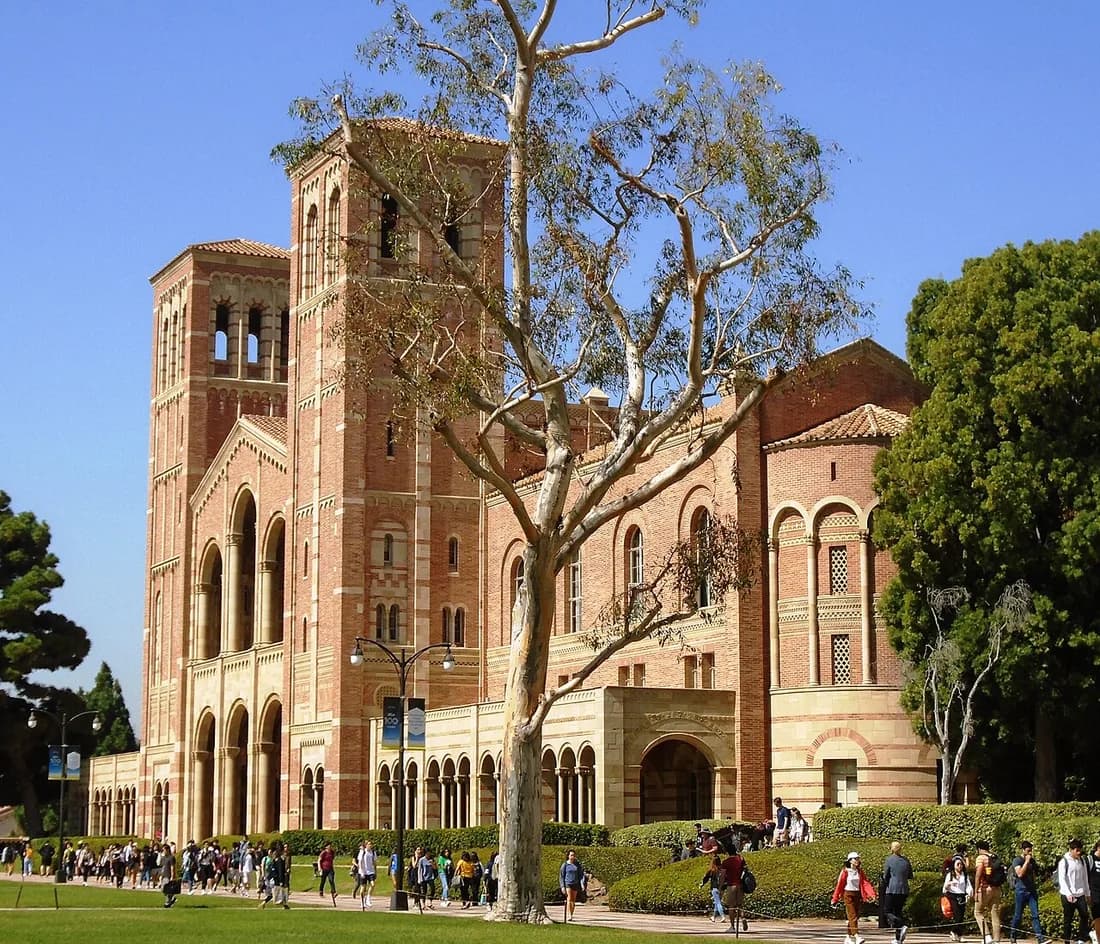
The twin towers and arched facade of Royce Hall at UCLAHER CHOICE: UCLA

Royce Hall, UCLA · Photo: Beyond My Ken / Wikimedia Commons, CC BY-SA 4.0. Cropped.

She chose UCLA for room to explore before settling on a research specialty.

Johns Hopkins offered the closest match to her early interests, and Cornell appealed for its breadth. She weighed biology and public-health access at UCLA alongside the campus environment and what her family would pay.

ALSO ADMITTED TO

  • Johns Hopkins University
  • Cornell University

Anonymized client journeys, shared with initials to protect privacy. C.M. also received a UCLA offer and chose Johns Hopkins University.

Read Z.W.’s full story Applying from mainland China

WHEN YOU’D LIKE A HAND

A conversation can help you find a useful place to start.

Bring your questions to a free 45-minute introduction with your proposed mentor. Afterward, we’ll email a personalized plan with recommended next steps.

Official UCLA and University of California sources are linked beside the relevant guidance.

UCLA’s first-year applicant page (opens in a new tab)
