










SMALL BY DESIGN Every student gets our full attention. Read our story →
University Planning Guide

UNIVERSITY PLANNING GUIDE · CBSE, ICSE, AND ISC

Aiming for a university abroad? Start with strong marks in Class 9.

Your Class 9 marks can decide your Class 11 stream, and Oxford, Imperial, and the London School of Economics (LSE) set their offers in your Class 12 marks. Here's what matters each year, from Class 9 to Class 12.

For CBSE, ICSE, and ISC schools in India or abroad.

Written for the 2026–27 school year.

Students in Class 10 in 2026–27 usually apply in fall 2028 for 2029 entry.

At a glance

At an Indian-board school, when do you make the choice that matters most?

In Class 10, when you choose your Class 11 stream. Some schools ask months before your board results, and count your Class 9 marks too.

What matters most, in our view
The stream and Mathematics your degree needs, and top marks in Class 12. Your choices ↓
One thing now
Classes 9 and 10: Ask your school when you choose your Class 11 stream, and which marks it uses.Class 11: Ask how and when your school predicts your Class 12 marks.Class 12: For this year's dates, open the guide below for the country where you go to school.
Can wait, in our view
Your essays and personal statement, until the summer after Class 11. Your years ↓

Universities can change the subjects and marks they require, so check each course's page for the year you'll start.

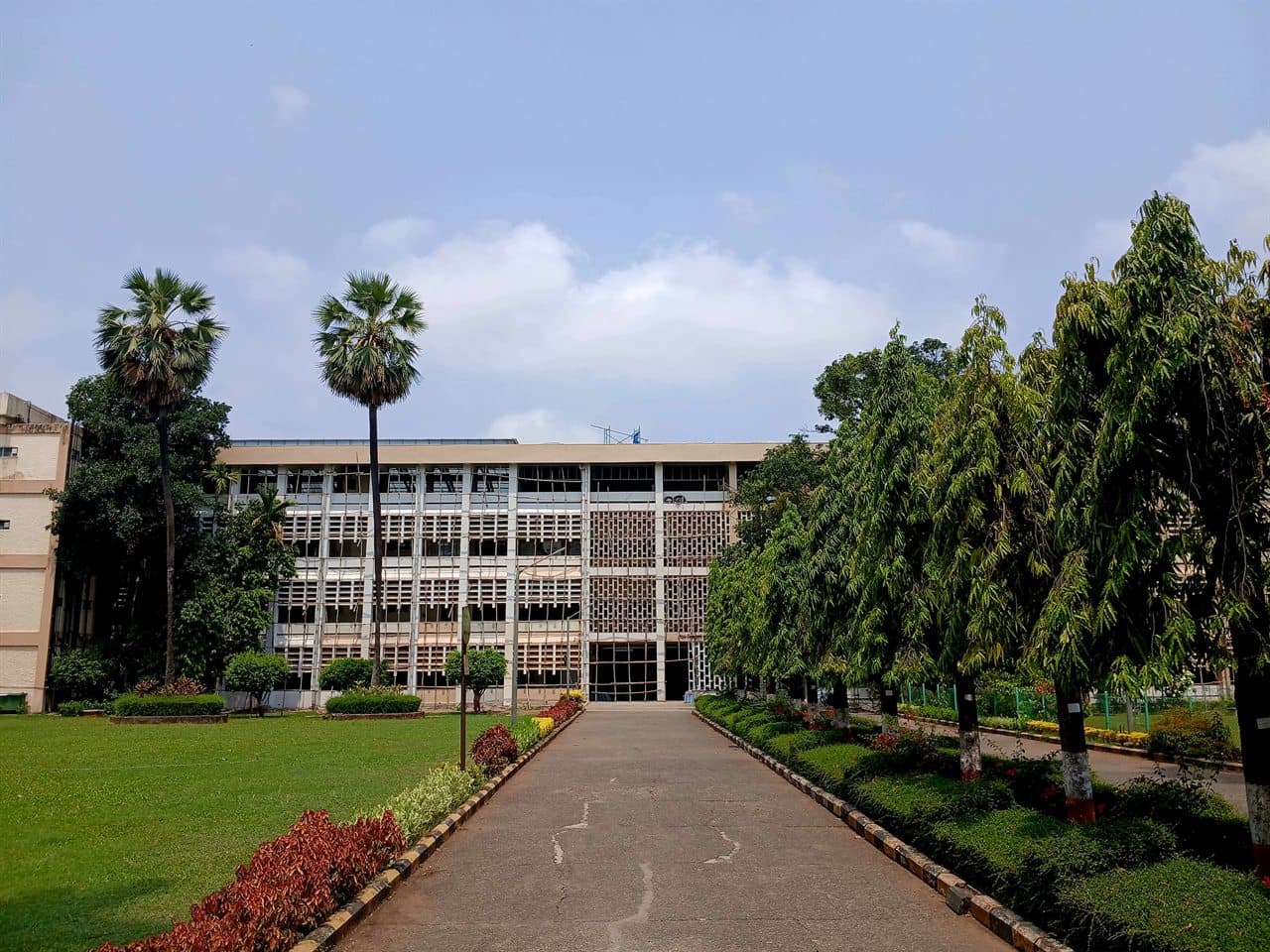
La Martiniere College in Lucknow, seen down a path of palm trees and flower beds
La Martiniere College, Lucknow · Photo: Tony / Wikimedia Commons, CC BY-SA 2.0. Resized and cropped.

Year by year

Three choices in these four years decide where you can apply.

Find your year to see what matters now.

  1. Class 9

    Ages 14 to 15 · about U.S. grade 9Your marks this year count twice: some schools use them to place you in a Class 11 stream, and Stanford asks every applicant for grades from U.S. grade 9, which for you is Class 9. Stick with two or three activities, and keep them going into Class 11. New from 2026–27: CBSE offers Class 9 Mathematics and Science at Advanced Level too, so ask your school what that means for Class 11.

    CoursesActivities
  2. Class 10

    Ages 15 to 16 · about U.S. grade 10Choose your Class 11 stream and subjects, at some schools months before your board results. Each school decides how: DPS Dubai, for example, lists Science-stream cutoffs of 75% in pre-boards and 80% in the board exam. Applying to Princeton later? It asks for your Class 10 board results as well as Class 12.

    CoursesTests
  3. Class 11

    Ages 16 to 17 · about U.S. grade 11Your school, not the board, marks this year, and your predicted Class 12 marks draw on it. MIT also asks for three years of grades. Applying to the U.S.? Take the SAT or ACT when you feel ready, usually this year. Aiming for Cambridge, where Colleges may ask for Advanced Placement (AP) Exams? You can sit them in India without AP classes: in 2027, from May 3 to 7 and May 10 to 14.

    Tests
  4. Class 12

    Ages 17 to 18 · about U.S. grade 12You apply before your board exams, on the marks your school predicts. Apply through UCAS, the UK's university application service. Those predicted marks go with it, and they can't be changed once it's sent. For 2027 entry:October 15, 2026: the UCAS deadline for Oxford, Cambridge, and most medicine, dentistry, and veterinary courses.October 2026 or January 2027: the TMUA, which LSE requires for Economics.November 1: early applications to Harvard, MIT, Yale, Princeton, and Penn.January 13, 2027: the UCAS deadline for most other courses.

    Tests

The choices that matter

Make these three choices with your degree in mind.

Open each one for what's required, our advice, and who to ask.

Your stream, in Class 10Choose your stream for the degree you want.

A UK offer sets the Class 12 marks you need, often in the subjects relevant to your degree. So your stream decides whether you'll have the subjects it asks for.

Who to askYour school, before its Class 11 deadline. Check each course page too.

  • A1in three CBSE subjects and A2 in two more, for Oxford courses such as Medicine and Computer Science. In ISC: 90% overall, with 95% in three subjects and 85% in the other two
  • 95%average for LSE's most demanding offers, with three subjects at 95% and two at 90%
  • 90%overall across five subjects at Imperial, with 90% in the subjects relevant to your course

Our viewNot sure of your degree yet? Keep Mathematics if you can, alongside subjects you'd enjoy and can score highly in.

The evidence, and what it doesn’t show

What it doesn’t show: every course's offer. Check the courses you're considering, for the year you'll start.

Which Mathematics, in Class 10Planning economics or engineering in the UK? Take Mathematics, not Applied Mathematics.

CBSE and ISC both offer Mathematics and Applied Mathematics. What differs is which degrees each one keeps open.

Who to askYour school, before you choose your Class 11 subjects.

  • MathematicsLSEImperialKeeps math-heavy degrees openLSE's Mathematics degrees require itImperial's Electrical and Electronic Engineering asks for 95% in it, in Physics, and overall, plus a JEE rank it may waive
  • Applied MathematicsOxfordImperialCheck each university before you choose itOxford's and Imperial's entry pages don't mention it

Our viewUnsure about math-heavy degrees? Mathematics keeps more of them open.

The evidence, and what it doesn’t show

What it doesn’t show: other universities' rules on Applied Mathematics, so ask each one you're considering.

Where to apply, in Class 11Decide in Class 11 whether to apply in the UK, the U.S., or both.

UK offers usually depend on your Class 12 board results. Check when your board's results come out, so you know whether you'll have them before you choose.

Who to askYour school. Ask who will write your UCAS reference, and who will write the counselor letter many U.S. colleges ask for.

How applying differs in the UK and the U.S.
UK universities, through UCASU.S. colleges
How manyUp to five coursesUp to 20 on the Common App, which many colleges share
WritingOne personal statement for all your coursesEssays, which can differ by college
TestsAn admissions test for some coursesThe SAT or ACT, which Harvard, MIT, Yale, and Penn require for fall 2027
From your schoolOne reference, with your predicted marksA school report, teacher letters, and often a counselor letter

Our viewApply to both only if you'd be glad to go to either. A U.S. application adds essays, letters, and often a test, so start it in Class 11, not Class 12.

The evidence, and what it doesn’t show

What it doesn’t show: later entry years. UCAS consulted in 2026 on changing its deadlines and number of choices, as early as the 2028 cycle. Princeton requires the SAT or ACT again from fall 2028, and none of the U.S. colleges named here has announced its testing rules for fall 2029.

Where it leads

UK, U.S., Europe, or Asia? Each looks at your marks differently.

Here's how you apply in each place, with one fact to know and one to watch out for.

  • UK universitiesOxfordCambridgeUCAS, with online interviews in December 2026 for shortlisted Oxford applicantsYou can apply to Oxford or Cambridge, but not both in the same yearTwo Cambridge Colleges say Class 12 alone usually isn't enough, whatever your board
  • U.S. collegesPennMITPenn takes the Common App, and MIT has its own applicationPenn asks for your grades from every year of secondary school, and your board resultsMIT asks your school for predicted marks, because many results come only after its decisions
  • EuropeIE UniversityETH ZurichEach university's own applicationIE University's minimum for Indian boards is an 80% averageETH Zurich admits CBSE and ISC students only through an entrance exam (2026/27), and plans new rules from fall 2028
  • SingaporeNUSNTUEach university's own application, with its own datesNanyang Technological University (NTU) takes Class 12 applications from October 15, 2026, to March 19, 2027NTU and the National University of Singapore (NUS) need your final results within three days of their release

One of our students

Strong marks and coding? N.S. showed who his project was for.

A CBSE student in India applying internationally for the first timeMeet N.S., who applied to U.S. colleges from IndiaPrinceton gave him room for computing, language, and independent work.A Letrado studentChosePrinceton UniversityAlso admittedUniversity of California, BerkeleyCornell University

His technical record left out the people behind the project. N.S. built a simple pronunciation tool for younger cousins. His application emphasized grades and coding while barely mentioning the family experiences behind his interest in language.

How we helped: We connected his technical work to a specific question: how software responds when real people speak, hesitate, and switch languages.

Read N.S.'s story →

In our view

What you can skip at an Indian-board school.

Three things families often overdo, and what to do instead.

  • 5AP Exams, all at grade 5, which Christ's College, Cambridge, asks for alongside Class 12. Skip APs unless Cambridge is on your list.
  • 80%of your personal statement goes on your subject, Oxford suggests. Skip long, U.S.-style activity lists.
  • 3years at an English-medium school spare you an English test at Yale, Princeton, and Penn, and Harvard doesn't ask for one. Skip it unless a university you're applying to asks.

Where we come in

How Letrado can help.

Most of this advice costs nothing to follow. If you'd like help with part of it, here's where we come in.

  • Your stream and subjects

    A stream and a Mathematics choice that keep your degree options open.

    Undergraduate Admissions →
  • Tutoring in your board subjects and APs

    One-to-one help with Mathematics, Physics, Chemistry, Biology, and Economics, and with AP courses, alongside your classes.

    Tutoring & Test Preparation →
  • Your essays and personal statement

    Your U.S. essays and personal statement, in your own words, with honest feedback on every draft.

    Essay Support →
  • The SAT, ACT, and admissions tests

    The SAT or ACT for U.S. colleges, and the ESAT, TMUA, or UCAT where a UK course asks for it.

    Tutoring & Test Preparation →
  • Oxford and Cambridge interviews

    Practice conversations about your subject.

    UK & Oxbridge Admissions →
  • U.S. and UK applications together

    One university list for both, with every offer compared by its real cost.

    Undergraduate Admissions →

Start with a free 45-minute introduction.

We follow it with a personalized plan by email. Bring your marks so far and the courses you're weighing, and we'll tell you which look realistic.

If the student is under 18, please ask a parent or guardian to send this first message.

Arrange your free introduction →
